The trial of Yorgen Fenech isn't just about a single car bomb on a Mediterranean island. It's a high-stakes test of whether a European democracy can actually hold its most powerful figures accountable when they're accused of the ultimate crime.
Nine years after Daphne Caruana Galizia was blown up just outside her home in Bidnija, Malta, the man accused of orchestrating her murder is finally standing before a jury in Valletta. Fenech, the 44-year-old heir to a massive property and casino empire, faces charges of complicity in voluntary homicide and criminal association. He has pleaded not guilty. If convicted, he faces life in prison. Discover more on a similar issue: this related article.
For years, this case has been dragged out by constitutional challenges, procedural fights, and an absolute avalanche of legal maneuvering. Five men have already been convicted for their roles in the logistics of the killing, and another secured a presidential pardon to turn state's evidence. Fenech is the final, most prominent figure left on the docket.
The prosecution's case rests on a devastatingly straightforward narrative. They allege that Fenech paid €150,000 to three hitmen through a middleman named Melvin Theuma, a former taxi driver and bookmaker. The motive? To stop Caruana Galizia from exposing a web of corporate corruption that reached all the way to the top of Malta’s government. More reporting by USA Today highlights similar views on this issue.
The Anatomy of an Assassination Plot
To understand how we got to a crowded courtroom in Valletta, you have to look at how meticulously planned this killing allegedly was. According to the bill of indictment read out to the jury, the killers didn't just strike on a whim. They spent weeks tracking Caruana Galizia’s movements.
On the night of October 15, 2017, the hitmen broke into her leased rental car. Under the driver's seat, they packed a highly destructive explosive device inside a children's shoebox. The next afternoon, shortly before 3:00 PM, she drove away from her house. A remote signal sent from a boat out at sea detonated the bomb. Her son, Matthew, was home at the time and ran outside only to find the burning wreckage in a nearby field. She was 53.
The prosecution claims Fenech sparked the entire chain of events. He allegedly summoned Theuma to a meeting near the Hilton Malta hotel—a jewel in the Fenech family's Tumas Group portfolio. Fenech told Theuma to find someone to eliminate the journalist, even pointing him toward a known gangland figure, George Degiorgio.
The timeline reveals a chilling level of calculation:
- Early 2017: Fenech allegedly initiates the plot because Caruana Galizia is investigating his family’s business interests.
- May 2017: A surprise general election is called in Malta. Fenech tells Theuma to put the hit on hold.
- June 2017: Two weeks after the ruling Labour administration wins reelection, Fenech allegedly hands Theuma an envelope stuffed with €30,000 in upfront cash to kickstart the plan.
- October 2017: The bomb is detonated, and Alfred Degiorgio collects the remaining €120,000 from Theuma's garage.
The Evidence in the Ice Cream Box
Fenech’s defense team, led by lawyers Charles Mercieca and Gianluca Caruana Curran, argues that the case against their client is built on a foundation of lies. They claim that Melvin Theuma's testimony consists of "half-truths" and outright fabrications.
But the prosecution isn't just relying on a criminal's word. The case heavily features covert audio recordings. When Theuma was arrested in November 2019 during a separate gambling raid, he was found clutching an ice cream box. Inside were USB drives packed with secretly recorded conversations between himself and Fenech. Worried that the local authorities might lose or destroy the evidence, Theuma's legal team immediately sent copies to Europol headquarters in The Hague for safekeeping.
Those recordings blew the lid off the entire island's political establishment. Within days of Theuma's arrest, Fenech realized the net was closing in. In the pre-dawn hours of November 20, 2019, Fenech boarded his luxury yacht, the Gio, and slipped out of the Portomaso marina. The Maltese military intercepted the vessel at sea, forced it back to port, and placed Fenech in handcuffs.
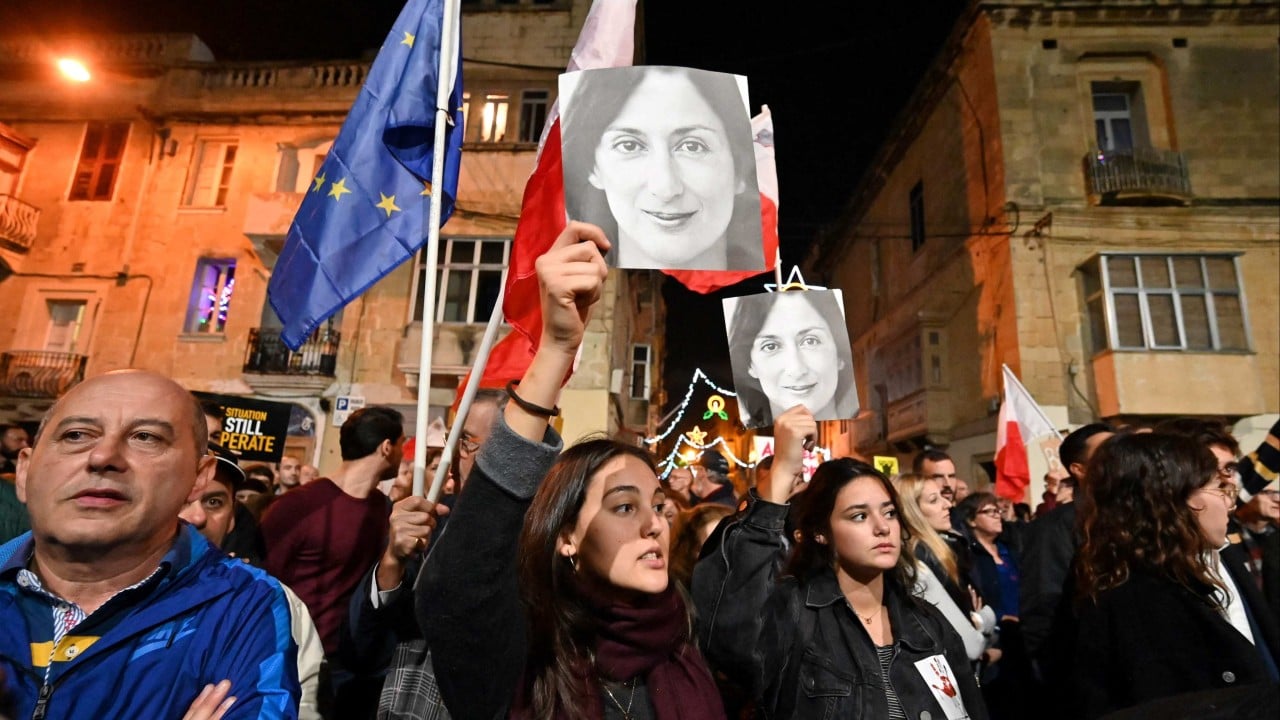
The fallout was immediate. Mass street protests erupted across Malta as citizens realized how deeply the tentacles of corruption had penetrated the state. The chaos forced the resignation of then-Prime Minister Joseph Muscat in December 2019. While Muscat himself was never legally implicated in the murder plot, a subsequent independent public inquiry concluded that his administration bore collective responsibility for creating a pervasive "atmosphere of impunity" that allowed the assassination to happen.
A Legal Battleground in a Sealed Bubble
The road to this trial has been a masterclass in legal attrition. Fenech spent over five years in custody without a trial. Because Maltese law places strict limits on pre-trial detention, the state was eventually forced to grant him bail in early 2025. It required what is believed to be the largest bail package in Maltese history: an €80,000 cash deposit, a €120,000 personal guarantee, and a massive chunk of Tumas Group shares worth roughly €50 million put up as collateral by his aunt.
Now that the trial has actually started, the court is taking no chances with jury tampering or external influence. The jury selection process alone took a grueling five hours, during which the sweltering 33°C (91°F) heat caused one reserve juror to collapse.
Judge Edwina Grima has placed the nine primary jurors and six reserves into a literal bubble. For the duration of the trial, they're completely segregated. They live in a designated hotel, stripped of their laptops, smartphones, and smartwatches. They can't watch the news, browse social media, or even discuss the case with family members during supervised visits.
The defense has already voiced major concerns about live media coverage, arguing that the intense international scrutiny could easily warp the testimony of upcoming witnesses. Judge Grima didn't ban the press, but she issued a stern warning to reporters to exercise extreme caution and reminded the jury that their verdict must rely solely on what happens inside the courtroom walls.
What is Left to Prove?
To understand why this trial matters, you have to look at the scoreboard of convictions that got us here. The state has already systematically dismantled the operational side of the murder plot:
- Vincent Muscat: Pleaded guilty in 2021, received a reduced 15-year sentence, and provided crucial evidence against his co-conspirators.
- George and Alfred Degiorgio: The brothers who planted and triggered the bomb switched their pleas to guilty on the first day of their trial in 2022. They're serving 40 years.
- Robert Agius and Jamie Vella: Convicted in June 2025 of supplying the bomb itself, both were handed life sentences without the possibility of parole.
Every single cog in the machine has been convicted or flipped. The only question left for the jury is whether Yorgen Fenech was the engineer who bought the machine.
The prosecution doesn't need to prove Fenech held the detonator. They need to prove beyond a reasonable doubt that he financed, ordered, and pushed for the hit. The core of the defense strategy will be to shred the credibility of the audio tapes and paint Melvin Theuma as a desperate criminal framing a wealthy tycoon to save his own skin.
The Real Stakes for Global Press Freedom
If you're wondering why news crews from across Europe have packed into the Valletta courthouse, it's because this case has become a bellwether for investigative journalism. Caruana Galizia was often described as a "one-woman WikiLeaks." Her blog, Running Commentary, routinely drew more readers than the island's established newspapers combined.
She was tracking the money trails from the Panama Papers, focusing heavily on an offshore shell company called 17 Black. She alleged that this entity was being used to funnel millions in bribes to top-tier Maltese politicians. After her death, international journalists picking up her files confirmed a vital piece of the puzzle: the secret owner of 17 Black was Yorgen Fenech.
When journalists are murdered in autocracies, the world registers a familiar, grim outrage. But Malta is an EU member state. If a billionaire can allegedly order the execution of a reporter in a Western democracy and slip through the cracks of a bogged-down legal system, the message to investigative journalists everywhere is terrifyingly clear.
The trial is slated to run for several weeks, operating six days a week. For the Caruana Galizia family, who sat quietly in the courtroom as the graphic details of the bombing were read aloud, it represents the final mile in a exhausting nine-year marathon for justice. For Malta, it's a moment of truth. The island is discovering whether its institutions are strong enough to convict a man who once seemed completely untouchable.
If you want to understand the systemic rot Caruana Galizia was fighting against, read the full 437-page report of the Malta Public Inquiry which details how state failures enabled her assassination. You can also follow the daily, verified courtroom transcripts via the Times of Malta live blog to see the evidence unfold in real-time.