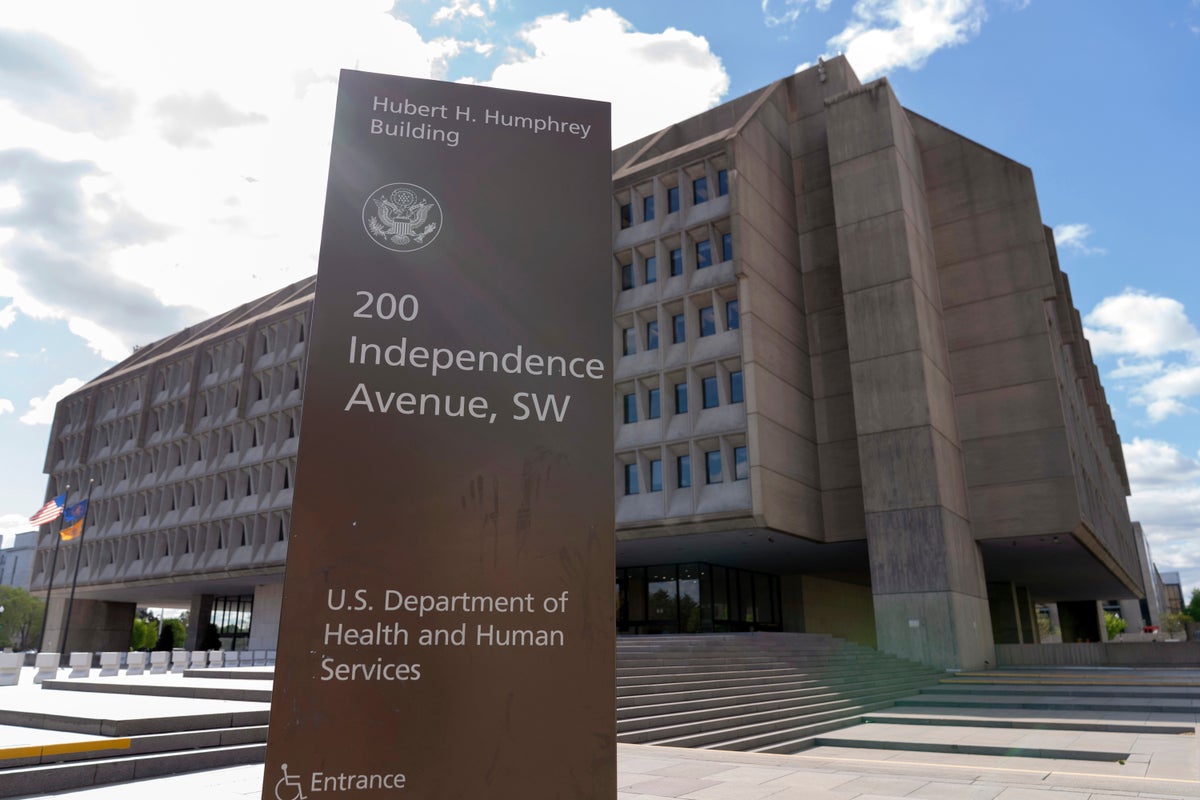
The federal government just pulled the plug on New York’s healthcare police. On Tuesday, the Trump administration announced an immediate freeze on all federal funding for New York’s Medicaid Fraud Control Unit. It’s a massive blow. The state agency responsible for tracking down scammers in the healthcare safety net is now officially broke on the federal dime.
Health and Human Services Inspector General Thomas March Bell delivered the bad news in a stinging letter to New York Attorney General Letitia James. He didn’t hold back. Bell accused the state of running a sluggish, low-performing operation that lets fraudsters off the hook. The federal funding suspension runs through at least September 30, forcing a high-stakes showdown over how the country fights medical theft. For a closer look into similar topics, we suggest: this related article.
This isn’t just a bureaucratic spat. It is an explosive political war. New York currently covers roughly 6.4 million people under its Medicaid program. When you freeze the budget of the team protecting those billions of dollars, things get messy fast. Letitia James immediately swore to fight the decision in court. She called the funding cut an outrageous political attack.
The real question isn’t just about who is right. It’s about what happens next to the millions of New Yorkers who rely on this system. To get more details on this development, extensive reporting can also be found on Al Jazeera.
The Brutal Math Behind the Federal Freeze
The Trump administration’s argument boils down to simple production numbers. Washington expects results for its money. According to the letter sent by Bell to James and unit director Amy Held, New York isn’t delivering.
Federal officials looked at how New York performed between 2023 and 2025. They compared the state to four other jurisdictions with similar populations and Medicaid budgets. The results looked terrible for the Empire State. New York secured the lowest number of criminal fraud convictions by a wide margin.
How bad was the gap? The federal letter pointed out that New York managed only eight or nine criminal indictments during a period when other similar-sized units locked down hundreds of cases. This happened despite New York overseeing a total Medicaid budget that is twice the size of those comparison states.
To the federal government, that looked like an agency asleep at the wheel. Bell wrote that enough is enough and declared the state in direct violation of its grant terms. The money stops now. If New York wants the cash back before the September deadline, it has to completely change how it does business. It has to prove it can rack up convictions.
Big Fish Versus Small Fry
New York isn’t taking the criticism lying down. The state’s defense highlights a fundamental disagreement over how law enforcement should measure success. Do you go after hundreds of low-level scammers, or do you spend years building massive cases against corporate executives?
Letitia James argues that her office chose the hard road. The state deliberately walked away from nickel-and-diming individual Medicaid recipients or low-level clerks. Instead, New York poured its resources into complex, high-impact investigations targeting corrupt company owners, health system executives, and major corporations.
When you look at the dollar amounts, New York’s strategy looks highly effective. Between 2019 and 2025, the state’s fraud unit recovered over $627.8 million. Just last week, James announced the dramatic arrest of a mastermind behind a $9 million Medicaid fraud ring. The state also points out that a 2025 federal report ranked New York as one of just four states responsible for half of all civil Medicaid recoveries nationwide.
If you measure success by dollars returned to taxpayers, New York is winning. If you measure it by the number of bodies sent to jail, New York is losing badly. The federal government made it clear that it cares about the body count. They argue that the focus on complex cases didn’t yield enough total results to justify ignoring the rest of the system.
Part of a Much Larger Crackdown
Don't look at this New York freeze in isolation. It is part of a sweeping national campaign aimed squarely at social safety net programs. The Trump administration has spent months warning states that lax oversight won’t be tolerated anymore.
Vice President JD Vance is leading the charge. He heads an aggressive interagency task force designed to root out waste and theft across the entire federal government. This task force has focused heavily on blue states. The administration has already demanded extensive internal fraud-tracking data from at least five states, four of which are run by Democrats.
New York is actually the second state to lose its fraud unit funding this year. Earlier in June, the federal government completely severed grant money for Hawaii’s unit. Hawaii had gone three straight years without securing a single Medicaid fraud indictment or conviction.
The pressure is hitting other states too. The federal government has withheld portions of broader Medicaid funding from California and Minnesota over distinct fraud disputes. Minnesota Governor Tim Walz openly called the moves a form of political retribution.
Meanwhile, the federal focus has expanded into Medicare. Dr. Mehmet Oz, the head of the Centers for Medicare and Medicaid Services, recently implemented a strict six-month freeze on new enrollments for hospice and home care providers across the country. The administration is flexing its muscles everywhere.
The Shaky Ground of Federal Data
Critics of the funding freeze point to a major credibility issue with the administration's data. Earlier this year, federal officials had to publicly admit to a massive math error in the statistics they used to launch a separate fraud investigation into New York's health department.
That mistake cost the administration some moral high ground. It allowed New York officials to argue that the current funding freeze is just more political theater ahead of the upcoming midterm elections. Joan Alker, an executive director at Georgetown University’s Center for Children and Families, pointed out the obvious contradiction. If the federal government genuinely wants to stop fraud, cutting off the budget of a state's primary fraud-hunting unit seems completely counterproductive.
The political tension is undeniable. The Department of Justice explicitly named New York’s fraud unit as a key partner in a massive national healthcare fraud takedown. Stripping federal certification from an office while simultaneously praising its cooperation in federal busts shows how fractured the relationship has become.
What This Means for the Whole Medicaid Program
The stakes extend far beyond the budget of one investigative office. Under federal law, states must maintain a certified, operational Medicaid Fraud Control Unit to remain fully eligible for their broader federal Medicaid matching funds.
If New York cannot resolve this fight with Washington quickly, the financial stability of the entire state healthcare system could crack. New York relies on billions of federal dollars to keep its medical programs running for low-income residents, disabled individuals, and the elderly. If the lack of a certified fraud unit triggers a wider freeze on general Medicaid matching funds, the state will face an immediate, catastrophic budget crisis.
Governor Kathy Hochul’s administration has backed James, calling the federal cuts disingenuous attacks. But statements won't pay the bills if the wider federal funding engine grinds to a halt.
Immediate Steps for Healthcare Leaders and Providers
The federal freeze throws the entire state compliance system into chaos. Healthcare providers, executives, and legal teams cannot afford to sit around and watch the political tennis match. You need to adjust to this new reality immediately.
Review All Active Audits and Self-Disclosures
If your organization is currently resolving a billing discrepancy or participating in a self-disclosure protocol with the state, do not assume things will proceed as normal. The state unit is under intense pressure to show rapid movement. Expect long-delayed cases to suddenly accelerate as state attorneys scramble to produce metrics before the September 30 deadline.
Tighten Internal Internal Billing Controls
Do not view the federal funding cut as a license to relax compliance. The federal government is watching New York providers directly. Federal agencies like the HHS Office of Inspector General and the FBI can bypass the state entirely to bring their own actions. Ensure your internal auditing systems are catching billing anomalies before a federal task force does.
Prepare for Mixed Inquiries
With the state unit fighting for its life, you may receive duplicate or overlapping requests for information from both state investigators trying to justify their existence and federal agents trying to prove the state missed something. Document every interaction carefully. Keep clean records of which agency requested which files to avoid getting caught in the crossfire.
The funding freeze forces New York to choose between its long-term corporate investigation strategy and the high-volume criminal numbers Washington demands. Watch the court filings closely over the next few weeks. Letitia James will likely seek an immediate emergency injunction to restore the funding while the lawsuit plays out. If the courts deny that request, the state will have to rapidly pivot its law enforcement strategy or face a massive hole in its enforcement budget.