The traditional transatlantic defense playbook doesn't matter anymore. Next week, global leaders gather in Ankara for the 36th NATO summit on July 7-8, 2026. Most European heads of state are walking into the Turkish capital with deep anxiety. They're bracing for another round of public dressing-downs from US President Donald Trump over defense spending and their refusal to back his recent military campaign against Iran.
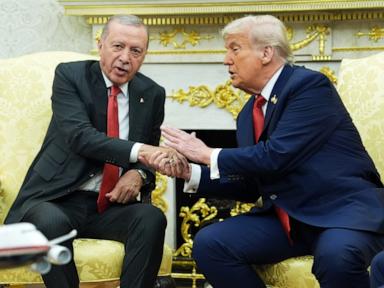
But Turkish President Recep Tayyip Erdogan isn't sweating. While other leaders scrambled to find a "Trump whisperer" after the chaotic 2025 summit in The Hague, Erdogan simply picked up the phone.
"I would not have gone for most people," Trump admitted frankly last week, recounting his conversation with the Turkish leader. "But he called me up. He said, 'Please, I have it in Turkey. You got to be there.' And so I'm going out of respect to President Erdogan."
This direct line of communication changes everything for the Ankara summit. By ensuring Trump's attendance, Erdogan didn't just save the event from a high-profile American boycott. He positioned Turkey to walk away with major strategic and military prizes that have been frozen for years.
The Strongman Premium and the Real Meaning of NATO 3.0
Western analysts love to wring their hands over Trump’s clear preference for personal relationships over institutional treaties. It’s a well-documented pattern. Philip Gordon, former national security adviser to Vice President Kamala Harris, points out that Trump consistently builds better relationships with autocrats than with traditional democratic allies.
In Ankara, this dynamic isn't a glitch; it's the main feature.
The White House is currently pushing a major structural overhaul dubbed "NATO 3.0." The core idea is simple: European nations must take the lead in defending their own continent, allowing the US to draw down its conventional forces and focus elsewhere. Defense Secretary Pete Hegseth even framed this transition around a "report card" system, explicitly threatening military drawdowns for nations that fall short on their obligations.
Yet, while a country like Germany faces constant criticism despite its massive economic clout, Turkey gets a pass. Why? Because Erdogan knows how to speak Trump's language. Turkey boasts the second-largest standing military in NATO, a fact Erdogan uses as leverage. By aligning with the American demand for hard military capability rather than just lecturing about democratic values, Turkey has insulated itself from Washington's wrath.
The Big Prize: F-35s and Jet Engines
Erdogan's biggest play at this summit isn't about diplomatic statements or communique wording. It's about hardware.
Ankara is eyeing a massive defense windfall. Specifically, they want the F-110 jet engines and a return to the F-35 fighter jet program. Turkey was booted from the F-35 program years ago after purchasing Russian S-400 missile defense systems—a move that infuriated both the Pentagon and Capitol Hill.
The Biden administration tried to offer Turkey a path back into Washington's good graces with a White House invitation in 2024, after Ankara finally greenlit NATO membership for Finland and Sweden. Erdogan snubbed it. He chose to wait for a better deal.
That gamble is paying off. During a meeting with NATO Secretary-General Mark Rutte, Trump was asked directly if he was bringing a "big gift bag" to Ankara involving the F-35s and jet engines.
"Yeah, I think so," Trump responded. "Yeah, I'm going to probably do something that's going to make him very happy."
Vice President JD Vance confirmed that the administration is actively exploring ways to execute the jet sale while navigating US legal constraints. It won't be an easy sell domestically. Powerful lawmakers, including Senate Foreign Relations Committee Chairman Jim Risch, are fiercely opposed to handing over advanced American aviation tech while Russian S-400 batteries sit on Turkish soil. But Trump has shown little hesitation in bypassing congressional gridlock when he wants to make a deal.
Shifting Red Lines in the Eastern Mediterranean
Turkey's diplomatic wins are already reverberating across the region, creating clear winners and losers before the summit even opens.
Israeli Prime Minister Benjamin Netanyahu recently tried to secure Trump's backing to counter Turkish influence in Syria. Instead, Trump publicly urged Netanyahu to be "reasonable" and showered Erdogan with praise. With the US taking a step back, Erdogan is aggressively asserting Turkish dominance in the Eastern Mediterranean.
Addressing his ruling AK Party, Erdogan issued a blunt warning regarding maritime borders and the unresolved Cyprus dispute: "If Turkey's rights and the rights of the Turkish Cypriots in the Eastern Mediterranean are targeted, I want it to be known that our response will be very clear and very harsh."
In the past, such rhetoric would trigger a sharp rebuke from Washington. Now, with Trump arriving in Ankara as Erdogan's personal guest, the regional balance of power has fundamentally shifted.
What This Means for Global Security
The Ankara summit marks a clear departure from traditional multilateral diplomacy. It shows that personal relationships can completely rewrite formal alliance rules.
If you are tracking international defense policy or regional stability in the Middle East and Eastern Mediterranean, watch these key indicators over the next two weeks:
- The F-35 Framework: Look closely at the wording of any bilateral defense agreements announced during the summit. If the Trump administration bypasses the S-400 restriction to supply jet engines, it sets a brand-new precedent for how US sanctions are applied to critical allies.
- US Force Drawdown Timelines: The Pentagon is currently conducting a six-month review of US military bases and troop postures in Europe. Watch for clues on which European bases will see cuts, and whether Turkey's strategic infrastructure becomes even more central to US operations.
- Regional Maritime Security: With Ankara feeling emboldened, monitor naval movements and drilling activities around Cyprus. The lack of US pushback could lead to a more assertive Turkish posture in contested waters.