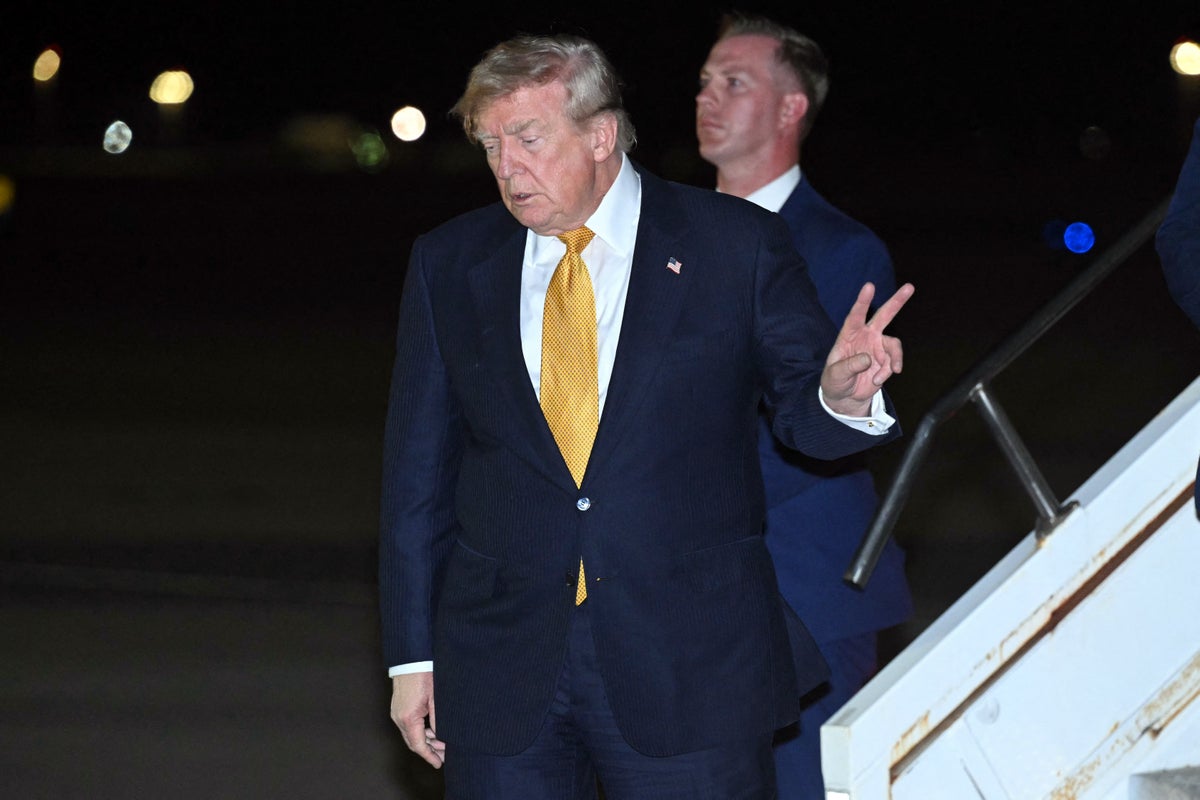
Donald Trump just dropped a bombshell that sounds straight out of a Hollywood thriller. He openly admitted to the New York Post that he has left standing instructions to completely flatten Iran if their government succeeds in assassinating him. It’s the kind of blunt, terrifying rhetoric that makes traditional diplomats pass out. He didn't mince words. He said if anything happens to him, the military has orders to bomb Iran at levels they've never seen before.
If you came here looking to understand whether we're on the brink of World War III, you aren't alone. The internet is losing its mind over this revelation. People want to know if these instructions are legally binding, why Trump is saying this right now, and how bad the situation with Tehran actually is.
Let's skip the media panic and look at what's really happening on the ground. This isn't just a random soundbite from a president who loves a good headline. It’s a direct response to a massive regional escalation that has been building up for months. We are dealing with a deeply volatile situation where the old rules of engagement have completely gone out the window.
The Reality Behind the One Thousand Missiles Threat
Shortly after his interview went live, Trump took to Truth Social to turn the volume up even higher. He claimed that 1,000 missiles are locked and loaded, aimed directly at the Islamic Republic of Iran. He warned that thousands more would follow immediately if the Iranian government acts on its public threats to take his life.
It's easy to dismiss this as classic Trumpian hyperbole. But you have to look at the immediate context of July 2026 to understand why the temperature is boiling over. This isn't happening in a vacuum. The short-lived US-Iran ceasefire is completely dead.
Just days ago, Trump declared the framework deal over after Iranian forces allegedly attacked three commercial ships in the Strait of Hormuz. The US military didn't hesitate. They launched nearly 200 airstrikes across Iran over a 48-hour period, effectively reigniting an active conflict. When Trump talks about missiles being ready, he’s referencing a military apparatus that is already actively dropping ordnance.
The threat environment surrounding the president is intensely real. During his recent trip to the NATO summit in Ankara, Turkey, the security protocols were visibly dialed up. Trump even switched aircraft for his return journey. The White House later confirmed this unusual move was a strict security precaution. When a sitting American president has to swap planes while bordering an adversarial nation because of credible intelligence, you know the threat matrix is off the charts.
The Shadow of the February Airstrikes
To understand why Iran wants Trump dead so badly, you have to look back at the explosive events of February 28. In a joint operation that shocked the global intelligence community, US and Israeli airstrikes successfully targeted and killed Iran's Supreme Leader, Ayatollah Ali Khamenei.
Think about that for a second. The supreme religious and political authority of Iran was eliminated in a direct military strike.
The fallout from that day is reaching a crescendo right now. Just this week, a massive, multi-day public funeral procession wound through Mashhad and other major Iranian cities to bury Khamenei. The crowds weren't just mourning. They were screaming for blood. Iranian state media showed thousands of protesters carrying enormous banners featuring Trump's face inside a sniper's crosshair. The text on the signs wasn't subtle. It read, "We Will Kill Trump."
Eulogists at the state-sponsored event openly told the crowds that killing Trump is a fundamental religious duty. They asked why the man who killed their leader was still allowed to walk the earth. When Trump says he knows he is number one on their list, he isn't being paranoid. The Iranian regime is shouting it from the rooftops.
Can a President Actually Command from Beyond the Grave
Here is where we need to inject some serious legal reality into the conversation. Trump claims he has left instructions to obliterate Iran if he is killed. But can he actually do that?
The short answer is no. Constitutional experts and national security lawyers have already pointed out the massive flaws in this plan. The United States Constitution is incredibly clear about how command authority works. The moment a sitting president dies, their power vanishes instantly.
Command authority doesn't stay with a corpse, and it certainly can't be passed down through a political will or a set of pre-written instructions. The second a president passes away, the Vice President is sworn in and immediately becomes the Commander-in-Chief.
If Trump were to be assassinated, the decision to launch a retaliatory strike would rest entirely on the shoulders of his successor. That person would have to evaluate the intelligence, consult with the Joint Chiefs of Staff, and potentially seek congressional authorization. They are under absolutely no legal obligation to follow a dead man's orders.
So why would Trump say this if it holds zero legal weight?
It’s all about deterrence. Trump knows that the threat of absolute destruction is a psychological weapon. By telling Iran that the machinery of war is already automated and set to trigger upon his death, he’s trying to convince Tehran that killing him won't save them from annihilation. He wants them to believe that his death would spell the immediate end of their country, regardless of who takes over the Oval Office. It’s a high-stakes bluff designed to make the cost of an assassination attempt completely unthinkable.
The Mixed Signals and Ongoing Diplomacy
What makes this situation even more fascinating is the bizarre dual-track strategy the administration is running. While Trump is online threatening to unleash hellfire and fury, the state department is quietly keeping the backchannels open.
Even though Trump insisted the ceasefire is finished, the White House has signaled that technical talks with Iranian officials are still happening through diplomatic intermediaries. It’s a classic madman theory approach to foreign policy. You have the president playing the role of the volatile, unpredictable warrior ready to push the button, while his diplomats try to leverage that fear to force concessions at the negotiating table.
We also saw a strange disconnect regarding recent intelligence. Reports surfaced via the Wall Street Journal that Israeli intelligence had passed a brand-new, specific Iranian assassination plot to the US. Yet, when asked about it, Trump flatly denied it. He claimed Israel came up with nothing new, noting that he has simply been their primary target for years and that’s just how life is.
This tells us that Trump is trying to project absolute fearlessness. He doesn't want to look like a leader hiding in a bunker because of fresh threats. He wants to project the image of a leader who has accepted the risks but has locked the target on his enemy's forehead.
What You Should Watch for Next
This conflict isn't going to cool down overnight. If you want to know where this is heading, keep your eyes on a few critical indicators over the coming weeks.
First, watch the shipping lanes in the Strait of Hormuz. If Iran attempts to seize or strike more commercial vessels, expect the US military to expand its bombing campaign beyond the 200 structural targets they already hit.
Second, pay close attention to the movements of Mojtaba Khamenei, the late Supreme Leader's son who was recently tapped to take over the regime. He noticeably stayed away from his father's public funeral ceremonies due to immense security fears. If he begins to solidify his grip on power publicly, it could signal whether Iran is going to double down on terrorism or quietly seek a way out of a war they cannot win.
Ultimately, Trump’s comments show a presidency operating on the absolute edge of geopolitical conflict. It’s direct, it's dangerous, and it defies every standard rule of international relations. But in 2026, the old rules simply don't apply anymore.
The deep animosity and the persistent nature of these operational threats are not entirely new. You can get a clearer picture of how deeply entrenched these intelligence investigations actually are by checking out this BBC News report on past Iranian assassination plots, which outlines the specific legal charges and networks the FBI has previously uncovered operating on American soil to target political figures.