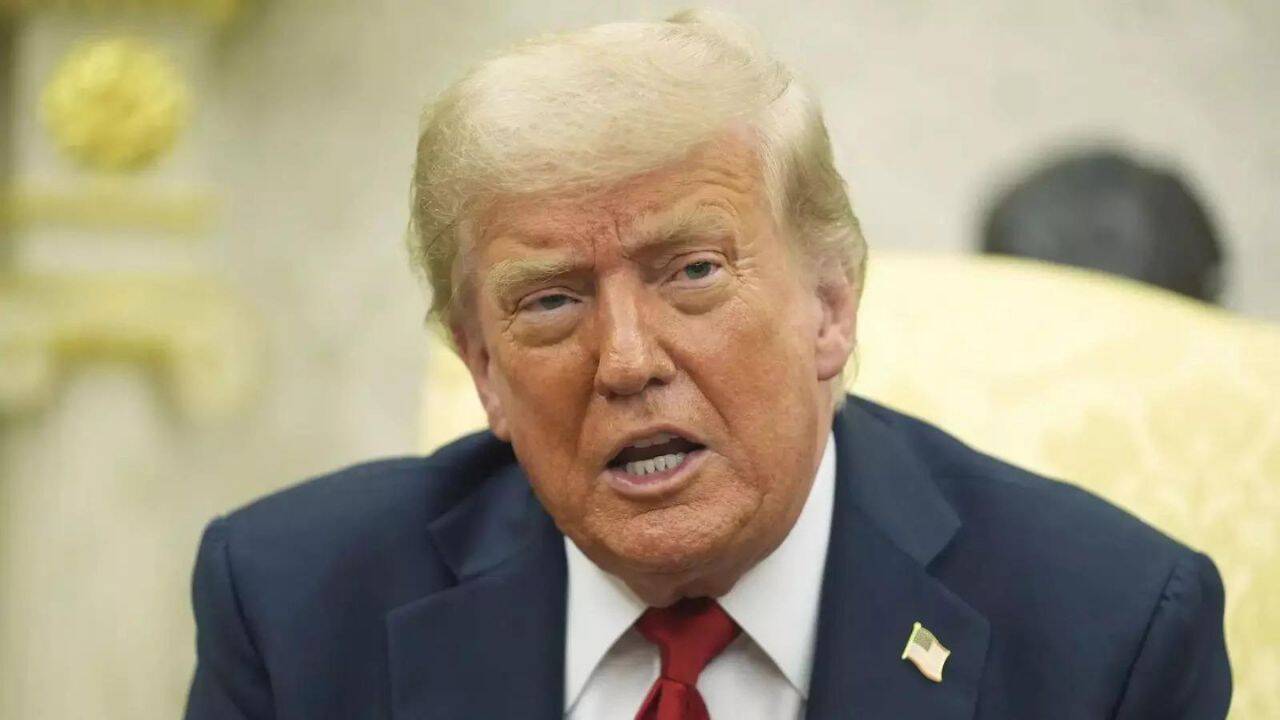
Donald Trump took to Truth Social to drop a massive number on his followers. The United States, he claimed, spent $999 billion on NATO between 2014 and 2025 to protect allies who give nothing back. He lined this up against the numbers of other nations: the United Kingdom at $90.5 billion, France at $66.5 billion, and Germany much lower.
"Ridiculous!" he called it.
If you just look at the raw numbers, he's telling the truth. The numbers are real. But the way they're framed leaves out how global military spending actually works. If you're trying to understand whether the American taxpayer is getting ripped off, you need to understand where that $999 billion actually goes.
The Math Behind Trump's 999 Billion Claim
Let's clear up the biggest misconception right away. The US doesn't write a $999 billion check to NATO headquarters in Brussels. NATO's direct administrative and collective budget is tiny by comparison—around $3 billion a year, and the US caps its contribution to that at 22 percent.
When Trump talks about $999 billion, he's talking about cumulative national defense spending.
The US military operates globally. That near-trillion-dollar total funds homeland defense, the nuclear triad, operations in the Middle East, and a massive naval presence in the Indo-Pacific to counter China. None of those missions have anything to do with defending European soil, yet they're cooked right into the numbers Trump uses to blast Europe.
The Trump Trillion Effect Is Real
Despite the misleading math, Trump's core grievance has fundamentally changed how Europe handles its own security. For over a decade, European allies treated defense spending targets like optional homework.
That changed. During a recent Oval Office meeting, NATO Secretary-General Mark Rutte even presented charts highlighted by a bold title: the "Trump Trillion." It was a deliberate move to flatter the president by showing that his relentless public pressure—combined with the brutal reality of Russia's ongoing war in Ukraine—finally forced Europe to pay up.
Look at the shifts happening right now:
- Every single one of the 32 NATO allies has finally reached or crossed the baseline target of spending 2 percent of their GDP on defense.
- In 2025, European members and Canada surged their defense spending by 20 percent in real terms, hitting $574 billion. It's the sharpest single-year increase in the alliance's history.
- Just last year, historic negotiations pushed alliance targets even higher, aiming toward a 5 percent GDP benchmark over the next decade.
Trump's rhetoric works because European leaders genuinely believe he might walk away from the treaty if they don't buy their own gear.
Washington Is a Shareholder Not a Donor
The idea that America gets "no benefit" from this setup doesn't hold up under financial scrutiny. The US military doesn't garrison Europe out of charity. It does it for power projection and economic stability.
Transatlantic trade is worth nearly $2 trillion annually, and mutual investments sit around $7.4 trillion. If Europe destabilizes, American retirement accounts and supply chains take a massive hit.
Furthermore, the US military depends heavily on European infrastructure. Access to Ramstein Air Base in Germany, naval stations in Spain, and logistics hubs across the Mediterranean are what allow Washington to deploy forces rapidly to Africa and the Middle East. Without those bases, American global reach shrinks overnight.
Then there's the defense industry. As European nations scale up their military budgets, they aren't just building local factories. They're buying American hardware. The European defense market could top $1.14 trillion by 2035, and US defense contractors are aggressively positioning themselves to capture the lion's share of those contracts.
The Sovereignty Side Effect
Europe is reading the room. Between Trump's unpredictability and the immediate threat of Russian missile strikes on places like Kyiv, Washington's allies are actively planning for a future where they can't rely solely on Uncle Sam.
We're already seeing the policy shifts. Canada is currently leading a push alongside ten other nations to launch a global defense bank. The goal is simple: provide affordable, independent financing for defense manufacturing and military infrastructure without waiting for US congressional approval.
Even European political factions that used to cheer for Trump's nationalist agenda are pulling away. Leaders across France, Germany, and Italy are finding common ground because of shared anxieties over US trade tariffs and shifting foreign policy positions.
How to Verify the Data Yourself
If you want to track whether allies are pulling their weight without the political spin, skip the social media posts and look directly at the primary metrics.
- Check the NATO Secretary-General’s Annual Report: NATO publishes verified, inflation-adjusted defense expenditures for all member states every year. Look at the "Defense expenditures as a share of GDP" tables rather than total dollar amounts.
- Isolate Regional Spending: Review the SIPRI (Stockholm International Peace Research Institute) databases to see how much of the US defense budget is dedicated specifically to the European theater via the European Deterrence Initiative, versus global power projection.
- Monitor Defense Procurement Contracts: Keep tabs on major European military purchases. Track how many billions in new European defense spending are being funneled directly back into US-based aerospace and defense firms.