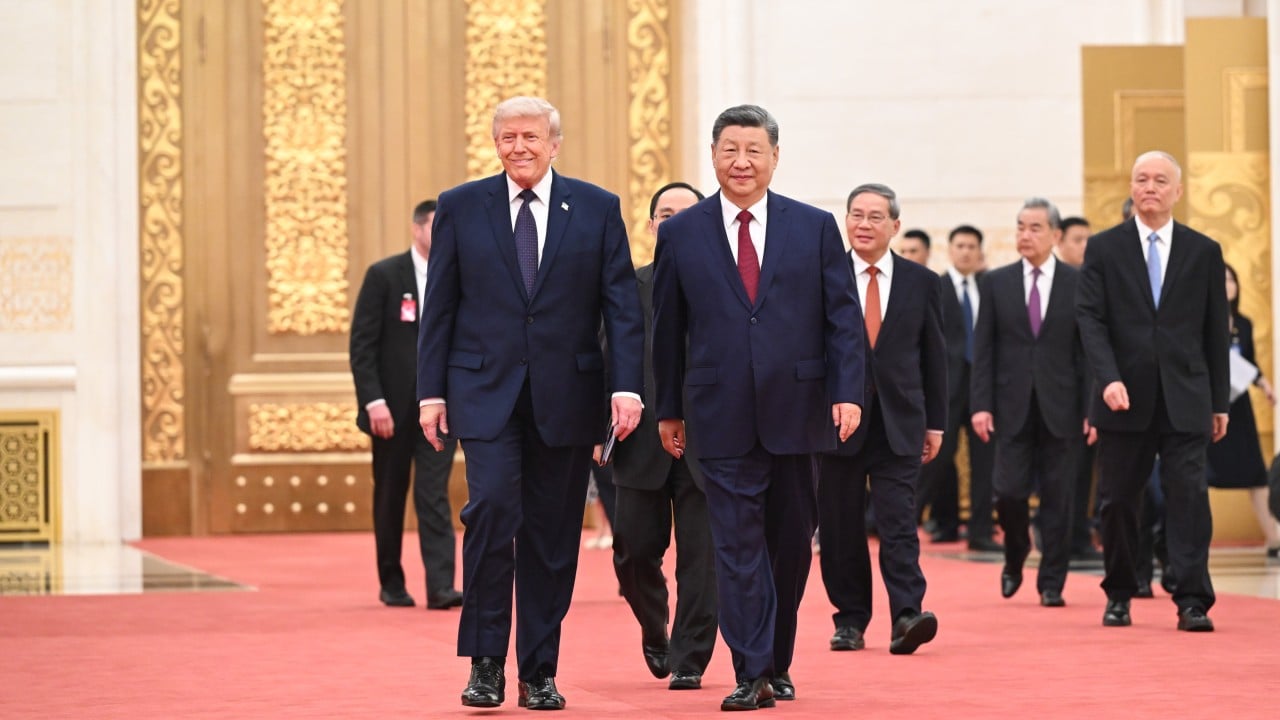
Multilateral diplomacy is dead. At least, that is the message coming out of Washington as negotiators try to salvage what is left of the upcoming Miami G20 summit. The White House is systematically gutting the traditional core of the Group of Twenty. They are taking a meat cleaver to the massive, multi-issue agreements that usually take months of international hand-wringing to produce.
Instead, the United States is actively shrinking the December 2026 gathering into a stark, transactional stage. The real goal has nothing to do with global consensus. The entire event is being engineered as a dramatic backdrop for a high-stakes, one-on-one showdown between Donald Trump and Chinese President Xi Jinping.
If you are expecting the usual sweeping declarations about global poverty or green energy transitions, you will be disappointed. Diplomatic sources inside the recent Sherpa drafting sessions in Washington reveal a brutal ideological pruning. The US delegation is flatly refusing to entertain the standard boilerplate language favored by the Global South and European allies. This is not just a shift in tone. It is a fundamental dismantling of how the world's largest economies interact.
Erasing the Global Agenda for an Audience of Two
For decades, these massive summits operated under a predictable script. Wealthy nations and emerging powers traded concessions on climate funding, economic development, and international tax frameworks. It was messy, but it gave smaller nations a voice.
That script is officially in the paper shredder. During the tense negotiations in Washington, American representatives made their priorities clear. They explicitly pushed to strip the draft text of long-standing commitments to poverty reduction, energy transition initiatives, and gender equality.
To the current administration, those topics are national sovereignty traps. They view them as empty phrases that tie the hands of American businesses while letting competitors off the hook. The white house wants a razor-thin focus. They want to talk about immigration control, cracking down on transnational crime, fighting terrorism, regulating foreign investment, and enforcing what they term fair trade.
This dramatic shift leaves developing economies completely out in the cold. A diplomat from an invited nation noted that the language coming from the American side since the initial planning sessions exclusively favors US domestic interests. The summit is not being treated as a forum for collective problem-solving. It is being run like a corporate board meeting where the host holds all the voting shares. The global community is realizing that the massive gathering at the Trump National Doral Miami resort is rapidly becoming an elaborate prop. It is a stage set for a handshake and a bilateral trade negotiation between Washington and Beijing.
The Choreography of a Manufactured Superpower Showdown
The timing here tells the real story. Just weeks before leaders arrive in Florida for the December 14 to 15 meetings, Xi Jinping will host the APEC leaders' meeting in Shenzhen. That November event will showcase China's vision of regional economic integration and state-backed tech development.
Trump intends to use the Miami G20 summit to counter that narrative directly on his home turf. By stripping away the bureaucratic clutter of typical G20 working groups, the administration ensures that all media attention fixes on one room. The global press corps will not be covering obscure finance tracks or sustainable development goals. They will be counting the minutes of the Trump-Xi bilateral meeting.
This hyper-fixation on bilateral deal-making over global governance is a trademark approach. It avoids the friction of getting twenty distinct governments to agree on complex text. If the US can strip the joint declaration down to a bare-bones statement on security and border enforcement, it prevents adversarial nations from scoring diplomatic points. But it also creates intense friction with long-standing allies who rely on the G20 to coordinate complex international financial regulations.
Redrawing the Guest List to Punish and Reward
A hollowed-out agenda requires a different kind of audience. The administration is not just rewriting the policy text. They are actively manipulating the guest list to break traditional diplomatic continuity.
The most glaring example of this is the complete ban on South Africa. Normally, the G20 operates under a troika system. The past host, the current host, and the next host work together to maintain a thread of policy continuity from year to year. Because South Africa hosted the previous cycle under a banner of solidarity and sustainability, the White House essentially shut them out. Trump barred them from attending the Miami summit entirely. This move fundamentally breaks the institutional memory of the forum.
To replace the dissenting voices, the US is packing the room with hand-picked allies and strategic partners. Poland is attending as a primary guest participant, reflecting its growing economic weight and alignment with Washington's hardline security stance. Central Asian nations like Kazakhstan and Uzbekistan have also secured invitations.
This is chess, not diplomacy. By bringing in nations that are heavily dependent on balancing their relationships between Russia, China, and the West, the US creates a captive audience for its economic agenda. The message to the rest of the world is unmistakable. You play by the host's rules, or you do not get a seat at the table.
Why the New Economic Focus Distorts Global Finance
The administration defends this radical downsizing by claiming it returns the G20 to its original, core mission. When the group was elevated to a leader-level summit in 2008 during the global financial crisis, it was designed to fix broken economic systems. The US argues that decades of mission creep turned the forum into an ineffective debating society for progressive social policies.
The official platform for the Miami G20 summit focuses heavily on three pillars. They want to limit regulatory burdens across borders. They want to protect traditional energy supply chains rather than force a transition to renewables. They want to dominate emerging technologies like artificial intelligence.
On paper, keeping things strictly economic sounds practical. In reality, it completely ignores the structural imbalances that smaller economies face. Developing nations rely on G20 consensus to negotiate debt relief, access international development finance, and manage the immediate economic shocks of climate change. By removing those topics from the text, the US is effectively telling the Global South that their structural vulnerabilities are their own problem.
Treasury Secretary Scott Bessent has lined up multiple meetings for the finance track to push policies aimed at modernizing financial regulation and expanding digital asset frameworks. While Wall Street and major tech hubs might find value in those discussions, they offer little comfort to nations struggling with crippling sovereign debt and hyperinflation. The narrow focus creates an artificial environment where global problems are ignored if they do not directly align with American corporate interests.
The Operational Reality Facing Foreign Delegations
If you are a diplomat preparing for Miami, your strategy needs an immediate overhaul. The old playbook of trading a paragraph on carbon emissions for a paragraph on market access is useless. The American sherpas are simply red-lining those sections without offering a counter-proposal.
Foreign ministries are realizing that trying to force traditional multilateral language into this summit is a waste of resources. The real work is happening in smaller, fragmented rooms. Alliances are forming on the sidelines because the main stage is completely compromised.
Nations are already shifting their expectations. European delegations are quietly coordinating with Latin American and Asian counterparts to salvage bilateral agreements outside the official G20 framework. They know they cannot change Trump's mind on the main text. Instead, they are treating the Miami summit as a giant networking event. The official joint declaration will likely be a brief, toothless document, meaning the real value will come from private meetings held far away from the main cameras at Doral.
What Happens When the Cameras Turn Off
We are looking at a permanent shift in how international summits operate. The Miami G20 summit is proving that a determined host country can successfully hijack a premier global forum and bend it to a purely national agenda.
When the event wraps up on December 15, the success of the summit will not be measured by economic stability metrics or new international trade pacts. It will be judged solely on what happens during that single meeting between Trump and Xi. If they walk out with a tentative agreement on tariffs or a temporary truce on technology transfers, the White House will declare total victory.
For the rest of the world, the cost of that victory is incredibly high. The institutional framework that allowed for coordinated global economic responses is being systematically dismantled. Future hosts will look at the Miami model and realize they no longer have to build consensus. They can just throw a party, invite their friends, lock out their critics, and use the global stage to chase a single headline.
Next Steps for International Strategy Teams
Stop analyzing this summit through the lens of traditional global governance. It is an exercise in sovereign leverage. If your organization or government is trying to navigate the fallout of the Miami summit, shift your focus immediately.
- Abandon multilateral lobbying: Do not waste diplomatic capital trying to restore climate or social language to the main joint declaration. The US delegation has an absolute veto and will use it.
- Pivot to mini-lateral coalitions: Build targeted economic agreements with smaller groups of like-minded nations outside the G20 structure. The real policy work is moving to sub-groups like the G7 or regional trade blocs.
- Prepare for a transactional trade environment: Analyze how a potential bilateral understanding between Trump and Xi will impact your specific industry supply chains. A sudden shift in tariffs or tech restrictions arising from their private meeting will happen instantly, without the usual bureaucratic warnings.
- Map out the new guest network: Establish direct lines of communication with the newly invited nations like Poland, Kazakhstan, and Uzbekistan. They are the new wildcards in the shifting diplomatic alignment.
The era of the grand, all-encompassing global summit is over. Miami is not a breakdown of the system. It is the debut of a new, fractured reality.