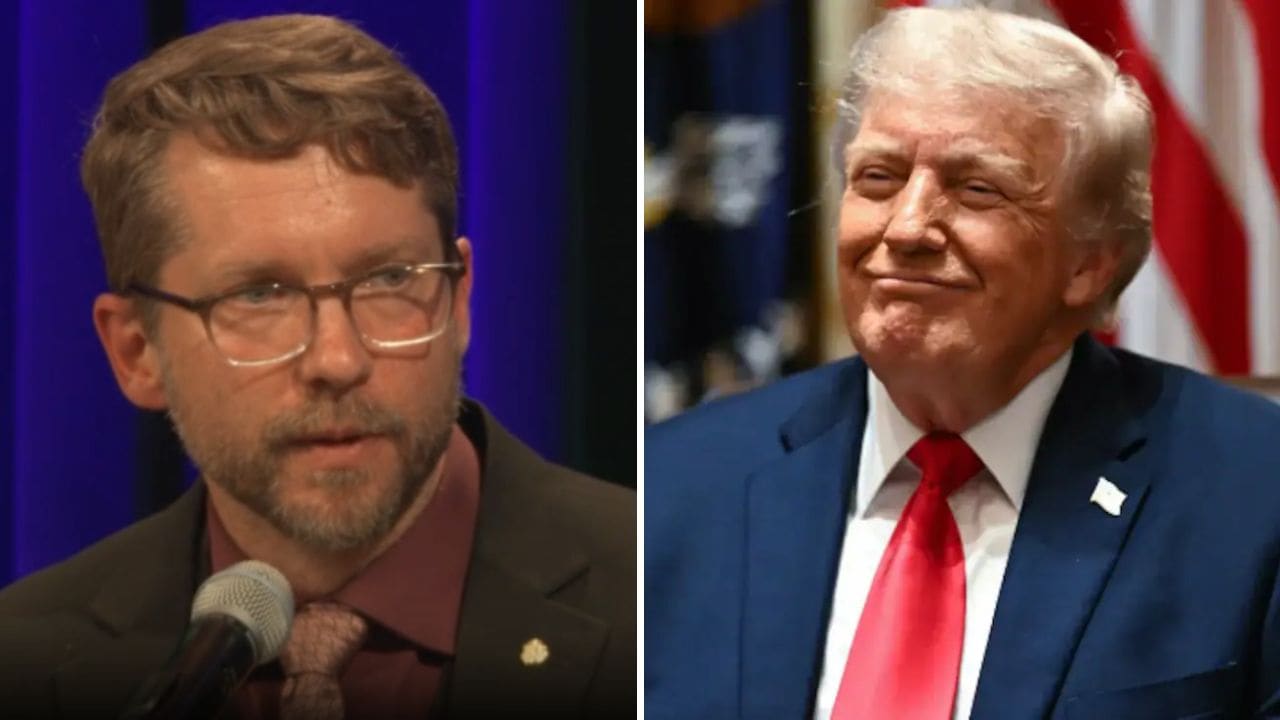
You’ve seen the headlines about Donald Trump cozying up to Silicon Valley elites. He shares stages with Elon Musk, fills his cabinet with tech accelerationists, and actively tears up executive orders that placed safeguards on artificial intelligence. On paper, the modern conservative movement looks completely bought into the idea of a frictionless, automated future.
But out in the real world, a massive fracture is forming.
A growing segment of Donald Trump's core base is actively rebelling against this narrative. They aren't looking to Silicon Valley venture capitalists for guidance. Instead, they are rallying behind a fierce, uncompromising voice you might not expect: Joe Allen.
Joe Allen isn’t your typical academic critic writing for elite policy journals. He’s a veteran media figure, known widely for his years as a correspondent on Steve Bannon’s "War Room" podcast. He’s an open Trump voter, deeply embedded in the populist right. Yet, he spends his days warning that the current trajectory of artificial intelligence represents a direct, civilizational threat to human freedom.
His group, Humans First, is drawing a hard line in the sand. They argue that the corporate push for unchecked automation will destroy working-class livelihoods, compromise personal privacy, and lead to an eerie, machine-dominated future. It turns out that a lot of everyday populist voters agree with him, creating a fascinating political paradox.
The Massive Rift Inside the Populist Movement
If you look closely at Washington right now, you’ll notice a major contradiction. The current administration has completely leaned into a deregulatory agenda, pushing for total dominance over international competitors. Billion-dollar initiatives like Project Stargate are designed to pour massive infrastructure into building the ultimate data centers. The official messaging treats algorithms as the ultimate tool for geopolitical power.
But Joe Allen’s rapid rise among the base reveals that the populist movement isn't a monolith.
For years, populist politics thrived on a deep-seated distrust of large, centralized institutions. First, it was corporate media. Then, it was globalist institutions and pharmaceutical giants. Now, that same intense skepticism is turning directly toward Big AI.
When Allen speaks to crowds, he doesn't just talk about lost jobs. He focuses on the concept of transhumanism—the idea that human beings are gradually merging with machines, losing their autonomy to smartphones, software algorithms, and digital surveillance systems. To an anti-establishment voter, a world where algorithms decide who gets a job, who gets banned from the internet, or how everyday life is monitored feels like the ultimate form of elite control.
Why Everyday Voters Are Rejecting the Silicon Valley Promise
Silicon Valley likes to pitch its tools as democratic instruments that make life easier. The reality on the ground feels very different for working-class communities.
- The War on Human Labor: Working-class voters see these advanced models as tools designed to replace human writers, artists, administrators, and eventually, manual laborers. It’s a direct threat to the dignity of work.
- The Elimination of Privacy: To train these massive models, companies scrape incredible amounts of personal data. Worse, proposed laws to fix safety issues often require users to upload government IDs to third-party companies just to verify their age online. It's a logistical and privacy nightmare.
- The Hyper-Concentration of Power: Power is being concentrated into the hands of roughly 11 massive corporate players, including entities like Palantir, OpenAI, Anthropic, and X.
This last point is exactly why Humans First is gaining traction. The group pushes a specific, hardline agenda: asking politicians to sign a pledge completely refusing any campaign donations from these tech giants or their major investors. They are drawing a direct link between tech money and political corruption.
An Unexpected Alliance
The most surprising development in this movement is who is actually showing up to the table. This isn't just a Republican phenomenon. Allen has openly noted that a parallel schism is happening on the political left.
Anti-establishment leftists in urban centers like New York City and populist conservatives are discovering they share the exact same fears. Both sides deeply distrust corporate monopolies. Both sides hate the idea of continuous digital surveillance. And both sides feel that human agency is being systematically erased in favor of corporate efficiency.
While political leaders on both sides of the aisle continue to take massive campaign contributions from tech executives, their respective bases are quietly finding common ground. They don't want a world run by cold, algorithmic calculations.
What This Means for the Near Future
Don't expect this tension to disappear. As the federal government continues to hand out massive, multi-million-dollar contracts to private tech firms, the disconnect between elite political strategies and grassroots anxiety will only widen. For figures looking toward future political cycles, taking a hardline, skeptical stance against corporate tech dominance is becoming an incredibly potent way to appeal to voters who feel alienated by the current trajectory.
If you want to understand where this movement goes next, stop looking at the press releases coming out of Silicon Valley boardrooms or Washington press conferences. Keep your eyes on the local town halls, the grassroots pledges, and the independent media platforms where everyday people are actively organizing to protect human agency.
Your next step is simple: pay close attention to the local and national politicians you support. Look up their funding sources. Check if they are taking significant campaign contributions from the major tech conglomerates driving this automation wave. The tension between human labor and corporate automation is no longer a futuristic debate—it's happening right now in local town halls across the country.