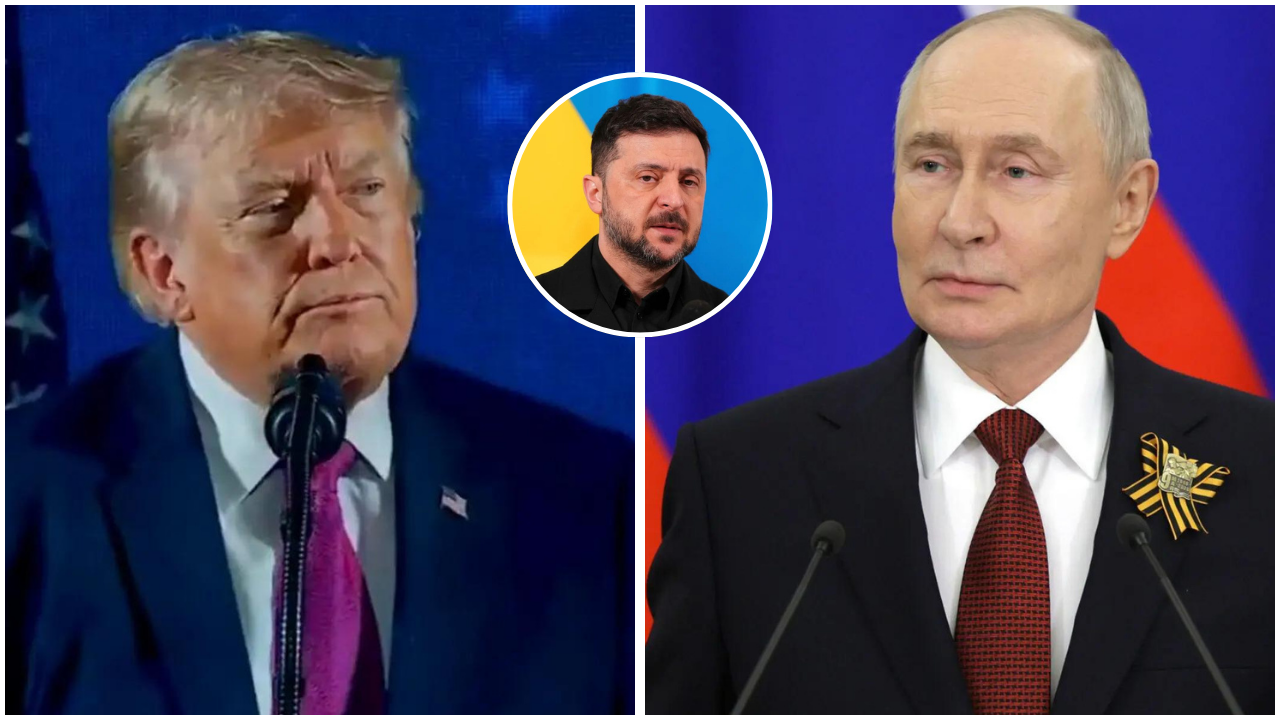
Donald Trump just spent nearly an hour and a half on the phone with Vladimir Putin, trying to muscle his way toward a peace deal that has eluded the world for more than four years. The timing wasn't an accident. Orchestrated on the Fourth of July, while Americans were firing up barbecues, the US President was working the phones with both Moscow and Kyiv, trying to position Washington as the ultimate dealmaker before heading to the critical NATO summit in Ankara, Turkey.
If you've been tracking this war, you know the narrative. Trump spent his campaign trail days promising he'd finish the conflict in 24 hours. Now that he's back in office, reality has hit hard. The 90-minute marathon with Putin, paired with a separate call to Ukrainian President Volodymyr Zelenskyy, shows a presidency shifting away from quick fixes and toward an intricate, grinding diplomatic push. But don't expect tanks to stop rolling tomorrow.
The Kremlin rushed out its version of the conversation immediately. Putin's aide, Yuri Ushakov, quickly told state media that Trump reaffirmed his readiness to find a rapid end to the fighting. Zelenskyy, firing off a Telegram update from his own bunker, called his discussion with Trump very good and noted that American resolve will mean everything. Still, underneath the diplomatic pleasantries lies a massive gulf in what both sides actually consider peace.
The Strategic Dance Ahead of Ankara
The immediate catalyst for these calls is the upcoming NATO summit in Turkey. European leaders are terrified that Washington might cut a deal over their heads. By engaging both combatants right before landing in Ankara, Trump is trying to signal that he holds the cards, not Brussels or London.
Russia knows exactly how to play into this dynamic. During the call, Putin explicitly reminded Trump that he has a standing open invitation to visit Moscow. That's a highly calculated move designed to rattle European defense ministries who view any normalization of relations with Russia as a betrayal.
But Trump isn't going into these talks blind. He's dispatching his trusted envoys, Steve Witkoff and Jared Kushner, to keep the backchannels buzzing. Ushakov confirmed that Kushner and Witkoff are already preparing for another direct trip to Moscow. This shows the administration is bypassing traditional State Department channels, relying instead on a tight circle of loyalists who treat international geopolitics like a high-stakes real estate negotiation.
The Kostiantynivka Disconnect and Frontline Realities
You can talk about diplomacy all day, but the real terms are dictated by artillery on the 1,200-kilometer frontline. Right as the phone lines were buzzing between Washington and Moscow, a fierce information war was playing out over the city of Kostiantynivka.
Moscow claimed its forces had completely captured the strategically vital city in Donetsk, calling it a major breakthrough. If true, it opens the gateway to Kramatorsk and Sloviansk, the last major Ukrainian strongholds in the Donbas region. Putin reportedly used the phone call to brief Trump on this supposed victory, painting a picture of an unstoppable Russian advance.
Kyiv shot back instantly. Ukrainian military spokespeople called the claim a flat-out lie. Zelenskyy even mocked the announcement on social media, noting that if Russia truly controlled the city, maybe Putin wouldn't mind meeting him there face-to-face to sign a treaty.
This brings us to the core issue. Russia still insists that any political-diplomatic resolution must include Ukraine completely surrendering the entire Donbas region, alongside other occupied territories. Zelenskyy's government has repeatedly stated that ceding land for peace is a non-starter. Trump wants a deal, but he can't force one if neither side is willing to blink on territorial sovereignty.
The Secret Leverage of the Iran Parallel
Here is the angle most mainstream reports completely glossed over. The US isn't just dealing with Ukraine right now. Washington has been heavily entangled in a tense confrontation with Iran, and Trump explicitly linked the two conflicts during his discussions.
According to Kremlin insiders, Trump told Putin that a separate deal with Iran is close to completion. The administration is trying to run a multi-theater diplomatic strategy. The theory is simple. If the US can stabilize the Middle East and check Iran's regional ambitions, it cuts off a major supplier of cheap attack drones to Russia.
Putin openly expressed hope that US-Iran negotiations would lead to long-term stability, but don't think he's doing this out of the goodness of his heart. Russia has used the Iran crisis to distract American intelligence and military resources. If Trump manages to close the loop on Iran, he frees up massive diplomatic leverage to apply directly to the Kremlin. It's a grand strategy that relies on everything going perfectly, which rarely happens in international relations.
What Most Analysts Miss About the Trump Putin Chemistry
People love to overanalyze the personal dynamic between Trump and Putin. Critics say Trump is too soft, while supporters say his blunt style is the only thing dictating respect from Moscow. The truth is much more transactional.
During the July 4 call, the two leaders even drifted into talking about the 2026 FIFA World Cup, which the US is currently co-hosting. Putin wished the US success with the tournament. It sounds like empty small talk, but it's part of a deliberate effort to build rapport that can be cashed in later when the actual hard bargaining begins.
Putin also made sure to congratulate the American people on Independence Day, subtly invoking Russia's historical role in the development of American statehood. It's a classic psychological play. Moscow wants to deal with Washington as an equal superpower, completely freezing out the European Union and the Ukrainian leadership from the ultimate decision-making process.
The Immediate Steps to Watch Next
The coming days will show whether this 90-minute call was just theatrical posturing or the foundation for an actual ceasefire. Watch these specific markers to understand where this is going.
First, look at the body language at the NATO summit in Ankara. If Trump pushes the European allies to increase their own defense spending while floating a potential freeze on the current frontline, you'll know the parameters of the Kushner-Witkoff plan.
Second, watch the deployment of Ukrainian long-range drones. Lately, Kyiv has been hammering Russian oil refineries deep inside the Urals, causing genuine domestic fuel rationing in parts of Siberia. Ushakov explicitly complained about these attacks during his briefing, calling them terrorism against civilians. If Trump pressures Zelenskyy to halt these deep-strike missions in exchange for keeping US military aid flowing, it will be the clearest sign yet that a temporary ceasefire negotiation is actively underway.
Don't buy into the hype of an overnight peace treaty. A 90-minute phone call doesn't erase four years of bloody trenches, shattered cities, and deep-seated geopolitical hatred. It just means the hard, ugly business of realpolitik has entered its next phase.