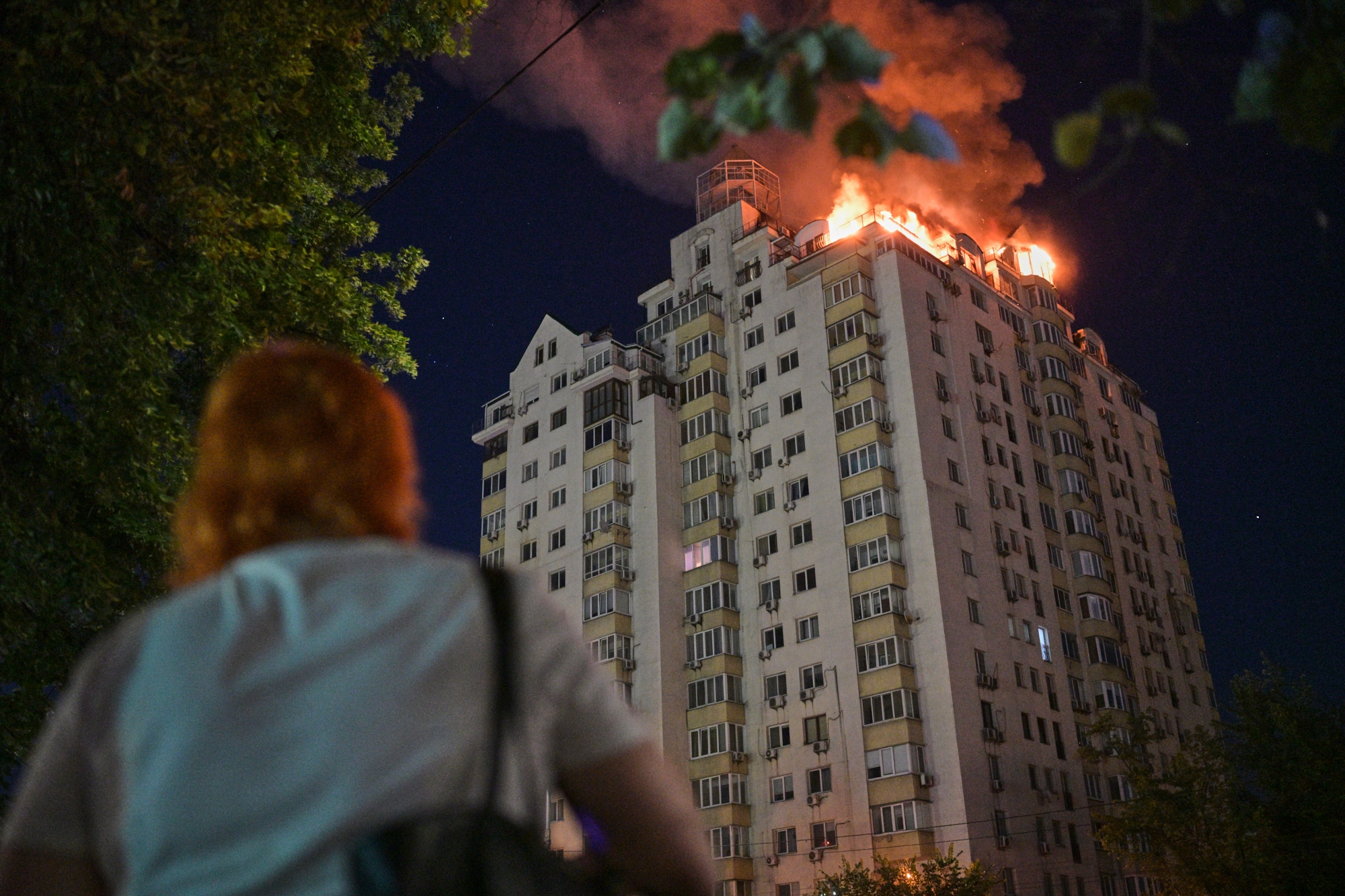
The brutal reality of the war in Ukraine just crashed down on the capital again. Overnight, Russia unleashed an 11-hour barrage of drones and missiles straight into Kyiv, killing at least 17 civilians and wounding 86 others. The attack crumpled apartment buildings and left a central boulevard hotel burning. Residents spent the night wedged into crowded subway stations, a familiar horror now in its fifth year.
Moscow isn't hiding its motives. The Russian Defense Ministry openly called the bombardment retaliation. Ukraine has spent the last 40 days executing a systematic, deep-strike campaign against Russia's energy heartland. Kyiv's long-range drones are hitting Russian oil refineries hard, causing genuine fuel crises inside Russia, forcing petrol rationing, and pushing the Kremlin into a corner. Don't forget to check out our earlier post on this related article.
This isn't just a random escalation. It is a calculated, high-stakes economic slugfest. Ukraine is betting that choking Russia's oil profits will force Vladimir Putin to the negotiating table. Putin is betting he can terrorize Ukraine into submission first.
The Cost of Kyiv's Fuel War
For months, the conventional wisdom suggested Ukraine could only fight a defensive war on its own soil. That thinking is obsolete. Kyiv's 40-day blitz has brought the economic pain of this war directly to Russian citizens. If you want more about the context of this, Reuters provides an excellent summary.
- Refineries in Flames: Major facilities, including the Moscow oil refinery and industrial sites in regions as far as Nizhny Novgorod, have taken direct hits from Ukrainian long-range drones.
- Domestic Shortages: The strikes have disrupted refining capacity so severely that multiple Russian regions have introduced petrol rationing to prevent total exhaustion of supply.
- Crimean Emergency: In occupied Crimea, a critical logistical hub for the Russian military, authorities declared a state of emergency following relentless targeting of supply lines.
Putin himself recently admitted that these drone strikes are driving domestic fuel shortages. For an economy that relies entirely on oil to fund its war machine, these strikes hit where it hurts most. But the blowback for Ukrainian civilians is immediate and devastating.
An 11-Hour Night of Horror in the Capital
As dawn broke on Thursday, the true scale of Russia's retaliation became clear. Kyiv Mayor Vitali Klitschko announced a city-wide day of mourning as emergency crews clawed through the rubble of shattered homes.
In one district, the first six floors of an apartment complex completely collapsed after a direct hit. Debris rained down across all corners of the city of three million people. Ukrainian Foreign Minister Andrii Sybiha called it a "night of horror," pleading again with Western allies for advanced air defense systems. Poland even scrambled fighter jets to protect its own airspace as missiles flew close to the NATO border.
The Kremlin's strategy is transparent. By escalating the pain for civilians, Moscow wants to break the domestic political will behind Ukraine's oil offensive. Kremlin spokesperson Dmitry Peskov made it clear that Russia will continue to increase pressure on Kyiv until its strategic goals are met.
The Strategy Behind the Scarcity
Why is Ukraine risking these devastating retaliatory strikes? Because the frontline in the east is largely stagnant, and diplomatic efforts have completely stalled.
Western analysts point out that Putin still believes time is on his side. He expects Western military aid to fizzle out, and he believes Ukraine's resolve will eventually crack under relentless strategic bombing. Kyiv knows it cannot win a pure war of attrition against a country with more bodies to throw into the meat grinder.
By targeting oil infrastructure, Ukraine is attempting to asymmetricly degrade Russia's ability to fight. Tankers can't run without fuel. Logistics trucks can't move supplies without diesel. And the Russian state cannot pay its soldiers if its primary export revenue dries up.
It is a brutally logical strategy, but as the bodies are pulled from the rubble in Kyiv, the human cost of this economic warfare remains tragically lopsided.
If you want to understand where this conflict goes next, stop looking just at the trench lines in the Donbas. Watch the smoke rising from the refineries inside Russia, and watch how much more horror Kyiv can withstand.
For those following the conflict, the most critical metrics to watch right now aren't territorial gains, but the weekly volume of Russian refined oil output and the speed of Western air defense deliveries to Ukraine.