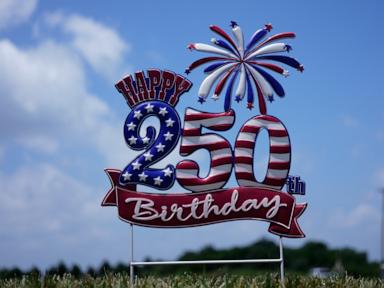
Throwing a birthday party for a divided nation is a brutal corporate assignment. This summer, America reached its semiquincentennial milestone. You might think the US 250th anniversary would be a goldmine for brands and nonprofits looking to cash in on collective pride. It is not. Instead, corporate boardrooms and charity directors are finding themselves trapped in a political minefield where a simple flag design can alienate half their customer base.
The traditional playbook for patriotic marketing is completely broken. Fifty years ago, during the 1976 Bicentennial, corporations flooded the market with red, white, and blue merchandise to general applause. Today, national pride is at an all-time low. A recent survey from The Associated Press-NORC Center for Public Affairs Research reveals that far fewer Americans view their country as exceptional compared to just a decade ago. The American flag itself has turned into a partisan symbol.
For corporate decision-makers, the stakes are incredibly high. If you wave the flag too loudly, you are accused of partisan posturing. If you ignore the milestone completely, you risk looking unpatriotic. This creates a massive headache for the major players trying to navigate this toxic environment.
Two Flags Two Americas
Nothing illustrates this cultural fracture better than the bizarre existence of two competing institutional commissions for the same anniversary.
On one side sits America250. This is the official, nonpartisan body established by Congress back in 2016. Led by former US Treasurer Rosie Rios, its branding relies on a sleek, continuous red, white, and blue ribbon that loops to spell out the number 250. It is designed to look modern and inclusive.
Then there is Freedom 250. Created late last year by President Donald Trump and run by his close political allies, this alternative group offers a completely different aesthetic. Its logo features a traditional serif font wrapped inside a ring of 13 stars. It is an explicit nod to the original colonial flag.
This institutional split has forced everyday consumers to choose sides at the grocery store. Average shoppers notice the difference. Many citizens have openly stated they will only buy merchandise featuring the official America250 ribbon, viewing the alternative Freedom 250 logo as a partisan weapon. Others reject the official commission entirely because they associate any centralized celebration with whatever administration they happen to oppose.
When the celebration itself splits into rival factions, corporate sponsorships fall apart. Look at what happened to Freedom 250’s signature event, the Great American State Fair. It turned into a marketing disaster. Nearly every scheduled musical act pulled out at the last minute. Why? Because their managers realized the event had become a campaign-style rally rather than a neutral cultural celebration. Musicians do not want to alienate half their streaming audience for a single gig.
The Corporate Dilemma from Soda Cans to Cookouts
Major consumer packaged goods companies are trying to walk a tightrope, but the rope is fraying.
Coca-Cola tried to resurrect the magic of its legendary 1971 Hilltop commercial. They reimagined the famous tune as "I'd Like to Buy America a Coke." Alongside the nostalgic media campaign, they rolled out custom mini-cans for all 50 states, Washington, D.C., and Puerto Rico. To make the campaign palatable to skeptics, Coke tied the product launch to a goal of collecting 250,000 volunteer hours through its local bottling networks. They focused on safe, universally agreeable causes like food insecurity, disaster relief, and supporting military veterans.
Walmart has taken a similar approach, stocking its shelves with commemorative goods while funding local community tributes. Clorox jumped in by putting limited-edition packaging on household staples like Hidden Valley Ranch, Kingsford charcoal, and Burt’s Bees.
These campaigns attempt to bypass Washington politics by focusing heavily on local pride and regional culture. Coca-Cola's state-specific murals are painted by local artists to reflect neighborhood history rather than macro-nationalism.
Even with these precautions, the risk of a consumer backlash remains high. Every piece of creative copy is viewed through a hypersensitive ideological lens. If a brand emphasizes diversity in its 250th anniversary ads, it faces boycotts from the right. If it focuses heavily on traditional founding mythology, it faces cancellations from the left.
Nonprofits Caught in the Crossfire
You might assume that charitable organizations would have an easier time. After all, volunteering is inherently good.
Unfortunately, the nonprofit sector is suffering from the exact same institutional poison. One of the tentpoles of the official celebration is an initiative called America Gives. The program encourages citizens to log their volunteer hours in a centralized national tracker. The goal is to spark a historic wave of civic service.
The results have been underwhelming. The national tracker crawled past 38 million hours just before the July 4th holiday weekend. That sounds like a big number until you look at the baseline data. According to an AmeriCorps analysis of Census Bureau data, Americans logged roughly 4.99 billion hours of service in a single year between 2022 and 2023. The 250th anniversary campaign is capturing a tiny fraction of normal American altruism.
Nonprofit leaders are frustrated. Merle Heatwole, the Salvation Army USA National Commander, admitted that many local churches and volunteer groups have backed away from the program. They are terrified that the national tracking tool is secretly tied to a specific political agenda. Volunteers keep asking whether the initiative is connected to the current Trump administration or prior Democratic operations. Fear of partisan contamination is paralyzing local action.
Compounding this cultural anxiety is a brutal structural reality. The federal volunteer framework is falling apart. The Trump administration made deep cuts to AmeriCorps in 2025. This move stripped the federal agency of critical funding and decimated the local infrastructure that nonprofits rely on to coordinate large-scale service events. Charities cannot easily host thousands of new volunteers if they do not have the staff to manage them.
Why the Youth Market is Ignoring the Milestone
If you are trying to reach Gen Z and younger millennials with patriotic messaging, you are screaming into a void.
Audra Watson, who runs youth civic programs at the nonprofit C&S, is currently managing a massive project to engage 20 million young people over a three-year period. Her data shows that the vast majority of young adults are completely unmoved by the 250th anniversary.
The young people who do get excited about the milestone are what organizers call hand-raisers. These are individuals who were already obsessed with history or civic tech. They are not the average consumer. For the broader demographic of 14-to-24-year-olds, the macro narrative of American exceptionalism feels deeply disconnected from their daily economic realities.
Young activists are highly active, but they operate through a hyper-local lens. They care about climate change in their city, food deserts in their neighborhoods, and local school board policies. When a brand or a large legacy nonprofit tries to wrap these issues in a giant American flag for a corporate anniversary, young consumers see right through it. They view it as a hollow public relations stunt.
How to Build a Polarized-Proof Brand Strategy
If your organization needs to navigate a major cultural milestone in this environment, stop using the 1976 playbook. You cannot copy past strategies. Here are the practical steps you should take immediately to protect your brand while still engaging your audience.
De-escalate the National Narrative
Stop trying to solve the national identity crisis in your ad copy. Do not make sweeping statements about what America means. Instead, shrink your geographic focus. Highlight individual town histories, regional craftspeople, or specific local community projects. People who hate federal politics still love their hometowns.
Separate Branding from Political Organizations
Avoid aligning your business directly with disputed commissions or rival political committees. You do not need an official stamp of approval from a partisan group to celebrate your company’s own history or your local community’s achievements. Keep your logos neutral and your partnerships clean.
Lead with Operational Capacity
If you are a nonprofit launching a service drive, fix your internal operations before you invite the public. Do not promise an incredible volunteer experience if your local chapters lack the staff to run it. A chaotic, disorganized service day does more damage to your long-term donor retention than doing nothing at all.
Focus on Tangible Execution Over Rhetoric
Consumers are exhausted by corporate statements and empty promises. If you want to mark a milestone, do not just release a heavily produced video or sell a flag-printed t-shirt. Fund a concrete piece of infrastructure. Build a park, update a community kitchen, or provide scholarships for local trade students. Let your actions do the talking.
The companies and charities that survive this anniversary are the ones that understand patriotism is no longer a consensus marketing tool. It is a fragile cultural dynamic that requires cold, calculated management. If you cannot execute with total neutrality, focus on your core business and leave the flag-waving to someone else.