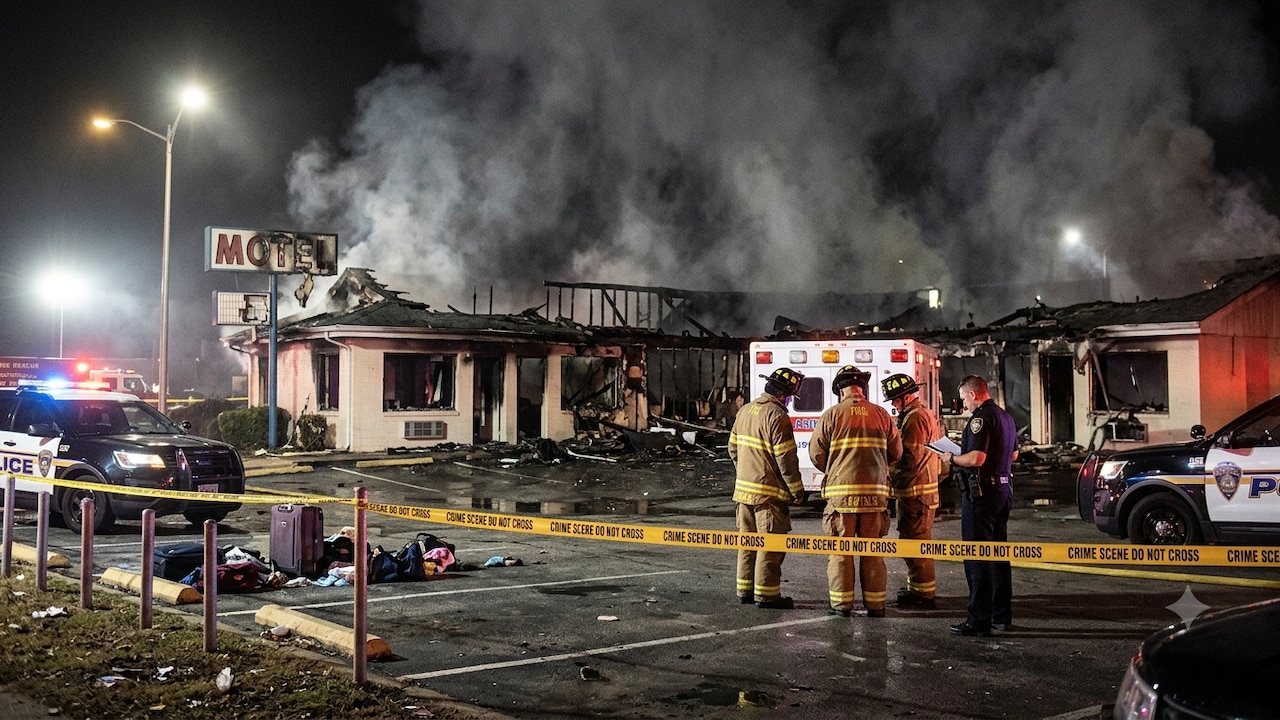
The American dream often requires families to live where they work, blending their home lives with commercial properties. This exact arrangement turned fatal in Ohio when a horrific US motel fire tragedy claimed the lives of three family members from Gujarat, India. Hiteshbhai Suthar, his wife Hinaben, and their 20-year-old daughter Ishani died of suspected suffocation when a massive blaze ripped through the Econo Lodge motel in Wooster, Ohio. They spent their final moments trapped inside a bathroom, desperately seeking refuge from thick black smoke. Their story isn't just an isolated tragedy. It highlights the stark safety vulnerabilities facing thousands of immigrant families who operate and live inside budget hospitality properties across the United States.
Understanding what went wrong during this incident can save lives. When emergency sirens blared at 1:30 AM, a normal overnight shift turned into an inescapable trap. The Suthar family had migrated from Nadiad in Gujarat's Kheda district just two years prior, seeking a stable future. Hiteshbhai worked at the motel, and the family lived in an apartment section attached to the property. When the flames broke out, they found themselves completely cut off from the main exits, leading to a frantic phone call to the front desk that haunts the surviving staff. You might also find this related story interesting: Why Pakistan Public Healthcare Is Collapsing Under Broken Promises.
Inside the Fatal Incident and the Panic in Room 104
The fire began deep within the structure of the Econo Lodge, located about 96 kilometers south of Cleveland. By the time the Wooster fire departments arrived, heavy flames were already burning through the roof of a detached rear section of the building.
April Graser, the hotel clerk on duty, received a panicked call from the family's room. She recounted hearing the family screaming and crying as smoke began filling their living quarters. They couldn't get out of the door. The hallway was already an impassable wall of heat and toxic gas. As discussed in latest coverage by BBC News, the implications are notable.
In a moment of pure desperation, the family was advised to retreat to the bathroom, turn on the water supply, and wait for emergency responders. They locked themselves inside, hoping the running water would cool the air and block the smoke. It didn't work. The fire took hours to control, and all three family members succumbed to smoke inhalation before rescuers could reach them.
The Myth of the Safe Bathroom Refuge
Hide in the bathroom and turn on the shower. You hear this advice passed around as a common survival hack for hotel fires. In reality, it's a strategy that frequently proves fatal.
Structural fires in budget motels burn hot and fast due to the materials used in modern construction and furnishings. Synthetic fabrics, carpets, and wood frames produce massive amounts of carbon monoxide and hydrogen cyanide. A standard bathroom door offers almost zero fire rating. It will burn through or warp within minutes, allowing toxic gas to seep into the small, unventilated space.
Turning on the shower does not scrub toxic gases out of the air. Worse, hot water can create steam that mixes with smoke, making the air even harder to breathe and accelerating thermal burns in the lungs. Unless you have absolutely no other choice and are actively sealing the cracks of the door with wet towels while opening a window to the outside, staying inside an unventilated bathroom during a major structural fire guarantees smoke inhalation.
The Unspoken Risks of Living Where You Work
Thousands of families from India, particularly from the state of Gujarat, move to the United States to manage independent motels, gas stations, and convenience stores. To maximize profits and keep operational costs low, managers frequently live on-site in modified apartments right next to the front desk or utility rooms.
This lifestyle creates a unique set of hazards that standard residential homes don't face.
- Commercial properties house large electrical grids, commercial laundry dryers, and heating systems that run constantly.
- Budget motels built decades ago often lack modern hardwired smoke alarm networks or automated sprinkler systems in every single unit.
- Living quarters are often retrofitted into spaces that lack multiple egress points, meaning a fire in the adjacent utility room completely blocks the only exit.
The Suthar family's tragedy reflects a wider pattern. Budget hospitality properties are statistically more prone to rapid-spread fires due to deferred maintenance and older structural frameworks. When an entire family lives in the belly of the business, a commercial disaster instantly becomes a family catastrophe.
Critical Evacuation Rules to Survive a Building Fire
When you stay at a motel or live on a commercial property, you can't assume the building's fire suppression systems will save you. You must take your safety into your own hands the moment you check in or move into a space.
Scout the Emergency Exit Paths Immediately
Don't wait for an emergency to locate the stairs. The moment you enter a room, open the door and count the number of doors between your room and the nearest exit. In a real fire, thick smoke will completely blind you. You will need to feel your way along the wall in total darkness. Knowing the exact count can keep you from missing the exit door.
Always Test the Door Handle Before Opening It
If you wake up to a fire alarm, never just throw the door open. Feel the door and the metal handle with the back of your hand. If it feels hot, the fire is right outside your door. Opening it will cause a backdraft, pulling flames directly into your room. If the door is cool, open it slowly with your shoulder pressed against it, ready to slam it shut if smoke or heat rushes in.
Crawl Low Under the Smoke
Smoke rises, carrying the highest concentrations of toxic gas and superheated air toward the ceiling. The cleanest, coolest air will always be within 12 to 24 inches of the floor. If you must move through a smoke-filled hallway, get down on your hands and knees. Keep your head down and crawl.
Create an Emergency Blockade If Trapped
If the door is hot and you cannot escape through a window, you must defend your space. Do not run to the bathroom and hide. Stay in the main room where fire crews are more likely to look for survivors from the outside.
- Shut the door tight.
- Stuff wet towels, sheets, or clothing into every crack around the door frame to seal out smoke.
- Turn off any air conditioning or heating units that might draw smoke into the room.
- Signal out the window using a bright piece of clothing or a flashlight to alert rescuers to your exact location.
What Needs to Change in the Hospitality Sector
Local governments and corporate lodging brands must enforce stricter safety standards for on-site employee housing. Too often, employee quarters are treated as an afterthought during safety inspections. Every living space attached to a commercial property requires functioning, interconnected smoke detectors, working fire extinguishers, and at least two distinct paths to the outside.
Relying on old advice and outdated structures costs lives. The loss of Hiteshbhai, Hinaben, and Ishani Suthar should serve as an urgent wake-up call for property owners and immigrant business associations alike to audit their safety setups immediately.
Check your smoke detectors today. Know your exit paths. Don't let your home become an inescapable trap.