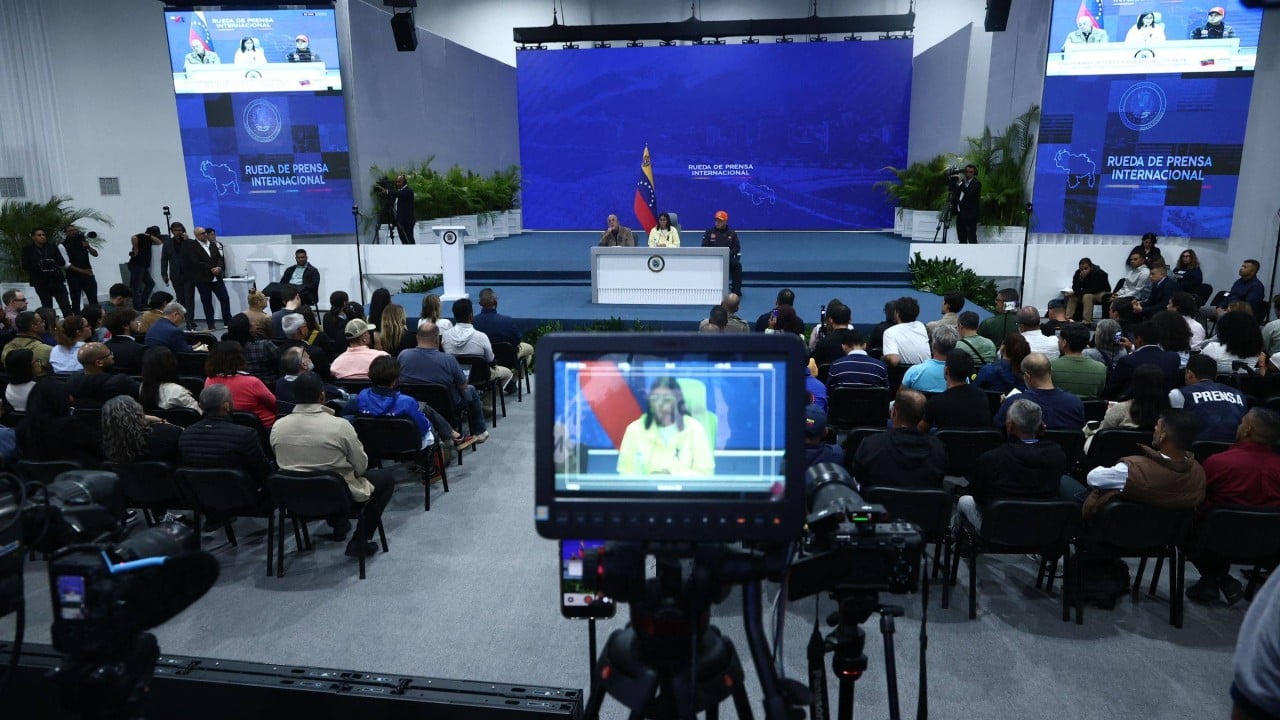
Thousands of people are buried under concrete along Venezuela’s northern coast right now. We don't know the exact number because the government isn't counting them. Instead, Interim President Delcy Rodríguez spent her latest press conference fighting with international journalists and defending her administration's heavily criticized rescue efforts.
The crisis kicked off on June 24 when twin earthquakes measuring 7.2 and 7.5 magnitude smashed into the country less than a minute apart. It flattened nearly 200 buildings across Caracas and the hard-hit coastal state of La Guaira. The official death toll just climbed to 2,595. But everyone on the ground knows that number is a fiction.
While Rodríguez insists her government acted within hours, an unofficial missing persons database run by civil society groups and the opposition tells a wildly different story. Over 38,000 people remain unaccounted for. The United Nations is quietly buying 10,000 body bags. The gap between official spin and reality is widening by the hour.
The First 48 Hours and the Bare Hands Rescue
When a disaster hits, the first two days determine who lives and who dies. In Venezuela, those critical hours were lost.
Rodríguez wore a black mourning ribbon on her sleeve while addressing reporters at the Generalisimo Francisco de Miranda Air Base. She forcefully rejected claims that citizens were left to fend for themselves. "We did not wait one day, two days or three days. We activated immediately," she claimed. She even waved her phone at a camera to show her WhatsApp messages ordering a disaster response.
But texts don't move tons of collapsed concrete.
The reality on the ground was a total breakdown of state capacity. Firefighters lacked fuel for their trucks. Civil defense teams used cellphone flashlights because they had no portable lighting. Heavy machinery never arrived in the neighborhoods that needed it most.
Because the state failed to deploy equipment, residents did the only thing they could. They used their bare hands. Neighbors formed human chains to move chunks of rubble, listening for screams from collapsed basements.
Instead of sending excavators, the government sent the military. Rodríguez justified blockading the hardest-hit zones like La Guaira by claiming that "bad actors" were clogging the roads with uncoordinated aid deliveries. Heavily armed military police in balaclavas patrolled the ruins. They had rifles, but they didn't have drones, sound detectors, or power tools. They watched while families dug for their grandmothers with broken shovels.
Shifting Blame to the Dead and the Media
When a government can't provide basic services, it usually looks for a scapegoat. Rodríguez blamed two targets: private developers and the press.
Several signature social housing towers built under former President Hugo Chávez collapsed during the tremors. When asked about this, Rodríguez claimed without a shred of evidence that 80% of the destroyed structures were privately developed. It was a blatant attempt to protect the legacy of the socialist movement that built her career, even as survivors pointed out the shoddy materials used in state-run construction projects.
Then came the attack on the press. Rodríguez accused international news outlets of running "media laboratories" to weaponize the tragedy against her fragile administration.
This isn't just a natural disaster. It's a massive political test. Rodríguez took power back in January 2026 as an interim leader after the United States ousted Nicolás Maduro. Her 180-day temporary mandate expired the very week these earthquakes hit. She's desperate to project control to her backers in Washington and her rivals at home.
The political absurdity peaked when Diosdado Cabello, the country’s feared security chief, was caught on camera berating an American rescue team as they tried to locate bodies. It sparked outrage online, yet highlighted the surreal political friction holding back relief efforts.
The Makeshift Morgues and the Deportee Tragedy
The infrastructure failure is most obvious at the ports. In La Guaira, authorities set up a makeshift morgue beneath massive grain silos.
The smell of decomposition around the complex is overwhelming. Pickup trucks, old cars, and motorcycles arrive in a steady stream, dropping off bodies wrapped in blankets. Workers dump bags of lime over the area to mask the putrid odor.
Outside the gates, people wait for days just to read handwritten lists of names. Alicia Mendoza spent days searching for her 38-year-old son, Alejandro Bisbal. Her story exposes a dark twist to this disaster.
Alejandro was one of more than 100 Venezuelan migrants deported from the United States just hours before the earthquake struck. The flight landed, and the deportees were processed and sent to a coastal hotel. That hotel was completely leveled by the 7.5 magnitude tremor. Many of them survived the US immigration system only to be buried alive within hours of touching down in their homeland.
Hospitals in Caracas are facing a full-blown medical crisis. The World Health Organization reported massive surgical backlogs, overcrowding, and a total collapse of biosafety measures. There is no running water in some clinics. Trauma patients are lying on floors while doctors beg for basic antibiotics.
Tectonic Plates and Broken Promises
Venezuela’s coast sits directly on the boundary between the Caribbean and South American tectonic plates. It's an active zone. The country knows earthquakes. The historic 1812 Caracas quake killed 30,000 people.
The issue isn't that the ground shook. The issue is that decades of corruption and economic collapse stripped the country of its ability to absorb the shock.
Before the disaster, the government pushed citizens to use VenApp—a mobile application originally designed to spy on political dissidents after the disputed 2024 election—to report missing persons. Now, they're using that same tool of state surveillance to track the dead.
International help is arriving. Teams from 27 countries are on the ground. Specialists from the US, the UK, and Argentina brought search dogs, thermal imaging cameras, and listening gear. They're pulling people out alive, including a security guard rescued after eight days in a dark basement. But these foreign teams are working around a government that seems more interested in managing its image than managing a catastrophe.
What Needs to Happen Next
If you want to support the relief efforts or understand how to navigate this crisis, stop looking at official government press releases. Focus on these direct actions:
- Rely on Civil Society Data: Track missing persons and ground updates through independent NGO networks and opposition-led databases rather than state media outlets. They have logged tens of thousands of names that the interim government ignores.
- Direct Aid to Local Groups: If you are looking to donate, route funds through international agencies like the UN Refugee Agency or established local non-profits operating directly inside La Guaira clinics. Avoid state-run channels to ensure supplies reach victims instead of being impounded by security forces.
- Demand Airspace Openings: International pressure must focus on keeping Venezuelan airspace open. The administration has already threatened to block incoming flights from exile leaders trying to coordinate independent aid distribution. Humanitarian corridors must remain demilitarized.