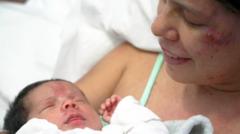
When a multi-story concrete building drops from beneath your feet, logic dictates your chances of survival are nearly zero. Yet, amid the massive devastation of the twin earthquakes that tore through Venezuela, a mother and her 18-day-old newborn beat those odds. Dayana Patino and her tiny son, Juan David, survived 32 hours pinned underneath the heavy concrete wreckage of their eighth-floor apartment block in the coastal city of La Guaira.
The raw numbers coming out of Venezuela are staggering. The doublet earthquakes—a rare occurrence where two severe shocks strike back-to-back—measured 7.2 and 7.5 magnitude. They hit within just 39 seconds of each other. That double-punch completely flattened over 250 buildings, claimed more than 1,450 lives, and left an estimated 50,000 people missing.
Most people look at a story like Dayana’s and call it a pure miracle. While there is no denying the extraordinary luck involved, a close look at her 32 hours under the rubble reveals a striking masterclass in survival psychology and physical endurance.
The Anatomy of a Structural Collapse
To understand how anyone survives an eighth-floor collapse, you have to look at the physics of how buildings fall. When the twin quakes hit on Wednesday, Dayana was washing dishes. Within seconds, she felt herself flying, then sinking into a chaotic mix of dirt, rushing water, and shattering concrete.
This type of sudden structural failure often creates what search and rescue teams call "survivable voids." When floors pancake onto one another, large pieces of furniture, heavy appliances, or structural pillars can wedge against falling concrete slabs. This leaves small pockets of space underneath. Dayana was crushed against furniture, which inadvertently acted as a shield, preventing the full weight of the ceiling from crushing her and her baby instantly.
Her physical position was brutal. Her left leg was pinned flat under a heavy block of concrete. Her temple was jammed hard against a jagged rock. She could not shift her body or move her limbs. In these tight, dark voids, hyperventilation is a quick killer. It burns through precious oxygen supplies and accelerates dehydration. Dayana’s immediate instinct to stay calm wasn't just a emotional choice; it was a biological necessity that preserved her life.
Maternal Instinct as a Survival Engine
The human body under extreme stress typically defaults to a fight-or-flight response, which floods the system with adrenaline, spikes the heart rate, and triggers panic. In a confined space, panic causes irrational behavior, like screaming continuously until exhaustion sets in.
Dayana managed her energy like a seasoned survival expert. She stopped screaming when she realized the thick layers of dust and concrete completely muffled her voice. Instead, she made a tactical decision. She resolved to save her breath and scream only when she heard distinct footsteps or rescue voices near her position.
Her core focus shifted entirely to the 18-day-old infant in her arms. She kept her focus on checking his breathing. Every few minutes, she reached out in the pitch black to touch his nose, using his tiny breaths as physical proof that they were both still alive.
Psychologists specializing in trauma note that having a clear, external purpose during a disaster dramatically improves survival rates. The intense need to keep her child alive suppressed her own panic, kept her mind sharp, and stopped her from slipping into unconsciousness despite her head injury and pinned leg. Finding a bible underneath her body in the dark provided an extra psychological anchor, giving her the emotional endurance to hold out through the night.
Navigating the Golden Window of Disaster Rescue
In urban search and rescue, the first 72 hours are known as the golden window. During this timeframe, the probability of extracting survivors alive is at its peak. After 72 hours, dehydration, internal bleeding, and crush syndrome begin to cause rapid mortality rates.
The rescue of Juan David and Dayana occurred at the 32-hour mark, deep within that critical window. International teams have flooded into the country to assist local authorities. Specialist crews equipped with heavy generators, listening devices, concrete cutters, and trained search dogs arrived from the UK, Mexico, Brazil, the US, and Spain.
The rescue itself was an incredibly delicate engineering task. Pulling a baby out of a collapsed high-rise requires extreme precision. Moving one wrong piece of debris can trigger a secondary shift in the unstable pile, crushing anyone trapped below. Rescuers successfully cleared a narrow pathway to pull baby Juan David out first to the sound of cheers from the crowd. It took another tense 90 minutes of careful digging to free Dayana without shifting the concrete pinning her leg.
The Realities of Seismic Vulnerability
This disaster highlights a massive issue that structural engineers have warned about for years. Venezuela’s coastal cities, including La Guaira and parts of Caracas, feature high-density housing built on steep, seismically active terrain. A decade of severe economic hardship means building maintenance, structural retrofitting, and strict code enforcement have lagged far behind.
When a 7.5 magnitude quake strikes an area with fragile infrastructure, older concrete towers lack the flexibility to sway. Instead, they sheer at the joints and collapse straight down. This structural vulnerability is why the missing persons list has grown so exponentially, leaving volunteers and international crews working around the clock to clear debris by hand where heavy machinery cannot fit.
Actionable Steps for Earthquake Preparedness
You can't predict when a major fault line will slip, but you can alter how you react in those first ten seconds. Survival data from major global earthquakes shows clear patterns in what keeps people alive.
Identify your voids beforehand
Look at your living space. Identify heavy, solid objects like a reinforced structural column, a heavy hardwood table, or a structural structural frame. In a collapse, these are the items that hold up falling slabs and create life-saving voids.📖 Related: pa marriage license chester countyDrop, cover, and hold on
Do not try to run out of a moving building. Most injuries occur when people try to navigate stairs or hallways while the ground is shifting. Drop to your hands and knees, cover your head and neck, and crawl under shelter if it is nearby.Conserve your resources if trapped
If the worst happens and you are trapped, protect your airway from concrete dust using your clothing. Do not scream continuously. Tap rhythmically on pipes or walls with an object if possible. Sound travels much further through structural steel and concrete than it does through the air.Prepare a critical document grab-bag
Keep physical copies of identification, medical records, and essential medications in a waterproof, easily accessible bag near your exit. When systems fail, having immediate access to your medical history can save your life at a triage center.
Dayana Patino and her son are currently recovering in a clinic in Caracas. Their survival is a vivid reminder that clear thinking, physical endurance, and a refusal to give in can keep you alive when everything else falls apart.