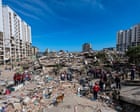
Five days have passed since the twin earthquakes tore through northern Venezuela. The initial 72-hour window, the golden frame of time where trapped people can survive without water under tons of concrete, is gone. Now, rescue crews are working against pure biology and physics.
When the magnitude 7.2 and 7.5 tremors struck less than sixty seconds apart on Wednesday evening, June 24, 2026, they didn't just rattle windows. They literally pancaked nearly 190 buildings and heavily compromised hundreds more, mostly in the coastal state of La Guaira. Witnesses say structural layers fell like a deck of cards. Learn more on a connected issue: this related article.
Right now, the confirmed death toll sits at 1,450 people. The actual number is almost certainly much higher. Tens of thousands remain unaccounted for, and families are left clawing through the dust with their bare hands.
http://googleusercontent.com/lmdx_content/ADSVgmxydiJCAAdJHxHBEvqUnKKDedwUDyucpfDuSXhwjLCoNqBxvZaIrexGvgpGWZwZViuWCXktycOAYBgoswVyOXwLQQlruUpJlLoIpvoYgtCXZZlZiqBYOaKsLEaNJtJdFtbRncQrOTYWNcgegqrqcCpzgeSgvSXdmNLfJrNEQYtPWplUFcSmjkNspxkIQctZKlvtvjFLzOkVBsHucEdZJgSyY1125 More analysis by USA.gov explores comparable perspectives on this issue.
Miracles in the Rubble of Caraballeda
Despite the terrible timeline, hope isn't completely dead. Just yesterday in the coastal town of Caraballeda, French and American specialist teams managed to pull a father and his teenage son out from a crushed concrete pocket. They spent nearly four days trapped in total darkness.
Interim President Delcy Rodríguez point-blank refused to call off the operation after the rescue. She made it clear that as long as people are coming out alive, nobody is packing up their gear.
But finding survivors at this stage requires precision equipment. Over 2,200 specialists and 140 highly trained search dogs from 27 countries have landed to assist local civil defense forces. Teams from Spain, Mexico, Argentina, and the United States are working alongside local emergency services, setting up field hospitals to treat injuries immediately on site.
The Logistics Nightmare on the Ground
Getting aid to where it actually needs to go is a logistical mess. The earthquakes caused extensive damage to roads, bridges, and regional airport runways. The United Nations emergency relief chief, Tom Fletcher, described the destruction to vital transport networks as completely overwhelming.
In coastal zones like Catia La Mar and Caraballeda, the situation is desperate. People are terrified to go back inside any structure that's still standing. Thousands are sleeping out on the streets or in makeshift open-air camps, exposed to the elements and lacking basic sanitation. UNICEF reports that around 1.8 million people now need urgent humanitarian assistance, including 680,000 children who lack clean drinking water and food.
Years of severe underinvestment in Venezuela's domestic emergency services have made the response sluggish from the start. Local volunteer groups have had to step up to fill massive gaps, providing water, basic rations, and trauma counseling outside local mortuaries.
The Financial Fallout
The physical destruction is staggering. A preliminary satellite assessment run by the United Nations Development Programme uses automated digital tracking to evaluate the wreckage. They estimate direct physical damage at roughly 6.7 billion dollars.
That massive sum represents about six percent of the entire country's gross domestic product. It covers destroyed residential zones and economic assets, but it doesn't even count the long-term impact on infrastructure or the total halt of daily commerce. For an economy already dealing with systemic vulnerabilities, this is a heavy blow.
What Needs to Happen Instantly
Heavy lifting gear and specialized acoustic sensors must get prioritized at every blocked port and road checkpoint. Heavy concrete cutters and life-detecting radar are what save lives in this exact phase of a disaster, not generic supplies.
If you want to support the immediate relief efforts on the ground, avoid sending uncoordinated physical goods that clog up broken supply chains. Focus your contributions toward established international agencies like the UN Office for the Coordination of Humanitarian Affairs or trusted medical non-profits already running the active field hospitals in La Guaira. Direct funding allows field teams to source clean water bladders and medical supplies from nearby regional hubs without waiting for broken airports to clear.