Washington is playing the long game with Taiwan, and it has nothing to do with blind faith in the ruling party.
If you watch mainstream headlines, you might think the US only cares about the current pro-independence administration in Taipei. That is a massive misunderstanding of how American diplomacy actually works. The sudden flurry of high-profile Taiwanese opposition figures landing in the US capital tells a completely different story.
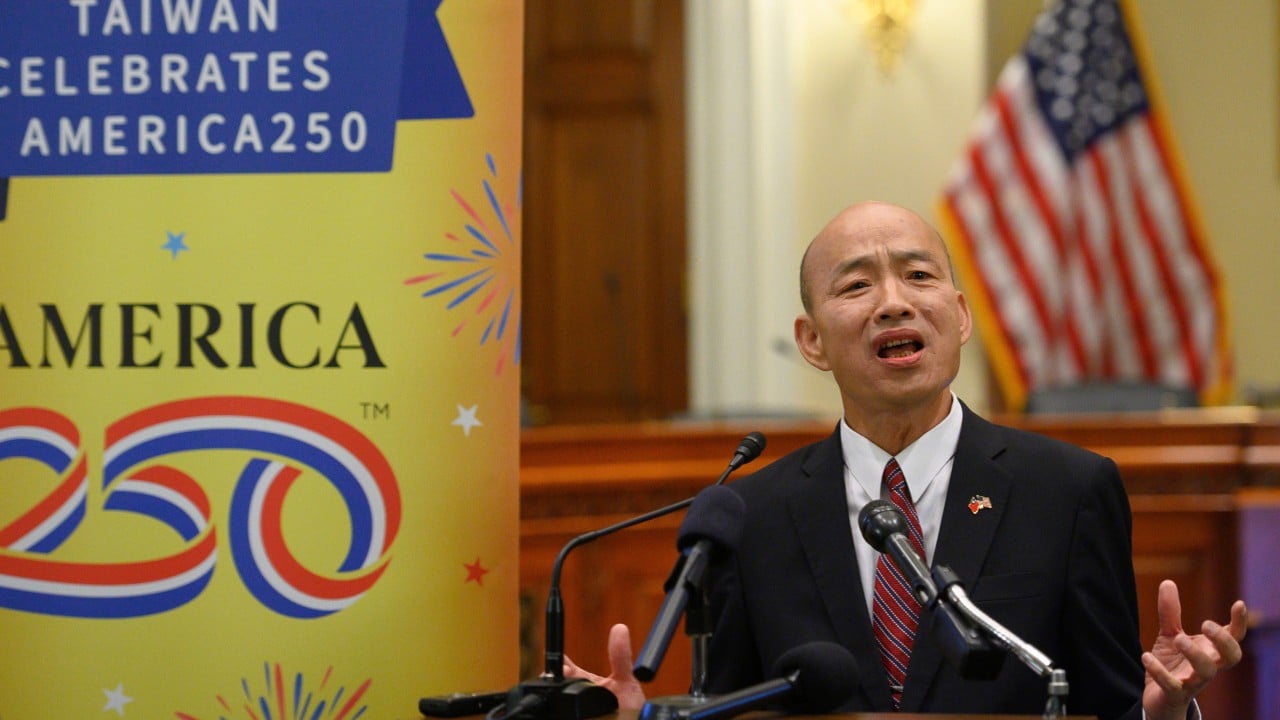
The latest and biggest move happened this week. Han Kuo-yu, the charismatic and polarizing Speaker of Taiwan's legislature and a heavyweight in the opposition Kuomintang (KMT) party, just wrapped up a high-stakes tour through Phoenix and Washington D.C.. He did not just get a polite nod from low-level staffers. He met with a bipartisan group of senators, spoke with over 30 House members, and sat down with officials from the White House and the Department of War.
This is not accidental. It is a calculated American effort to court, understand, and maybe even pressure the political party that could very well take power in Taiwan’s 2028 election.
The Three Arrivals That Woke Up Washington
Han Kuo-yu's trip is the climax of a three-part parade of KMT leaders heading west over the last few months. To understand what the US is doing, you have to look at the sequence.
First, Lu Shiow-yen, the influential mayor of Taichung and a massive favorite for the 2028 presidential ticket, made a quiet but highly watched trip to the US in March. Then, just weeks ago, the newly minted KMT Chairwoman Cheng Li-wun spent 15 days crisscrossing the US to smooth over growing anxieties in Washington. Finally, Han Kuo-yu arrived with an eight-person cross-party parliamentary delegation.
Washington is realizing that dealing exclusively with the ruling Democratic Progressive Party (DPP) is a bad strategy for long-term stability. Political power in Taiwan shifts. By rolling out the red carpet for Han, Lu, and Cheng, US policymakers are building insurance policies for a future where the KMT runs the show.
What the US Actually Wants From the KMT
Let's be completely honest about why American lawmakers are spending hours talking to a politician who once ran a explicitly pro-engagement campaign toward Beijing. The US is terrified that the KMT will compromise Taiwan's defense readiness in the name of regional peace.
The main point of friction right now is defense spending. Taiwan's opposition-controlled legislature recently slashed a proposed $40 billion special defense budget down to $25 billion. That did not sit well with defense hawks in Washington. Republican Senator Dan Sullivan openly warned that the KMT was playing with fire by trimming that budget.
During her trip, Chairwoman Cheng admitted she had to clear up many misunderstandings about her party’s approach. The US is using these meetings to send a clear message: if you want American backing, you have to pay for your own armor.
But it is a two-way street. Han Kuo-yu used his time in Washington to remind American leaders that Taiwan feels lonely in its heart on the global stage. He pushed hard for the US to help Taiwan gain access to international organizations and urged the Trump administration to stop delaying a vital $14 billion arms sales package.
Silicon Shield Diplomacy
There is another massive layer to this story that the political commentators often overlook, and it involves the desert of Arizona.
Before Han Kuo-yu or any of the other KMT officials even stepped foot in Washington, they made a mandatory pit stop in Phoenix. Why? To tour the massive semiconductor factories being built by Taiwan Semiconductor Manufacturing Company (TSMC).
Taiwan has surpassed Germany to become the fourth-largest trading partner of the US, a reality entirely fueled by the global demand for advanced computer chips. By visiting the Arizona fabs, KMT leadership is signaling to both parties in the US that regardless of who wins the presidency in Taipei, the supply chain that powers the global tech economy remains safe. It is a smart move that neutralizes the criticism that the KMT is too quick to align with Beijing's economic orbit.
Navigating the Reality of Taiwan Politics
If you want to understand where this relationship goes next, stop looking at the polite press releases and look at the actual actions you can take to track the situation.
First, keep a close eye on the defense budget votes in Taipei over the coming months. If the KMT continues to stall or cut military spending despite Han's warm reception in Washington, expect relations with US defense officials to sour rapidly.
Second, monitor the timeline of the $14 billion American arms delivery. If those weapons start moving faster, it means Han's face-to-face charm offensive with House and Senate leaders actually worked.
Washington is not trying to magically transform the KMT into a carbon copy of the DPP. They are doing something much more practical: ensuring that no matter which way the political wind blows in Taiwan, the bridge to Washington stays open.