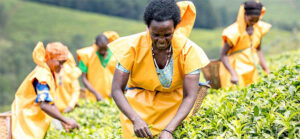
We need to talk about who is actually growing the food in Sub-Saharan Africa. If you look at any major report on African agriculture, you will see photos of women in bright clothing tilling fields. They are the face of farming on the continent. Yet, when it comes to funding, land ownership, and tech distribution, these same women get pushed to the margins. It makes no sense.
The Food and Agriculture Organization (FAO) named 2026 the International Year of the Woman Farmer. It is about time. For decades, global development strategies treated gender issues like a minor side project. They treated it like a box to check. That mindset is a massive mistake. You cannot fix food insecurity in Africa without putting women farmers at the absolute center of your strategy.
Let's look at the immediate reality. In Sub-Saharan Africa, about 64% of the population faced moderate or severe food insecurity recently. Think about that number. More than half the population does not know if they will have enough to eat. Meanwhile, over 30% of women between the ages of 15 and 49 suffer from anemia. The system is broken. But the fix isn't just throwing more money at industrial farming conglomerates. The fix is removing the artificial barriers that stop women from maximizing their fields.
The Elephant in the African Agribusiness Room
Women make up roughly 49% of the entire agrifood workforce in Sub-Saharan Africa. They do half the work. They manage the seed preservation, handle local distribution, process the raw crops, and run the village markets. They are also the ones keeping traditional knowledge alive about which seeds survive a dry spell.
Yet, their productivity lags behind men.
Why? Because they are less capable? Absolutely not. International Food Policy Research Institute (IFPRI) data proves that women are incredibly efficient farmers when they have the same tools as men. The productivity gap exists purely because women are denied the basic resources that male farmers take for granted.
Look at Tanzania. Economic updates show that closing the agricultural gender gap would lift roughly 80,000 Tanzanians out of poverty every single year. It would boost the nation's annual GDP growth by 0.86%. This isn't just a moral argument. It is cold, hard economics. When women farmers win, the entire economy grows.
The Real Bottlenecks Holding Women Farmers Back
To understand why this gap persists, we have to look at the daily reality of a woman farming in rural Zambia, Niger, or Kenya. She isn't failing because she lacks work ethic. She is failing because the legal and financial systems are rigged against her.
Land Rights That Exist Only on Paper
Land is everything in agriculture. If you don't own the dirt you till, you can't make long-term investments. You won't build irrigation. You won't plant high-yield, slow-maturing fruit trees.
An FAO study of 32 Sub-Saharan African nations found that men are far more likely to own or control agricultural land in 28 of them. In over 40% of those countries, the ownership gap is massive. Even worse, where laws actually exist to protect a woman's right to inherit land, those laws are rarely enforced in rural courts. Traditional customs override statutory law. A widow frequently loses her farm to her late husband's brothers. Without secure land rights, a female farmer is essentially a tenant on her own soil.
The Invisible Financial Wall
If you want to buy high-quality fertilizer or drought-resistant maize seeds, you need cash. If you don't have cash, you need a bank loan. To get a bank loan, you need collateral.
What do banks want for collateral? Land titles.
Since women rarely hold the land titles, they get turned away by formal banks. Only about 49% of women in Sub-Saharan Africa have a formal financial account, compared to 61% of men. This credit drought forces women to rely on informal moneylenders who charge extortionate interest rates. It keeps them trapped in a cycle of subsistence farming where they can never grow enough surplus to sell for a real profit.
The Smartphone Divide
Agriculture went digital years ago. Today, smart farmers use mobile apps to check weather forecasts, track commodity market prices in the capital, and buy inputs directly from suppliers.
Women are being left behind in this digital transition. In Sub-Saharan Africa, women are 29% less likely than men to use mobile internet. Around 205 million women across the continent have zero access to digital tools. When a male farmer knows exactly when the rains will start because of an SMS alert, and a female farmer has to guess, her crop yield suffers. This isn't a lack of farming skill. It is an information blackout.
Real Solutions That Actually Work
We don't need more vague declarations or high-level summits where politicians give speeches. We need practical models that have already proven they can shift the balance of power.
I have looked closely at what worked in Ethiopia. Through community-based programs, organizers bypassed traditional commercial banks entirely. They set up dedicated women's savings and loans cooperatives. This allowed women to pool their money, build collective credit, and purchase solar-powered water pumps, pipes, and quality seeds together. They didn't need a male relative to sign off on a bank loan. They became their own bank.
Another critical piece is changing how we design agricultural technology. Organizations like the West Africa Agriculture Productivity Program (WAAPP) started focusing heavily on training women researchers. In fact, three out of ten researchers trained under their program have been women.
This matters because female researchers tend to look at different problems. They look at how long a crop takes to cook, how easy it is to process by hand, and whether it can withstand sudden dry spells without expensive chemical treatments. They build tools that match the actual workload of rural women, who still handle the majority of household childcare and cooking alongside their field duties.
Actionable Steps to Move the Needle
If you are an investor, a policymaker, or an agribusiness leader, you can make a difference right now. Stop looking at women farmers as charity cases. Treat them as underserved business partners.
- Fund localized savings groups. Stop waiting for big commercial banks to open rural branches. Put your capital into village savings and loan associations run directly by local women.
- Invest in gender-blind digital distribution. Build voice-based mobile agronomy tools that work on basic feature phones. Don't assume every farmer has a smartphone or speaks the official national language.
- Enforce legal land registries at the local level. Pressure regional governments to co-title land to both husbands and wives. This protects women from land grabbing when family structures change.
- Buy directly from women-led cooperatives. If you run a supply chain or a food processing business, source your raw materials directly from women’s farming groups. Give them guaranteed contracts so they can plan their investments ahead of the season.
The math is simple. If you want to feed Africa, you have to fund the people who do the actual farming. Stop leaving half the workforce empty-handed.