You pack into a plaza with thousands of screaming strangers to watch a soccer match, expecting nothing but high-stakes sports drama and shared adrenaline. Instead, you end up running for your life or watching someone get wheeled away under a white sheet.
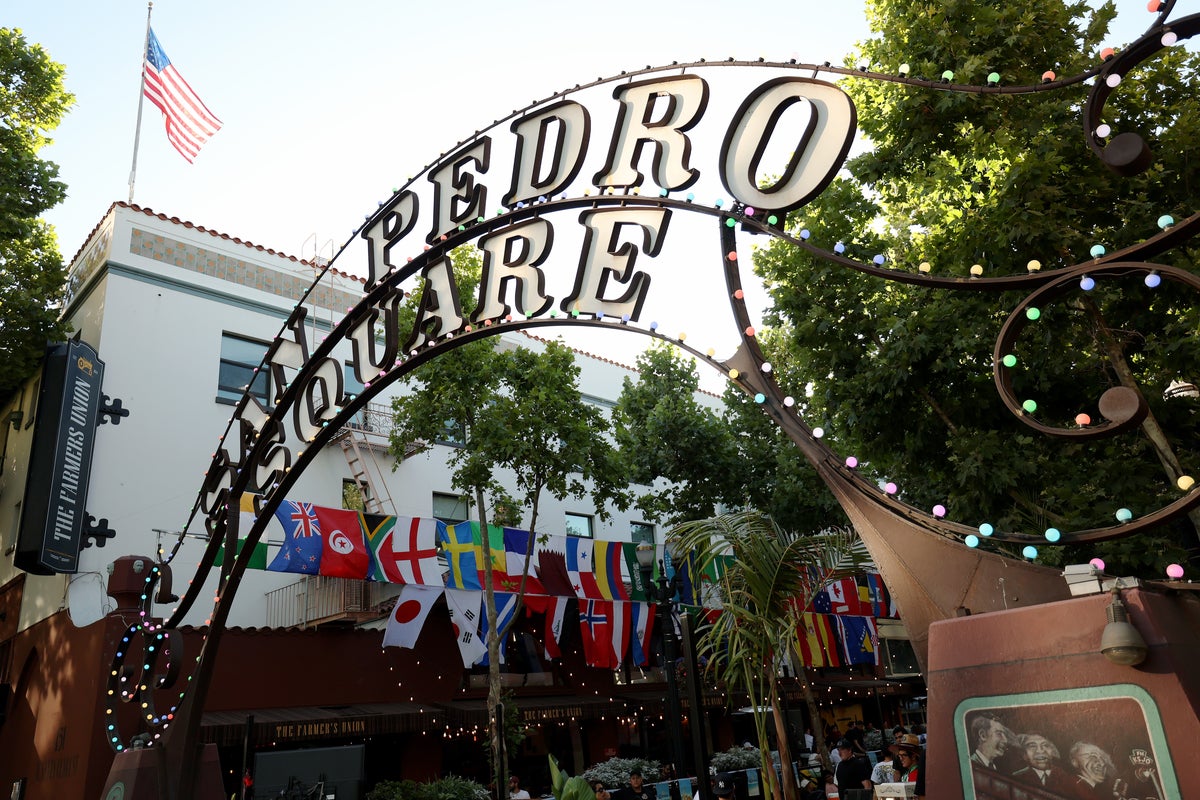
That nightmare became reality on Sunday night at San Pedro Square in San Jose, California. A sudden burst of gunfire shattered what was supposed to be a summer of celebration. When the smoke cleared, one person was dead on the scene and another was fighting for survival in a local hospital. Building on this theme, you can find more in: Why Super Typhoon Bavi Shocked Weather Experts And What It Means For Future Storms.
The most unsettling part? No game was even on. The matches had wrapped up hours earlier, yet violence found its way to the empty screens anyway.
http://googleusercontent.com/lmdx_content/iyeTtyGvQuOjGUXFYuhtHuciaByJEVRenYaVKBABURJvlfFJlkajUEyUNbmDupPLDgichoavDUlprCTIZPmpNpWbjXHbptInkPwIxKtnATifDtieKoCZXCgGCfXscmSvGZnsFuTbVMUCehcOLfnGjvDigIMMCYGappFgIymNpTlxiMVBuCuYWxsEYHfaeLtpsuxbjVh140050 Observers at The New York Times have provided expertise on this trend.
This tragedy is not an isolated blip. It is part of a terrifying trend tracking right alongside the tournament across the United States. If you are planning to attend any public viewings or matches this summer, you need to understand how these celebratory environments are shifting from high-energy parties into high-risk targets.
What Happened at San Pedro Square
Around 10 p.m. on Sunday, San Jose Police units swarmed the intersection of North Market Street and West Santa Clara Street. The area is home to San Pedro Square, an entertainment hub that has served as an official hub for regional watch parties.
Local reports describe a chaotic scramble as police vehicles cordoned off the area and forced popular nightlife spots to lock their doors. Eyewitnesses saw emergency responders desperately performing CPR before rushing a critically injured individual onto a stretcher. The San Jose Police Department quickly classified the incident as a homicide investigation. Surrounding streets remained dark and locked down deep into the night.
The timing of the shooting introduces a bizarre layer of concern for local security experts. The sole match broadcasted earlier that day had concluded around 2 p.m. local time. For eight hours, the fan zone functioned as a standard nightlife venue. The crowds remained, but the focused structure of a managed sporting event had dissolved.
This gap in time reveals a massive flaw in how cities protect these temporary entertainment zones. When the official whistle blows and the TV screens go dark, the heavy security detail often packs up and goes home. What remains is a highly concentrated, alcohol-fueled crowd in an open public area with minimal protection.
The Broader Pattern of Tournament Violence
If this were just an isolated dispute outside a California bar, it might not dominate international headlines. But the incident in San Jose is the latest entry in a troubling ledger of violence surrounding the tournament this summer. Major cities hosting teams and fans are discovering that the sheer gravitational pull of the tournament brings distinct safety vulnerabilities.
Consider what has played out across the country over the last few weeks:
- Kansas City, Missouri: Earlier this month, a shooting erupted right near the training base camp of the England national team, leaving nine individuals injured. Just a couple of weeks later, an armed suspect targeted international visitors traveling to an evening match. That highway ambush resulted in one fatality and left four others wounded, including an innocent rideshare driver.
- Brockton, Massachusetts: A city with a massive Cape Verdean community saw local celebrations turn bloody twice in a single week. Fans gathering to celebrate their national team's historic advancement were met with gunfire. The first incident left five shot and one stabbed. The second shooting, occurring right after another match, left four more people hospitalized with gunshot wounds.
- Los Angeles, California: A fan watch party descended into total chaos when a 19-year-old suspect opened fire into a crowd during a post-match celebration, severely wounding a father who was attempting to shield his teenager from the panic.
When you stack these incidents together, a chilling reality surfaces. The danger is rarely inside the multi-million-dollar stadiums where ticket prices are sky-high and metal detectors guard every turnstile. The real vulnerability lies in the community spaces, the public plazas, and the street celebrations where security is fluid and anyone can walk in.
Why Public Watch Parties Are Failing the Safety Test
Municipalities love public watch parties because they bring foot traffic, boost restaurant sales, and create vibrant social media moments. But managing the security of an open-air public square is a logistical nightmare compared to standard stadium operations.
In a traditional stadium environment, security teams control the perimeter. They scan bags, check tickets, utilize metal detectors, and monitor a closed environment. A public street or open plaza enjoys none of these luxuries. Anyone can walk into a public square with a weapon hidden in a jacket or a backpack.
Furthermore, these spaces mix volatile elements. Combine intense national rivalries, heavy alcohol consumption at local bars, and thousands of packed bodies, and you create a powder keg. It takes only a minor personal insult or a brief argument between two individuals to spark a lethal escalation.
The Centers for Disease Control and Prevention noted that approximately 44,000 individuals lost their lives to firearm injuries in the United States during 2024. For the millions of international tourists visiting North America for the games, encountering this reality is an absolute shock. Many visitors come from nations where public gun violence is practically nonexistent, leaving them completely unprepared for the spatial awareness required in dense American crowds.
How to Stay Safe at Mass Public viewings
Giving up on the tournament entirely is not the answer. The shared joy of international sports is an incredible experience, and you should be able to participate. However, relying blindly on city organizers to keep you safe is a mistake. You have to take personal responsibility for your surroundings.
If you are heading out to an open-air viewing area or a crowded nightlife district during a major match, use these rules to protect yourself:
Scout Your Exit Vectors Immediately
The moment you arrive at a plaza or fan park, do not just look for the best view of the screen. Look for at least two ways out that do not involve the main entrance. Open public spaces can bottle-neck instantly during a stampede. Know exactly where you will run if the crowd starts moving in a panic.
Avoid the Post-Match Temporal Trap
As seen in San Jose, the hours immediately following an event are often the most dangerous. The structured security presence drops, but the lingering crowd remains. If you want to hang out and celebrate a big win, move away from the immediate central hub and find a structured indoor venue with its own private security presence.
Identify Solid Cover Options
Concrete walls, thick pillars, and brick buildings offer protection from gunfire. Plastic tents, canvas barriers, and parked cars offer very little. If an altercation breaks out near you, do not drop to the floor behind a plastic table. Move immediately behind heavy, structural barriers.
Monitor Crowd Dynamics
Watch parties attract diverse crowds, including families and casual fans. If you notice a shift where families start leaving, or if specific groups begin engaging in aggressive posturing, trust your instincts. Leave the area immediately. The most effective way to survive a crowd shooting is to ensure you are not there when it starts.
The homicide investigation in San Jose is still developing, and local police have not yet released details regarding suspects or specific motives. But the structural lesson is already obvious. Open-air fan spaces require the exact same rigid security architecture as the multi-million-dollar stadiums, or cities should stop hosting them altogether. Protect yourself accordingly before you head out to celebrate the next match.