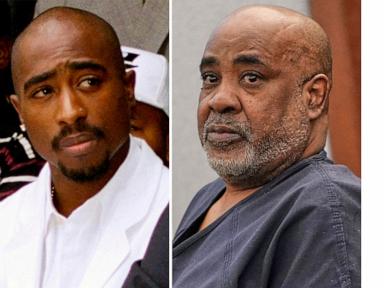
Duane "Keffe D" Davis just found out the hard way that you cannot sell your confession to the public and then hide it from a courtroom. For decades, the 1996 drive-by shooting of rap icon Tupac Shakur stood as one of America's most frustrating unsolved mysteries. Investigators hit wall after wall, rumors swirled, and hip-hop history grew darker under the weight of conspiracy theories. Then, Davis decided to talk. He talked in police interview rooms, he talked on YouTube, and most damagingly, he co-wrote a book.
On June 30, 2026, Clark County District Judge Carli Kierny cleared the way for prosecutors to use that very book against him.
The 2019 memoir, titled Compton Street Legend, is no longer just a piece of hip-hop memorabilia sitting on true-crime bookshelves. It is now central piece of evidence for the state. Davis's defense attorney, Michael Sanft, fought aggressively to keep the book out of the upcoming trial, which is scheduled to kick off on August 10, 2026. The defense tried to brush the book off as a fictionalized cash grab. They blamed ghostwriters. They claimed it was impossible to prove which words actually came from Davis's mouth.
The judge didn't buy it. Judge Kierny made it plain that Davis repeatedly adopted the book's narratives as his own, loudly proclaiming it to be the "real truth" across various media platforms. By bragging about his involvement to anyone who would listen, Davis effectively waived his right to silence.
This ruling is a massive victory for the prosecution and a devastating blow to the defense. Chief Deputy District Attorney Marc DiGiacomo summed up the situation perfectly with a chilling reality check. Had Davis simply kept his mouth shut and never written the book, he probably would have never faced prosecution for the murder. Instead, his own words became his trap.
The Fatal Mistake of Compton Street Legend
To understand why this ruling matters so much, you have to look at what is actually inside that book. Compton Street Legend describes the inner workings of the South Side Compton Crips during the height of the 1990s gang wars. But the core of the book—the reason prosecutors care about it—is the detailed account of September 7, 1996.
In the memoir, Davis admits to being inside the white Cadillac that pulled up next to a black BMW on the Las Vegas Strip. Inside that BMW were Tupac Shakur and Death Row Records boss Marion "Suge" Knight. The book details how Davis allegedly secured the firearm, a handgun, and tossed it into the backseat where another passenger used it to open fire on Shakur.
Davis faces one count of murder with a deadly weapon with intent to promote, further, or assist a criminal gang. In Nevada, you do not have to be the person who pulled the trigger to be convicted of murder. If you aided, abetted, or orchestrated the crime, you are just as guilty under the law.
The defense team tried a classic legal maneuver to neutralize the book. They argued that because a co-author helped shape the text, the book represents a commercial product rather than a literal confession. They wanted the jury to see it as a embellished Hollywood pitch meant to line Davis's pockets.
Judge Kierny cut right through that argument. It does not matter who typed the sentences. It matters who claimed them. Because Davis went on promotional tours, signed copies, and did endless podcasts validating the contents of Compton Street Legend, he legally adopted those statements. The ruling sets a clear precedent for the trial. The jury will read what Davis claimed to have done on that deadly Las Vegas night.
When a Confidential Proffer Agreement Backfires
The book is only one half of the prosecution's weapon cache. The defense also tried to block statements that Davis made to law enforcement way back in 2008 and 2009. Back then, Davis sat down with federal and local authorities under what is known as a proffer agreement.
A proffer agreement is essentially a deal where a suspect agrees to provide useful information in exchange for a promise that those specific words will not be used directly against them in a criminal trial. Davis believed he had permanent immunity. He thought those old recordings were locked away forever in a police vault.
His defense argued that Davis only spoke to detectives because he was assured he would not face prosecution. They claimed those long-ago statements were involuntary because they were induced by promises of safety.
Judge Kierny admitted she felt some initial concern about the promises made to Davis in 2008. However, she ultimately ruled the statements voluntary. Davis had his lawyer present during those old interviews. He was never under arrest at that moment and was entirely free to leave the room.
More importantly, prosecutors revealed how Davis destroyed his own immunity. A proffer agreement protects your words as long as you keep them between yourself and the state. The moment you take those same secrets, package them into a commercial memoir, and sell them on Amazon, the rules change. You cannot market a secret confession to the public and then turn around and tell a judge that the exact same information must remain confidential in a courtroom.
The state now has the legal green light to use those 2008 and 2009 police interviews to verify and back up the claims made in the 2019 book. If Davis tries to claim in court that the book is pure fiction, prosecutors can hit play on the police tapes to show he told detectives the exact same story nearly two decades ago.
Inside the September 1996 Drive-By Shooting
The state's theory of the crime ties the murder directly to a brutal gang feud. To build a compelling narrative for the jury in August, the prosecution needs to recreate the chaotic environment of 1996 Las Vegas.
The violence kicked off hours before the shooting at the MGM Grand hotel. Tupac Shakur, Suge Knight, and their associates ran into Orlando "Baby Lane" Anderson in the hotel lobby. Anderson was a member of the South Side Compton Crips and happened to be Duane Davis's nephew. The Death Row crew, heavily associated with the rival Mob Piru gang, assaulted Anderson in a brief, chaotic brawl captured on hotel security cameras.
According to gang investigators, that beating demanded immediate retaliation. Gang respect and dominance were on the line. Prosecutors allege that Davis, acting as a high-ranking "shot caller" for the Crips, took charge of organizing the revenge plot.
Davis allegedly obtained a firearm, gathered loyal gang members, and drove out into the neon lights of the Las Vegas Strip to hunt down Knight and Shakur. They spotted the black BMW. The white Cadillac glided alongside it at a red light. Shots rang out, striking Shakur multiple times. He fought for his life in a hospital before dying six days later on September 13, 1996. Anderson always denied pulling the trigger. He was killed in an unrelated California shooting in 1998, leaving the investigation at a dead end for decades.
The case gathered dust. The trail went cold. It stayed cold until Davis chose to resurrect it himself through his public media blitz.
Why the Ghostwriter Defense Didn't Save Duane Davis
Many high-profile criminal defendants attempt to use the ghostwriter defense when their written memoirs contain incriminating details. The logic seems simple on the surface. If you did not put pen to paper yourself, how can the state prove those exact words belong to you?
Legal experts know this defense rarely holds up when the author spends years doing victory laps in the media. Davis did not just publish the book and disappear into anonymity. He sat on couches for YouTube channels, gave long interviews, and smiled for cameras while discussing his role in the historic hip-hop tragedy.
When a defendant actively promotes a book as his true story, the law views it as an adoptive admission. If a ghostwriter cleans up your grammar or structures your thoughts into readable chapters, but you nod your head and say "that is exactly what happened," those words become yours in the eyes of the court.
Prosecutors pointed out that Davis used the book to build a brand around being the lone survivor of that infamous white Cadillac. He wanted the fame. He wanted the notoriety. He wanted the money that came with being the man who finally gave the world the inside scoop on Tupac's death. The court's decision proves that you cannot cash checks based on your criminal history without eventually paying the legal price.
The Twisted Path to the August Trial
The road leading up to this point has been messy, dramatic, and filled with strange side stories that look like something out of a crime movie. Davis was arrested in September 2023, decades after the crime occurred. He pleaded not guilty and has been sitting in jail ever since.
His attempt to get out on bail created a massive sideshow in 2024. Judge Kierny originally set his bail at $750,000. A well-known music manager named Cash Jones, better known in the industry as "Wack 100," stepped forward and paid a $112,000 premium to a bail bondsman to secure Davis's freedom.
That is when prosecutors stepped in and blocked the release. They discovered recordings of Wack 100 on VladTV and jailhouse phone conversations where Jones talked about producing a lucrative media series based on Davis's life. Nevada has strict laws preventing individuals from profiting or benefiting from criminal acts. The state argued that the bail money was not a gift, but a business transaction aimed at exploiting a murder case for entertainment content.
Jones testified under oath that the money was just a personal gift and that his online boasts were completely made up to generate views and clicks for his media channels. Judge Kierny did not buy that excuse either. In June 2024, she officially denied Davis's release, forcing him to remain behind bars while awaiting his trial.
Even while locked up, Davis's circle tried to find a workaround. His family launched an online fundraiser called "Free Keefe Davis" to bring in anonymous donations, publicly blasting the judicial system for looking into the motives of their previous benefactor. None of it worked. Davis remains in custody, and his legal options are rapidly shrinking as the August 10 trial date approaches.
What Happens Next
With the judge ruling both the memoir and the prior police interviews admissible, the prosecution has a clear, straight line to presenting their case. Here is what to expect as the August trial date arrives.
- Jury Selection Challenges: Finding an impartial jury in Las Vegas for a case this famous will be incredibly difficult. Expect defense lawyers to heavily screen jurors to see if they have already read Compton Street Legend or watched Davis's viral YouTube clips.
- The Ghostwriter on the Stand: Do not be surprised if prosecutors call the book's co-author to testify. They will want to establish the exact process of how Davis relayed his story to prove the written words match his verbal statements.
- Playing the 2008 Tapes: The prosecution will likely play the old police recordings side-by-side with passages of the book to show a consistent pattern of confession spanning nearly twenty years.
- The Intent Argument: Look for the state to focus heavily on the gang enhancement aspect of the charge. They will use Davis's own descriptions of the South Side Compton Crips to prove the shooting was an organized gang action meant to maintain street dominance.
Duane Davis wanted to control the narrative of hip-hop's most infamous night. He wanted to be the ultimate storyteller. Instead, he wrote the very blueprint that the state will use to try and put him away for the rest of his life.