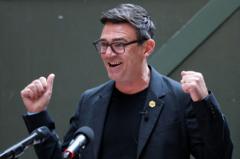
Andy Burnham is back in Westminster, and the timeline for British politics just got squeezed into overdrive. Winning the Makerfield by-election with a thumping 55% of the vote did more than just hand him a seat in the House of Commons. It triggered the final collapse of Keir Starmer’s grip on the Labour Party. Within days of Burnham’s victory speech, Starmer announced his resignation. Now, the man dubbed the "King of the North" stands as the undisputed frontrunner to become the next Prime Minister.
But behind the slick public performances and the undeniable popularity outside the M25 lies a massive problem. Burnham has spent nearly a decade playing the role of the high-profile outsider. Now that he is inside the building, the clock is ticking loudly. He has almost zero time to turn his broad, populist rhetoric into a concrete legislative agenda.
The transition from a regional metro mayor to the leader of a G7 nation usually takes years of policy development. Burnham has weeks.
The Speed Traps of the Leadership Race
Westminster moves fast, but a post-resignation leadership contest moves at warp speed. Burnham entered parliament on a wave of momentum, but momentum does not draft bills or solve economic stagnation. The immediate challenge is not winning over the public; he already knows how to do that. The real battle is convincing a deeply fractured parliamentary party that he has more than just vibes and a flat cap.
For nine years, Burnham ran Greater Manchester like his own personal fiefdom. He could criticize national policy without the burden of having to whip votes or manage complex Whitehall budgets. That luxury expired the moment he took his oath as the MP for Makerfield.
The biggest misconception about Burnham is that his return is a smooth coronation. It isn't. Former Defence Minister Al Carns and Chief Secretary Darren Jones have both hovered around the contest, weighing up whether they can gather enough nominations to block a total Burnham walkover. Even with Health Secretary Wes Streeting standing down to back him, Burnham faces a parliamentary party that remains deeply suspicious of his ideological shape-shifting.
What the Westminster Insiders Get Wrong
London-based commentators love to portray Burnham as a lightweight populist who excels on stage but lacks intellectual depth. This view misreads why he remains a potent political force.
He understands something that the Starmer iteration of Labour completely ignored: people want an emotional connection to their leaders. When Burnham attacks the "bankruptcy" of Westminster's campaigning style or calls the two-child benefit limit the "worst of Westminster," he is speaking a language that resonates far beyond the capital.
Look at his record in Manchester. He did not just talk about devolution; he forced the bus network back into public control through the Bee Network. He pushed for the Hillsborough Law to give victims of state disasters better legal backing. These are tangible policies, not just abstract concepts discussed in think-tank seminars.
The real critique is not that he lacks ideas, but that his ideas are designed for regional execution rather than national governance. Controlling a local transport budget is entirely different from managing net migration figures that, despite dropping significantly since 2024, remain a major doorstep issue in seats like Makerfield.
The Policy Gaps That Need Filling Fast
If Burnham wants to stabilize the government quickly, he needs to address three immediate blind spots.
- The Whitehall Power Structure: He has spent years arguing that Downing Street is too London-centric. To fix this, he needs to immediately appoint a heavy-hitting team to manage the devolution of power, potentially utilizing figures like the Greater Manchester CEO to oversee a new "No 10 North" operation.
- Economic Credibility: Regional mayors can borrow for capital projects, but a Prime Minister faces global bond markets. Burnham needs to quickly signal who his Chancellor will be to reassure markets that a Burnham administration will not spark a mini-budget style panic.
- Party Management: Starmer ran a tightly controlled, factional ship. Burnham has promised a more pluralistic style that listens to backbenchers. However, listening to everyone often leads to deciding nothing, a trap that paralyzed past Labour leaders like Gordon Brown.
The transition from shouting at the machine to running the machine is brutal. Burnham is an exceptional communicator, but the public stage offers no protection when the civil service demands immediate decisions on public sector pay or industrial strategy.
Moving Beyond the King of the North Tag
To govern effectively, Burnham must shed the skin of a regional rebel. He can no longer complain about Westminster because he now embodies it. His initial pledge to give 15% of his MP salary to local causes is a classic Burnham move—great for local headlines, but ultimately a distraction from the massive national crises landing on his desk.
The coming days will show whether he is a genuine statesman or just a permanent opposition figure who finally caught the car. The platform is his. The clock is running.
For a deeper dive into how this political shift unfolded on the ground in Makerfield, check out this BBC News Analysis on Andy Burnham, which provides direct reporting on the by-election results and the immediate fallout for the Labour leadership.