The ribbon-cutting ceremony was set. Workers had spent eight grueling years spinning steel and pouring concrete across the Detroit River, finally linking Windsor and Detroit with a massive, state-of-the-art span. Then, at the absolute last minute, the whole thing ground to a halt. The June 2026 opening was abruptly scuttled.
If you read the mainstream headlines, you might think it's just a simple case of administrative paperwork or standard bureaucratic gridlock. It isn't.
Instead, we are watching a high-stakes game of economic chicken between the White House and Ottawa. Accusations are flying, multi-million-dollar political donations are under the microscope, and a multi-billion-dollar international shipping artery is sitting entirely empty.
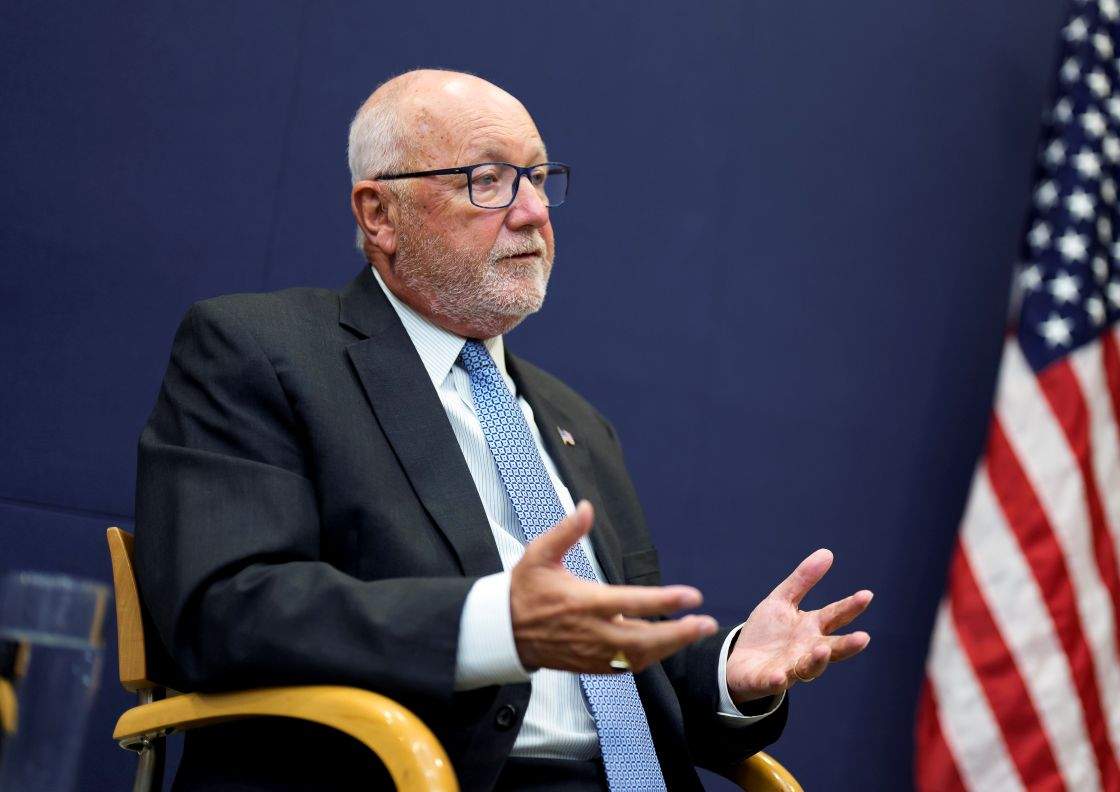
U.S. Ambassador to Canada Pete Hoekstra recently went on the record to push back against claims that political corruption is delaying the Gordie Howe International Bridge. He says it's about numbers and fair deals. Critics say it smells like favoritism for a billionaire donor. The reality is a messy mixture of both, combined with an American administration that views every piece of infrastructure as a bargaining chip.
Let's unpack what is actually happening on the border and look at why this bridge is still closed.
The Million Dollar Question Behind the Canceled Ribbon Cutting
The immediate spark for the outrage came down to a timeline and a very large pile of cash. In early June, word leaked that the bridge was days away from a formal opening ceremony. Almost immediately, American officials slammed the brakes on the event. Prime Minister Mark Carney tried to downplay the issue, vaguely pointing to technical aspects that both countries needed to iron out.
But nobody bought that excuse. Especially not when the political calendar is taken into account.
Just months before the scheduled opening, billionaire Matthew Moroun, whose family owns the competing Ambassador Bridge, cut a cool $1 million check to Donald Trump's super PAC, MAGA Inc. To make things look even more suspicious, campaign finance disclosures revealed that the Moroun family had previously flooded Pete Hoekstra's congressional campaigns with fifteen separate donations.
The optics are terrible. The Morouns have spent decades fighting tooth and nail to protect their highly lucrative trucking monopoly over the Detroit River. The Ambassador Bridge handles roughly a quarter of all trade between the United States and Canada. A brand-new, publicly owned bridge with modern customs plazas represents an existential threat to their bottom line.
When the Trump administration suddenly pulled the plug on the Gordie Howe Bridge opening, people immediately connected the dots. Did a well-timed donation buy a delay for a corporate monopoly?
Hoekstra says absolutely not. He insists the Morouns operate a massive U.S. business and naturally donate to politicians on both sides of the aisle. According to the ambassador, the American government stopped the opening simply because they were caught completely off guard. He claims that he and Commerce Secretary Howard Lutnick learned about the ribbon-cutting from media reports rather than official diplomatic channels. They objected because they were excluded from the loop.
Whether you believe that explanation depends entirely on how much faith you place in political coincidences.
The Myth of Who Actually Pays for the Bridge
Beyond the donation scandal, Hoekstra has started a rhetorical firestorm by challenging the core financial narrative of the entire project. For over a decade, the public understanding was straightforward: Canada is paying for the bridge.
Because Michigan state legislators refused to spend a single dime of taxpayer money on the project years ago, Canada stepped up. The Canadian government fronted the entire construction bill, which has now ballooned to an estimated $6.4 billion. Under the original binational agreement, Canada will operate the bridge and collect 100% of the toll revenue until its massive initial investment is fully recouped. Once the debt is cleared, the profits are supposed to be split evenly between Canada and the State of Michigan.
Hoekstra is now calling that arrangement a myth.
His argument is grounded in a blunt economic reality. Canada may have acted as the bank, advancing the upfront capital to build the physical structure, but Canadian taxpayers aren't ultimately paying the bill. The users are. Specifically, commercial truckers.
The vast majority of the freight moving across that border originates from or is destined for American companies. American consumers and businesses are paying the tolls that will eventually cover the construction costs. Because that toll money is heavily extracted from the American economy, Hoekstra argues that the United States is contributing the lion's share of the actual funding over the long haul.
Furthermore, the bridge is over budget and years behind its original schedule. The U.S. position is that these delays and cost overruns have fundamentally broken the original business model. If the project costs billions more than expected, it will take decades longer for Canada to recoup its cash. That pushes Michigan's share of the toll revenue far into the distant future. The White House wants to renegotiate the terms right now, before the first semi-truck drives across.
The Shadow of the Ambassador Bridge Monopoly
To truly understand why this border crossing is such a battleground, you have to look at the aging giant down the river. The Ambassador Bridge was built in 1929. For nearly a century, it has been the primary lifeblood of North American manufacturing, particularly for the automotive sector.
For decades, the Moroun family has run it as a private fiefdom. It is one of the only privately owned international border crossings in the world. It generates astronomical wealth through tolls and duty-free gas sales.
When the Canadian and American governments initially proposed a public alternative, the Morouns launched an aggressive, multi-front war to kill it. They bought up real estate in Detroit to block access routes. They funded prime-time television ad campaigns warning voters that a new bridge would ruin the economy. They even launched endless lawsuits challenging the legality of Canada funding infrastructure on American soil.
They lost those battles, but they didn't stop fighting. Now that the physical structure of the Gordie Howe Bridge is complete, the battle tactics have shifted from the courtrooms to executive political influence.
Every day the new bridge remains closed is another day of guaranteed monopoly profits for the old bridge. The Trump administration's willingness to hold up the opening fits perfectly into the Moroun family's long-term strategy. Even if Hoekstra is telling the truth and there is no explicit quid-pro-quo, the delay serves the exact same corporate interest.
Traffic Tolls and Trade Deals as Political Weapons
This standoff is not happening in a vacuum. It is deeply intertwined with the broader friction surrounding the Canada-U.S.-Mexico Agreement (CUSMA).
The Trump administration recently shocked Ottawa and Mexico City by declining to automatically extend the trilateral trade pact for another 16-year term. The White House is pointing directly to massive trade deficits and what it views as unfair trade practices. Trump has openly mused about terminating the deal entirely, asserting that the U.S. is better off without it.
Prime Minister Mark Carney has consistently reminded Canadians that the country possesses solid structural protections, such as key tariff exemptions. But those exemptions are only as strong as Washington's willingness to honor them. When asked directly if those protections would survive the upcoming trade reviews, Hoekstra refused to offer any guarantees. He made it clear that those calls are made strictly by the president.
The Gordie Howe Bridge is being used as leverage in these massive trade talks. By freezing the opening of a vital trade corridor that Canada desperately wants online, the U.S. gains an extra chip at the negotiating table. They want concessions on dairy markets, digital service taxes, and automotive manufacturing rules. Holding a $6.4 billion piece of Canadian-financed infrastructure hostage is an incredibly effective way to force Ottawa to listen.
What Happens Next for Cross Border Shipping
The physical bridge is essentially finished. It is ready for trucks, commuters, cyclists, and pedestrians. Yet, the gates remain locked. If you operate a logistics business or rely on cross-border supply chains, you cannot afford to wait around for politicians to stop bickering.
If you want to protect your operations from this ongoing border drama, focus on these immediate steps:
- Diversify your crossing routes: Stop relying exclusively on the Windsor-Detroit corridor. If the Ambassador Bridge suffers a sudden IT failure, a labor protest, or an unexpected maintenance closure, your supply chain will paralyze. Route a percentage of your freight through alternative gateways like the Blue Water Bridge in Sarnia-Port Huron or the Peace Bridge in Buffalo-Fort Erie.
- Audit your customs compliance: The U.S. administration is hyper-focused on enforcement. Expect increased scrutiny and potential border slowdowns at all existing crossings as trade tensions escalate. Ensure your paperwork, C-TPAT certifications, and manifest data are flawless to minimize transit delays.
- Factor regulatory volatility into your contracts: If you are signing long-term freight or supply agreements, build in clauses that account for sudden tariff adjustments or border delays. Do not assume the status quo of free trade will remain untouched over the next twelve months.
Hoekstra claims he is optimistic that both countries can reach an agreement to open the bridge soon without dragging it into the broader, messier CUSMA negotiations. We will see if that optimism holds water. For now, the most modern border crossing in North America remains an expensive monument to political leverage. Keep your logistics flexible, because this fight is nowhere near over.