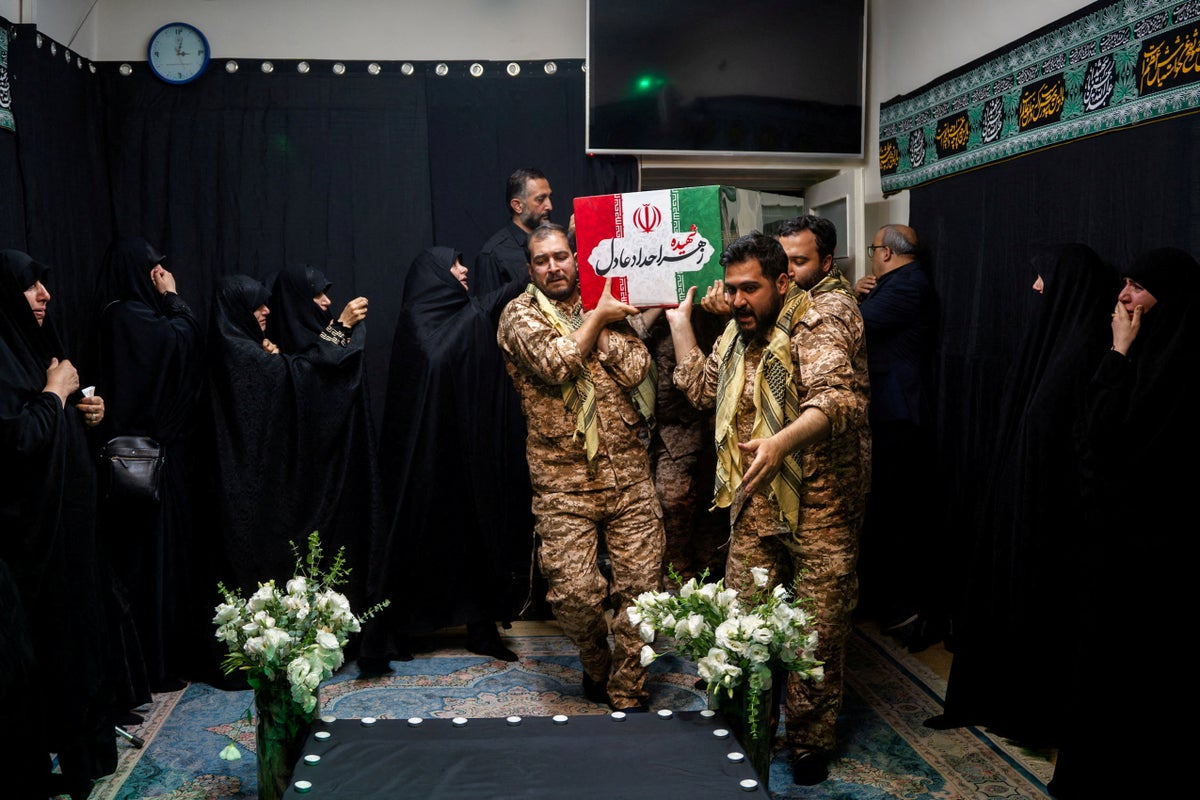
Don't let the temporary quiet fool you. The Middle East is sitting on a powder keg that's shorter than most people think. Right now, Tehran is preparing a massive, multi-day state funeral for its late Supreme Leader, Ayatollah Ali Khamenei. Millions of mourners are expected to pack the streets of Tehran, Qom, and Mashhad. But beneath the black banners and public grief lies a dangerous military standoff. Iranian commanders just gave Donald Trump and Israel an ultimatum. Don't move an inch while we bury our leader, or suffer the consequences.
This isn't just standard political theater. Khamenei was killed months ago during the explosive opening salvos of the US-Israeli war on Tehran. The fact that his funeral was delayed for so long shows just how chaotic the fighting became. Now, a fragile, Qatar-mediated ceasefire is holding the frontlines together by a thread. Tehran's warning isn't just defensive rhetoric. It's a calculated test of American and Israeli resolve at a moment when the global economy is trying to breathe a sigh of relief. If anyone miscalculates between July 4 and July 9, the entire region will plunge right back into all-out combat. Discover more on a similar issue: this related article.
The Chokepoint Drama at the Strait of Hormuz
While Washington talks about diplomatic breakthroughs, the real economic war is playing out in the water. Iran has tightened its grip on the Strait of Hormuz. Military officials in Tehran are ordering oil tankers to use exclusively approved routes. If a captain deviates, the Islamic Revolutionary Guard Corps promises an immediate, forceful reaction.
This creates a massive headache for global markets. For decades, the free flow of commerce through this narrow strip of water has been a non-negotiable principle for Western militaries. Now, we're seeing reports that European leaders view an Iranian or Omani shipping toll as an unavoidable reality. Trump has signaled a willingness to accept some form of toll if it keeps the oil flowing, but the underlying friction remains dangerous. U.S. Central Command recently huddled with Middle Eastern allies in Bahrain to reaffirm their commitment to keeping the waterway open. The problem is that American fighter jets are still buzzing the strait, and Iran claims that very presence is what makes the area unsafe. Further reporting by NPR highlights comparable perspectives on this issue.
Let's look at the numbers. Shipments are still squeezing through. Market trackers noted well over a hundred crossings in a matter of days, keeping oil prices hovering around sixty-seven dollars a barrel. The Trump administration is taking victory laps, claiming gas prices are dropping because American military posture forced the oil to keep moving. But this looks like wishful thinking. A single incident with an unapproved tanker route could send prices skyrocketing overnight. You can't run a global supply chain on the assumption that an aggressive coastal military will just play nice forever.
The Secretive Rise of Mojtaba Khamenei
The most explosive element of this entire situation isn't the dead leader, it's the new one. Mojtaba Khamenei, the son of the late Ayatollah, has assumed the mantle of leadership. He has been running the country from deep inside the shadows, largely because he was reportedly wounded in the very airstrikes that took his father's life. He hasn't been seen in public since taking the top spot.
His low profile hasn't stopped his enemies from making threats. Israeli Defense Minister Israel Katz openly declared that Mojtaba is marked for death. That kind of rhetoric turns a standard transition of power into a high-stakes survival game. Rumors are swirling that Mojtaba wants to emerge from hiding during the funeral ceremonies to meet the public and solidify his legitimacy. Doing so would be an extraordinary security gamble.
If he steps into the daylight, the temptation for a targeted strike will be massive. Iranian Foreign Minister Abbas Araghchi has drawn a hard red line here. He made it clear that any move against the current leadership will trigger a devastating response. The state funeral is supposed to display national unity, but it might actually expose the vulnerability of Iran's new command structure. Parliament Speaker Mohammad Bagher Ghalibaf is actively calling for huge crowds to fill the streets, turning the memorial into a mass demand for vengeance. He wants the world to hear the roar of the public, which only ups the pressure on the regime to deliver a blow if things go south.
The Illusion of Progress in Qatar
Meanwhile, the diplomatic track looks increasingly disconnected from what's happening on the ground. Trump's envoys, including Jared Kushner and Steve Witkoff, have been working the rooms in Qatar, trying to hammer out a lasting framework. Trump himself has told reporters that the denuclearization process is moving along well and that the meetings have been highly productive.
But you have to read between the lines. There have been no direct talks between US and Iranian officials. Everything is being filtered through third-party mediators. While Qatar praises the positive progress of the interim agreement, the core issues remain completely unresolved. The US wants a complete dismantle of the nuclear apparatus and an exit from the shipping lanes. Iran wants the immediate withdrawal of Western forces from its doorstep and a guarantee that its leadership won't be picked off one by one.
The pause in negotiations for the funeral gives both sides time to rearm and re-evaluate. It's a classic geopolitical breather, not a peace deal. U.S. Ambassador to the U.N. Mike Waltz recently reminded everyone of the American stance, bluntly stating that the late Ayatollah had decades of blood on his hands. That doesn't sound like an administration ready to make deep concessions. The rhetoric coming out of Washington and Tel Aviv suggests they see the ceasefire as an opportunity to dictate terms to a weakened adversary, while Tehran views the funeral as a moment to project defiance and regroup.
What Happens Next on the Ground
The next few days will determine whether the region transitions to a managed peace or descends into an even more destructive phase of the war. Security services have locked down the airspace over Tehran, Qom, and Mashhad. Civil aviation is grounded in these key zones to prevent any surprise aerial incursions.
If you're watching this situation develop, look out for these specific markers over the coming week:
- Airspace Violations: Any drone or reconnaissance flight near the funeral processions will be treated as an act of war. Watch how tightly the temporary flight restrictions are enforced.
- Tanker Defiance: Keep an eye on the Kpler shipping data. If a Western-aligned vessel deliberately ignores the Tehran-mandated shipping lanes in the Strait of Hormuz, the IRGC will likely attempt a boarding action.
- Public Appearances: Watch whether Mojtaba Khamenei actually appears at the Grand Mosalla complex in central Tehran. His presence or absence will signal the regime's true confidence in the current ceasefire.
- The Saudi Backchannel: Pay attention to diplomatic chatter between Riyadh, Islamabad, and Doha. The Gulf states are terrified of an escalation that ruins their own economic plans, and they are quietly keeping the communications lines open even if formal talks are paused.
The margins for error are nonexistent right now. The funeral is a massive logistical challenge and an emotional flashpoint for millions of citizens. With the armed forces of three nations on high alert, a single nervous radar operator or a single stray drone could collapse months of delicate diplomatic maneuvering in seconds.
For an insightful, detailed broadcast overview of the geopolitical stakes and the direct warnings issued by Tehran during this high-tension transition period, you can watch this CBS News report on the Iran funeral warnings.