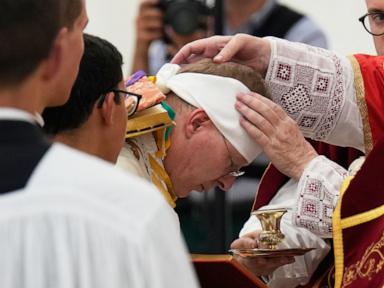
The bells of a mountain seminary in Ecône, Switzerland, just triggered a massive earthquake across the Catholic world. On July 1, 2026, a breakaway group known as the Society of St. Pius X (SSPX) defied Pope Leo XIV. They went ahead with unauthorized Latin Mass consecrations, ordaining four new bishops without a papal mandate.
This isn't just a rerun of church politics. It's an intentional rupture. The Vatican calls it a schism, a sin of extreme gravity that brings automatic excommunication. But if you think this is just a bunch of bitter traditionalists hiding in the Alps, you're missing the real story.
This rebellion looks entirely different from the one that triggered the original 1988 split. It's tech-savvy, heavily branded, and growing right under Rome’s nose.
The Swiss Defiance under Cloudy Skies
Thousands of faithful packed a field in Ecône, watching hundreds of priests process toward a tented altar. Incense filled the air. Organ music swelled. The whole event looked like a glorious celebration, completely detached from the threat of canonical execution hanging over it.
The society even ran a countdown clock on its website. They livestreamed the ceremony to global audiences on YouTube. Attendees walked away with souvenir wine sets and baseball caps stamped with the "Econe2026" seal.
The SSPX isn't hiding. They're leaning into their outsider status.
SSPX At a Glance (2026 Data)
- Worship centers: 800 across 77 countries
- Priests: 751
- Seminarians: 264
- New bishops ordained: 4
The newly consecrated bishops are Pascal Schreiber of Switzerland, Michael Goldade of the United States, Michel Poinsinet de Sivry of France, and Marc Hanappier of France. By accepting these ordinations without a papal mandate, these four men and the bishop who ordained them stepped directly into automatic excommunication under Catholic canon law.
Traditionalism 2.0 and the Digital Monopoly
The original 1988 consecrations by French Archbishop Marcel Lefebvre were desperate, analog, and frantic. Lefebvre believed the Catholic Church was on the verge of extinction after the modernizing reforms of the Second Vatican Council in the 1960s. He felt a state of necessity forced his hand.
Today, the SSPX uses that same "state of necessity" argument. Only two of their older bishops are still active. They claim they need new blood to ordain priests and run confirmations across their 800 chapels worldwide.
The strategy has flipped. This isn't about survival. It's a land grab for the monopoly on ultra-traditionalist identity.
The SSPX has built a massive global infrastructure. They have schools, seminaries, and thriving parishes. They have mastered digital branding. They appeal directly to a younger generation of Catholics who love the beauty of the ancient Latin Mass and shrug at Roman authority.
Why Pope Leo XIV Failed to Halt the Crisis
This disaster hits Pope Leo XIV especially hard. The American pontiff took office in May 2025 with a clear mission: restore church unity. He explicitly tried to mend the brutal liturgical rifts that worsened under Pope Francis.
Leo didn't want a fight. He even urged French bishops to find concrete solutions to include those who sincerely love the older rites. He bypassed previous restrictions, hoping for a durable liturgical peace.
The SSPX didn't care.
Just a day before the ceremony, Leo issued a deeply personal, last-ditch letter to the SSPX Superior General, the Rev. Davide Pagliarani. He begged them to turn back, warning that a schismatic act would deprive their own flock of licit sacraments.
Pagliarani’s response was cold comfort. He asked the Pope to wait before dropping any legal penalties, arguing that the society was actually helping a "mother in distress."
During his homily at the consecrations, Pagliarani doubled down. He claimed they love the Pope so much that they refuse to see him humiliated by false shepherds of modern religions. It’s a wild paradox: disobeying the Pope out of alleged love for the papacy.
The Deep Roots of the Catholic Culture War
To understand why thousands of young families support this rebellion, you have to look at what they are rejecting. The SSPX doesn't just prefer Latin over English or Spanish. They reject the core teachings of the Second Vatican Council.
They actively oppose modern church stances on religious freedom, relations with other faiths, and ecumenical dialogue. They view the mainstream church as a sinking ship ruined by liberalism.
Many mainstream Catholics find this stance completely untenable. You can't claim to protect Catholic tradition while actively tearing apart the visible unity of the Church. True Catholic theology ties tradition directly to communion with the Bishop of Rome. Breaking that bond turns a traditionalist movement into a parallel church.
The SSPX has also carried heavy historical baggage. Archbishop Lefebvre openly supported the collaborationist Vichy regime in France during World War II. One of the original bishops consecrated in 1988, Richard Williamson, later caused global outrage by denying the Holocaust. While Benedict XVI lifted those original excommunications in 2009 to spur dialogue, the group never gained legal status. This new stunt resets the clock, undoing decades of patient diplomacy.
What Happens Next for Everyday Catholics
If you follow traditional devotions or occasionally attend a Latin Mass, this crisis will change your environment. The lines are being drawn in the sand, and the middle ground is vanishing.
First, understand the status of SSPX sacraments. While the Vatican has granted them faculties for confessions and marriages in the past to protect the faithful, an official declaration of schism changes the calculation. Attending these chapels out of a deliberate desire to separate from the Pope puts your own canonical standing at serious risk.
Second, look for alternative communities. Diocesan Latin Masses and groups like the Priestly Fraternity of St. Peter (FSSP) remain in full communion with Rome. They celebrate the ancient liturgy while respecting papal authority. They prove you don't have to choose between liturgical tradition and the unity of the Church.
Third, watch Rome's official response. Pope Leo XIV wanted peace, but this open defiance forces his hand. Expect formal decrees confirming the automatic excommunications very soon. The Vatican cannot let a parallel hierarchy operate without consequences.
The spectacle in the Swiss mountains proved that Traditionalism 2.0 is ready for a fight. The question is how many faithful will follow them into the wilderness.