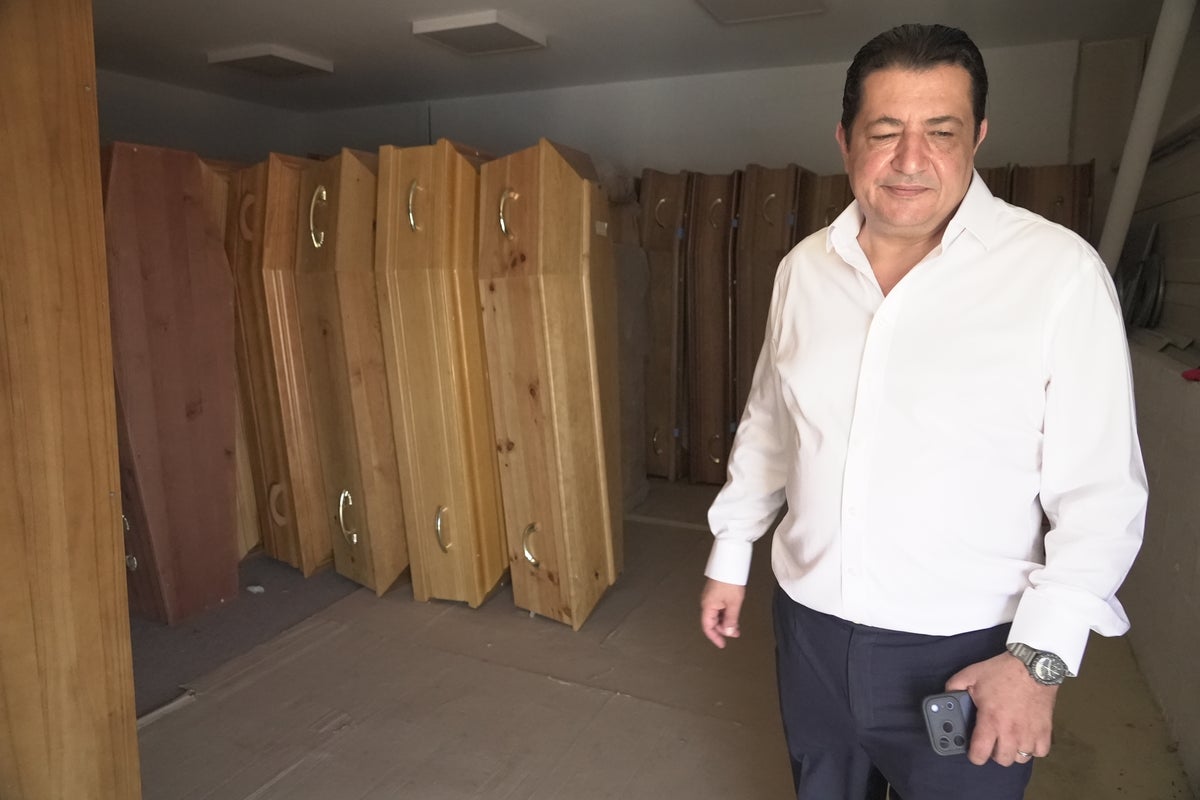
The phones in Paris funeral homes aren't stopping. When you call a mortuary in the French capital right now, you aren't greeted with typical administrative warmth. You get a blunt, exhausted no. The city is running out of space for its dead.
While tourists snap photos near the Eiffel Tower, a silent disaster is unfolding behind closed shutters. The recent early summer heatwave has pushed temperatures past 40°C (104°F), breaking a 150-year-old record. But the real story isn't the number on the thermometer. It is the immediate, crushing pressure on the city's infrastructure, its emergency services, and its morgues.
Public Health France recently released staggering preliminary data. On a single Wednesday during the peak of the heat, deaths surged to over 1,200 nationwide. By Thursday, that number climbed to 1,400. Friday saw another 1,400. When you consider that France normally sees about 900 to 1,000 deaths a day in spring, the math becomes terrifying. We are talking about thousands of excess deaths in a matter of days. Paris mortuaries hit their absolute limit almost immediately.
Why Paris Mortuaries Are Overwhelmed Right Now
The system wasn't built for a sudden, massive spike in mortality. Mortuary owners are facing a truly catastrophic bottleneck. Cold rooms designed to hold dozens of bodies filled up within forty-eight hours.
When a facility reaches capacity, everything stalls. Grieving families are left stranded, unable to transfer their loved ones from homes or hospitals. To handle the overflow, City Hall has scrambled to install temporary refrigerated storage units at municipal mortuaries. Hospitals have carved out a few dozen extra spaces. It is a band-aid on a gaping wound.
The crisis hits hardest behind closed doors. This is not a tragedy taking place on the streets. It is happening in the thousands of classic, zinc-roofed apartment buildings scattered across Paris.
The Trapped Heat Phenomenon
Parisian architecture is legendary, but it is a death trap in June. Those iconic Haussmann buildings with their beautiful stone facades and dark zinc roofs behave like ovens. Zinc absorbs solar radiation and radiates heat downward into the top-floor apartments. These apartments, historically called chambres de bonne, are tiny, poorly insulated, and lack air conditioning.
The Killer Is the Nighttime Temperature
During this heatwave, day temperatures caught all the headlines. But emergency room doctors will tell you that the real killer is the night.
When the sun goes down, a city is supposed to cool off. But the concrete, asphalt, and stone of Paris trap the heat, creating an urban heat island. Nighttime temperatures have repeatedly broken records, refusing to drop below 20°C or even 25°C in dense zones.
Without nighttime relief, the human body cannot recover. The heart pumps faster to try and cool the skin. Sweat fails to evaporate if the humidity is high. For an elderly person living alone on a fifth floor, three consecutive nights without cooling is a physiological breaking point. Their organs simply give out.
The Tragic Repetition of History
If this sounds familiar, it should. In 2003, a historic European heatwave killed an estimated 15,000 people in France alone. That disaster triggered massive public outrage, structural changes, and national soul-searching. The government implemented color-coded alert systems, established cool rooms in retirement homes, and created registries for vulnerable citizens.
Yet, here we are again.
Funeral directors on the ground in Paris openly express fear that those hard-earned lessons have been forgotten. The data backs up their anxiety. Of the deaths recorded during the worst three days of this current spell, 85% were individuals aged 65 and older.
Even more telling is the location of death. Fatalities occurring at home shot up by roughly 40% in the Paris region. These are not people who fell ill in fully staffed hospitals or modern care facilities. These are isolated seniors who died alone in their apartments, discovered only when neighbors noticed a lack of movement or a strange smell.
The reality is that social isolation remains as deadly as the climate itself. You can have the best public health pamphlets in the world, but if an 80-year-old woman has no one to check on her, open her windows, or hand her a glass of water, those pamphlets are useless.
The Broader European System Breakdown
France is just the epicenter of a broader regional crisis. This early-summer heat dome has trapped scorching air across Western Europe, and the infrastructure failures are rippling outward.
- Transport Gridlock: High temperatures cause railway tracks to expand and buckle. Tram lines have been suspended in major transport hubs, and highway surfaces are cracking under the strain.
- Emergency Response Surges: Ambulance services across neighboring countries like Germany are seeing unprecedented spikes in heat-related emergency calls. Dispatch centers are completely redlined.
- Drowning Epidemic: As desperate people seek relief in unmonitored lakes, rivers, and canals, accidental drownings have spiked dramatically. France alone reported dozens of water-related fatalities in a single weekend.
This isn't a normal summer patch of bad weather. It is a systemic shock.
What Cities Must Do to Survival-Proof Infrastructure
We have passed the point where telling people to "drink water" is an acceptable climate strategy. If cities like Paris want to stop their mortuaries from overflowing every June, they need to fundamentally alter how they operate.
The immediate next steps require moving away from crisis management and toward radical urban adaptation.
Reroute the Urban Landscape Immediately
Traditional asphalt and stone absorb heat all day and bleed it out all night. Cities need a massive, aggressive rollout of reflective white roofs and green canopy coverage. Planting trees isn't just about aesthetics; a mature tree canopy can lower local surface temperatures by several degrees through shade and evapotranspiration.
Mandatory Community Check Networks
Relying on vulnerable, isolated seniors to sign themselves up for a government watch-list does not work. Local neighborhood associations, postal workers, and building managers need to be integrated into a mandatory, active check-in network. When a red alert hits, every single isolated person needs a physical knock on their door.
Retrofitting Old Buildings Instead of Preserving Flaws
Preserving historical architecture cannot come at the expense of human life. Strict regulations must be passed to force landlords to insulate top-floor apartments properly and install external shutters or blinds that block sunlight before it hits the glass.
The current situation in Paris is a grim preview of the new normal. When the local morgues run out of room before July has even begun, the debate over climate adaptation is officially over. The bills are coming due, and right now, they are being paid in human lives.