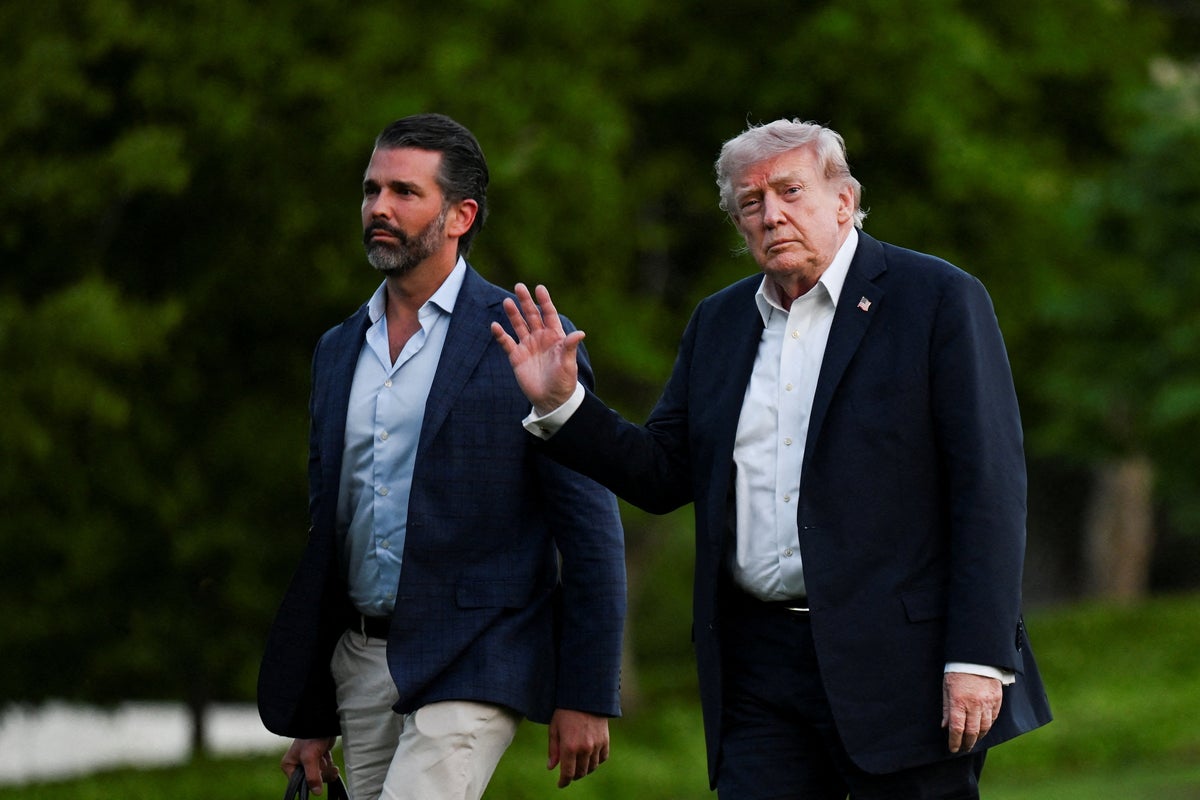
Donald Trump Jr didn't take a desk in the West Wing when his father reclaimed the White House. He went straight into private equity instead.
That move surprised political commentators expecting a white-collar administration posting. Yet joining Palm Beach-based venture firm 1789 Capital as a partner made perfect strategic sense. Power in Washington turns over every four years. Capital compounds forever.
The firm started as an explicit reaction to corporate America's embrace of environmental, social, and governance rules. Co-founders Omeed Malik, Chris Buskirk, and Rebekah Mercer set up shop in late 2022 to build a financier for what they call the Entrepreneurship, Innovation, and Growth economy. Their pitch was straightforward. Traditional Silicon Valley funds were forcing founders through diversity initiatives and ESG compliance checklists. 1789 Capital offered cash without political lectures.
Then the market moved faster than anyone predicted.
The Financial Surge Behind Anti-ESG Capital
Money followed the political shift. 1789 Capital began as a modest $150 million fund aimed at alternative media and conservative consumer platforms. Within two years, its assets expanded dramatically, scaling past $800 million before pushing toward billions under management.
That growth wasn't just luck. Conservative donors, state pension leaders in red states, and wealthy family offices had spent years complaining about Wall Street's cultural leanings. 1789 Capital gave them a legitimate structure to put capital to work without supporting initiatives they hated.
Don Jr brought institutional reach. His primary role revolves around deal origination, strategy, and bringing ultra-high-net-worth investors into the fold. When you combine high-profile political access with Wall Street veterans like Malik—who previously managed prime brokerage units at Bank of America Merrill Lynch—investors start paying attention.
Where the Money Actually Goes
Critics early on assumed 1789 Capital would only fund right-wing podcasts and culture-war merchandise brands. They were wrong.
While the firm's first major check went to Tucker Carlson's media network, its portfolio shifted rapidly toward heavy industry, artificial intelligence, and national security hardware.
Take a look at where their checks land now.
Defense Technology and Aerospace
The firm started backing defense startups that build hardware inside the United States. Companies like autonomous defense maker Firehawk and automated manufacturing platform Hadrian fit their core thesis: rebuild American industrial capacity.
Artificial Intelligence Infrastructure
Instead of funding consumer chatbots, 1789 Capital focused on chips and compute infrastructure. They secured positions in high-valuation hardware and AI companies including Cerebras, Groq, Perplexity, and Reflection AI.
The Elon Musk Ecosystem
The fund backed several of Elon Musk's private ventures, including SpaceX, xAI, and Neuralink. These investments align with their patriotic capitalism ethos while offering access to premier late-stage venture deals.
Alternative Media and Platforms
Substack, prediction market platform Polymarket, and the Tucker Carlson Network form the core of their distribution ecosystem. The strategy here is simple. Control the channels where news and public opinion are formed.
Ethics Arguments and the Policy Edge
You can't discuss 1789 Capital without talking about government contracts and policy alignment. That's where the real controversy lives.
Ethics watchdogs and political opponents point out a clear pattern. Portfolio companies backed by 1789 Capital have captured hundreds of millions in federal defense contracts and government loan programs. When the son of a sitting president acts as a partner in a fund whose portfolio companies win government business, questions about influence naturally follow.
Don Jr and 1789 Capital executives counter that no partner at the firm works in government. They argue that backing national defense, domestic supply chains, and advanced computing naturally puts portfolio companies in line for defense spending regardless of who holds office.
Whether you see it as smart opportunistic investing or a glaring conflict of interest depends largely on your political vantage point. But from a pure venture perspective, positioning a fund at the exact intersection of federal priorities and private capital is extraordinarily effective.
The Parallel Economy Is Moving Mainstream
For years, talk about a "parallel conservative economy" sounded like a niche marketing gimmick. Small apps and regional brands pitched themselves as alternatives to mainstream corporate giants, but few scaled.
1789 Capital changed that dynamic by shifting scale.
Instead of funding small consumer apps, they started buying into late-stage Series B and Series C rounds alongside major Silicon Valley funds. They proved that conservative capital could write $10 million to $50 million checks into critical infrastructure assets.
That shift forced traditional venture firms to take notice. When a promising defense tech or AI founder wants non-dilutive government alignment and capital that won't pressure them on ESG metrics, 1789 Capital is often at the top of their list.
What Founders and Investors Should Do Next
If you're operating a company or managing institutional capital in this environment, ignoring political capital structures is a mistake. Here's how to navigate this changing space.
- Audit your capital source alignment. Understand whether your existing venture backers carry political mandates that could complicate your regulatory goals or federal contracting efforts.
- Evaluate policy-aligned growth. If your business touches defense, domestic manufacturing, or energy production, track how federal procurement policies line up with specialized funds.
- Maintain compliance rigor. If you take investment from politically connected funds, ensure your procurement bidding processes are completely clean, documented, and transparent to withstand public scrutiny.
- Focus on product fundamentals. Political connections might open a door, but government and enterprise buyers ultimately judge software, hardware, and defense systems on cost and performance.