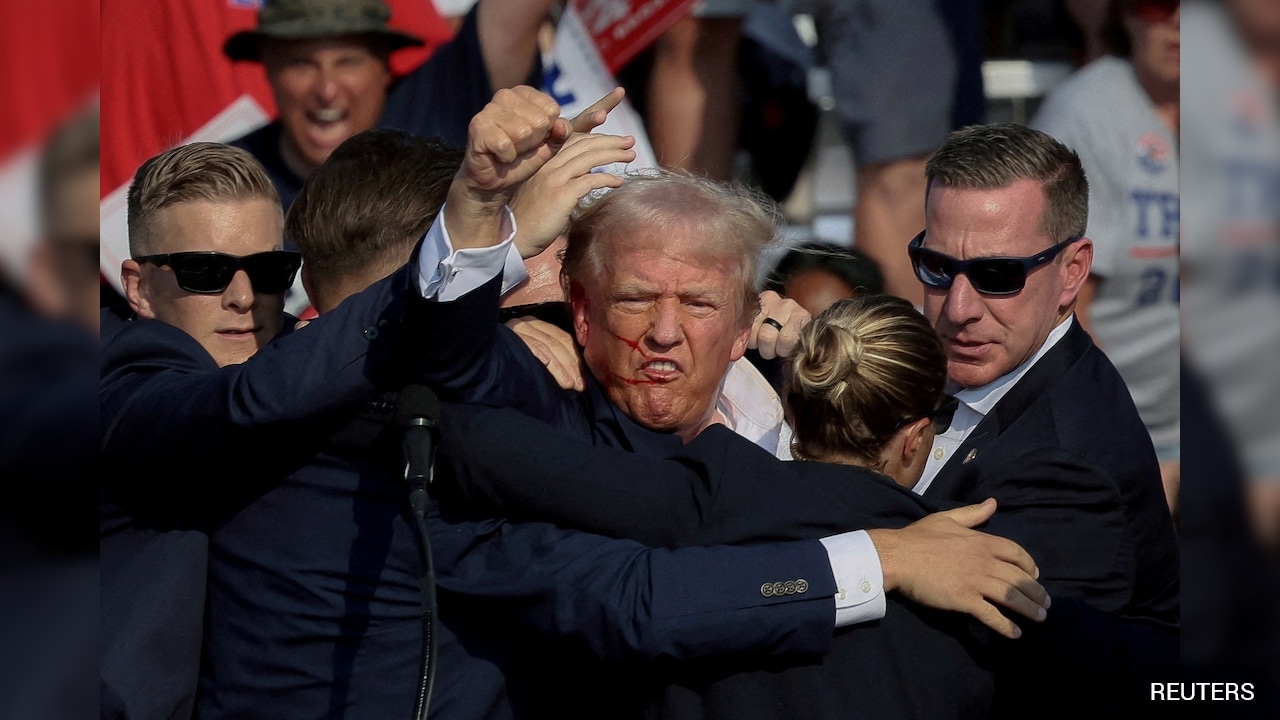
Imagine standing on a stage with a crowd of thousands in front of you while local police officers just a few hundred feet away are frantically screaming into their radios about a suspicious man with a rangefinder. Now imagine that the elite agency tasked with keeping you alive cannot hear a single word of it.
That is exactly what happened on July 13, 2024, in Butler, Pennsylvania. A damning government watchdog report released by the Department of Homeland Security Inspector General exposes a level of technical and operational negligence that is hard to stomach. The headlines focus on a single, staggering number. The Secret Service missed 102 local radio transmissions regarding the gunman, Thomas Matthew Crooks, before he opened fire on Donald Trump.
This was not a glitch. It was a choice. The agency failed to set up a unified communications room with local law enforcement. Because of that bureaucratic oversight, the protective detail on the ground was completely blind to the escalating emergency happening right outside the perimeter.
The Massive Gap Between Local Police and Federal Agents
When local police departments are tracking a threat, they use their tactical radio channels to coordinate. If the agency in charge of the outer perimeter cannot hear those channels, the security bubble is completely compromised.
According to the Inspector General, local law enforcement spent the minutes leading up to the shooting hunting for Crooks. They logged over one hundred transmissions describing his movements, his suspicious behavior, and his positioning near the American Glass Research building. The Secret Service did not hear a single one of those 102 alerts.
Instead of an integrated radio network, the federal agency relied on an astonishingly fragile backup plan. They received exactly five phone calls and three text messages about Crooks. That was it.
Think about the sheer math of that failure. You have an active threat being tracked in real time across 102 radio exchanges, and it gets compressed into eight manual text and voice check-ins. Information gets dropped. Urgency gets diluted. By the time someone sends a text, the gunman is already adjusting his scope. The report makes it clear that because this information remained trapped in local channels, the agents surrounding Trump never got the word to pull him off the stage before the shooting started.
The Inoperable Counter Drone System
The communication blackout on the ground was only half the problem. The security failure extended high into the air. Hours before Trump took the stage, Crooks flew a drone over the rally site for nearly nine minutes, mapping out the roofline and plotting his line of sight to the podium.
He did this completely undetected. The Secret Service actually had a counter-drone system on-site designed to flag exactly this kind of aerial surveillance. The problem was that the system did not work.
The Inspector General revealed that the equipment was handled by a single operator who was severely under-trained. This operator did not perform a standard pre-event test on the equipment before the rally. When the system encountered technical difficulties, it took the operator hours to figure out how to troubleshoot it. While the technician was scratching his head, Crooks was flying his drone right over the security perimeter.
Relying on a single person with minimal training to run critical airspace defense equipment is an amateur mistake. Security protocols are only as good as the people executing them. On that afternoon, the defense line was nonexistent.
Why a Unified Command Center is Security 101
Any experienced detail leader knows that inter-agency communication is the most volatile point of failure in large-scale operations. When you mix state police, local sheriffs, municipal units, and federal teams, you cannot expect things to work out naturally. You have to force integration.
Standard protocol for major events requires a physical or digital Joint Operations Center where representatives from every participating agency sit next to each other with their respective radios active. If a local officer spots a guy on a roof, he tells his dispatcher. The dispatcher sits two feet away from the Secret Service liaison, who immediately relays the threat to the shift leader on stage.
The Butler rally skipped this step entirely. By treating local police as an isolated outer ring rather than an extension of the core security apparatus, the agency created a deadly information vacuum. Local officers were doing their jobs and raising the alarm, but their voices stopped at the edge of their own radio towers.
Real Fixes for Modern Protective Details
We cannot fix what happened in Butler, but the data from this watchdog report points directly toward how protection logistics must change moving forward. Relying on paper-thin assurances or assuming local channels will find a way to get through is no longer an option.
Mandate Hardware Level Radio Integration
Agencies must stop relying on personal cell phones, text groups, and spotty phone calls to bridge communication gaps during live events. Every protective advance team needs to carry multi-band radios capable of programming local frequencies directly into the primary command net. If a local department is holding an outer sector, their primary dispatch frequency must be actively monitored inside the federal command post.
Enforce Automated Redundancies for Drone Defense
Airspace monitoring cannot depend on a single technician who barely knows how to boot up the software. Counter-drone systems must feature standardized checklists, mandatory pre-flight validation windows, and automated fail-safes that alert supervisors the moment a system goes offline. If the system is down, the protectee does not take the stage. It needs to be that simple.
Fix the Chain of Accountability
A security plan is only effective if someone is explicitly responsible for verifying its components. Moving forward, a designated technology coordinator must sign off on the status of every radio patch, drone defense unit, and line-of-sight mitigation before an event goes live.
The report shows that the Butler failure was not caused by a lack of resources or a shortage of advanced tech. It was caused by organizational complacency. When elite security teams fail to coordinate the basics of communication, advanced gear and tactical training do not matter. Fixing these basic operational handoffs is the only way to prevent a repeat of that near-fatal afternoon.
You can learn more by watching Official Secret Service Radio Traffic Briefing, which highlights the immediate aftermath and initial agency acknowledgments regarding the communication gaps.