Imagine waking up, turning on the tap to brush your teeth, and getting nothing but a dry, hollow hiss.
Now imagine that dry hiss lasting for two weeks. You might also find this related coverage useful: Why Massive Executive Paychecks Are Actually Good For Your Career.
No shower. No flushing toilets. Local schools shuttered, and local businesses bleeding cash. For thousands of residents across Kent and Sussex, this wasn't a hypothetical apocalypse—it was life in late 2025 and early 2026 under the management of South East Water.
The industry watchdog, Ofwat, has finally hit the company with a massive £30.5 million redress package. It concludes three separate, biting investigations into years of dry taps, abysmal customer support, and financial mismanagement. As extensively documented in detailed articles by Harvard Business Review, the results are significant.
But this isn't just another slap on the wrist for a failing monopoly. It's a fundamental reckoning for the private water model.
What the £30.5 Million Penalty Actually Looks Like
Let's look past the headline numbers. A £30.5 million fine sounds impressive, but what matters is where the cash is coming from and where it's going.
Crucially, shareholders are footing the bill, not the long-suffering billpayers. In a sector where companies frequently pass the cost of regulatory failure back to the consumer, this distinction is massive.
The money has been sliced up into specific operational and community buckets:
- £13 million is ringfenced directly for the company's "Remediation Plan" to fix the broken infrastructure that caused these outages in the first place.
- £5 million will fund free water butts for household customers to support water conservation.
- £5 million goes toward bringing forward smart meters for businesses and non-household customers.
- £5 million is earmarked for expanding on-site drinking water storage capacity.
- £1.5 million is allocated to a community fund for the hardest-hit areas.
- £1 million will go directly to boost supply resilience at vulnerable local sites.
Additionally, South East Water has to pay for a watchdog-appointed independent monitor to oversee its turnaround. If they drag their feet, the regulator will know immediately.
A Comedy of Engineering and Communication Errors
How did a utility firm serving millions manage to mess up this badly?
It's a mix of neglected infrastructure and a corporate culture that simply refused to own its mistakes.
Take the infamous December 2025 outage in Tunbridge Wells, which left 24,000 customers dry right before Christmas. The company's treatment works at Pembury suffered a coagulation failure. At the time, the leadership team blamed "changes in water chemistry" caused by lower groundwater and—incredibly—more people working from home.
The Drinking Water Inspectorate (DWI) wasn't buying it. Marcus Rink, the chief inspector, pointed out that the chemicals were perfectly fine; the system failed because the company's monitoring was subpar and the filters were poorly maintained.
Then came Storm Goretti in early 2026, leaving another 70,000 homes in the dark and without water.
    South East Water’s Outage History:

    [2020 - 2023 Failures]  ➡️  286,000+ customers affected
    [Dec 2025 Outage]       ➡️  24,000+ customers dry (Tunbridge Wells)
    [Jan 2026 (Goretti)]    ➡️  70,000+ homes dry (Kent & Sussex)
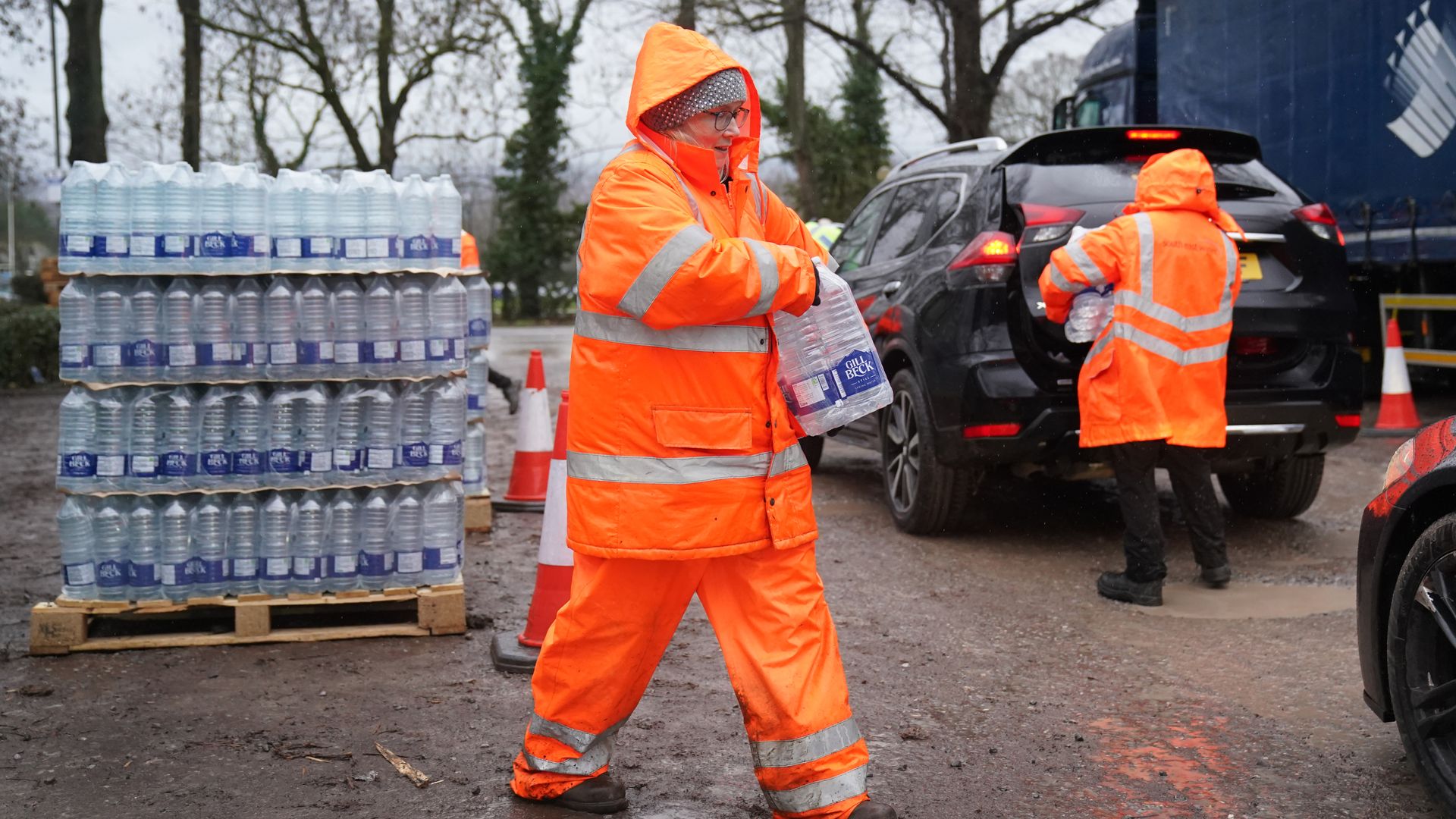
When things went wrong, the customer service was basically nonexistent. Desperate residents couldn't get clear updates. Bottled water stations were poorly run, forcing people with medical conditions, young children, and elderly relatives to queue for hours or travel miles just to get a single plastic bottle of drinking water.
The Silent Financial Red Flag
While customers were struggling with dry taps, another crisis was brewing in the company's back office.
In May 2026, Moody's downgraded South East Water’s credit rating to Ba1—plunging it below investment grade.
Why does a credit rating matter to a household trying to flush the toilet? Under the terms of its operating license, South East Water is legally required to maintain two investment-grade credit ratings. Falling to "junk" status meant the firm was in direct breach of its license.
This rating drop wasn't just about spreadsheets. Moody's explicitly cited the company's severe operational vulnerability and poor supply resilience as the primary drivers for the downgrade. When your infrastructure is so weak that a routine cold snap or a storm breaks the network, the financial markets notice. They realize you're a high-risk gamble.
The "Unaccountable Clique" Loses Its Grip
Before this £30.5 million penalty landed, the political pressure had already reached a boiling point.
In May 2026, the Environment, Food and Rural Affairs (EFRA) Committee took the highly unusual step of declaring a complete lack of confidence in South East Water's senior management. They described the leadership as an "unaccountable clique" that fostered a culture of avoiding responsibility.
The fallout was swift. Chairman Chris Train resigned, followed days later by Chief Executive David Hinton.
It was a rare moment of actual accountability in a sector where executives usually collect fat bonuses regardless of operational disasters.
Why This Matters for the Future of UK Water
If you don't live in the South East, you might think this is a localized problem. It isn't.
What happened at South East Water is a symptom of a larger, systemic disease plaguing privatized utilities across the UK. For decades, private water firms have prioritised shareholder dividends while underinvesting in the basic pipes, treatment centers, and storage reservoirs required to keep the system running.
Now, climate change is bringing more extreme weather—hotter summers, wetter winters, and stronger storms like Storm Goretti. A network held together by patch-jobs and wishful thinking cannot survive these shifts.
By forcing shareholders to pay this £30.5 million directly into infrastructure improvements, Ofwat is trying to send a clear message: the era of privatising profits and socializing the operational risk is over.
But whether a monitor and a remediation plan are enough to fix a deeply cracked system remains to be seen.
What to Do If Your Water Supplier Fails You
If you're a customer of South East Water, or any utility provider that leaves you high and dry, don't just sit there waiting for the tap to drip. You have rights.
- Check your automatic compensation: Under the Guaranteed Standards of Scheme (GSS), you are owed compensation if your water supply isn't restored within a specific timeframe (usually £20 for the first 24 hours and £10 for each further 24 hours).
- Get on the Priority Services Register: If you have a medical condition, a disability, or young children, sign up immediately. Water companies are legally obligated to deliver bottled water directly to your door during an outage.
- Claim for business losses: If you run a business and a lack of water forced you to close, document your losses. While domestic customer compensation is capped, businesses can pursue claims for direct losses caused by negligent service interruptions.