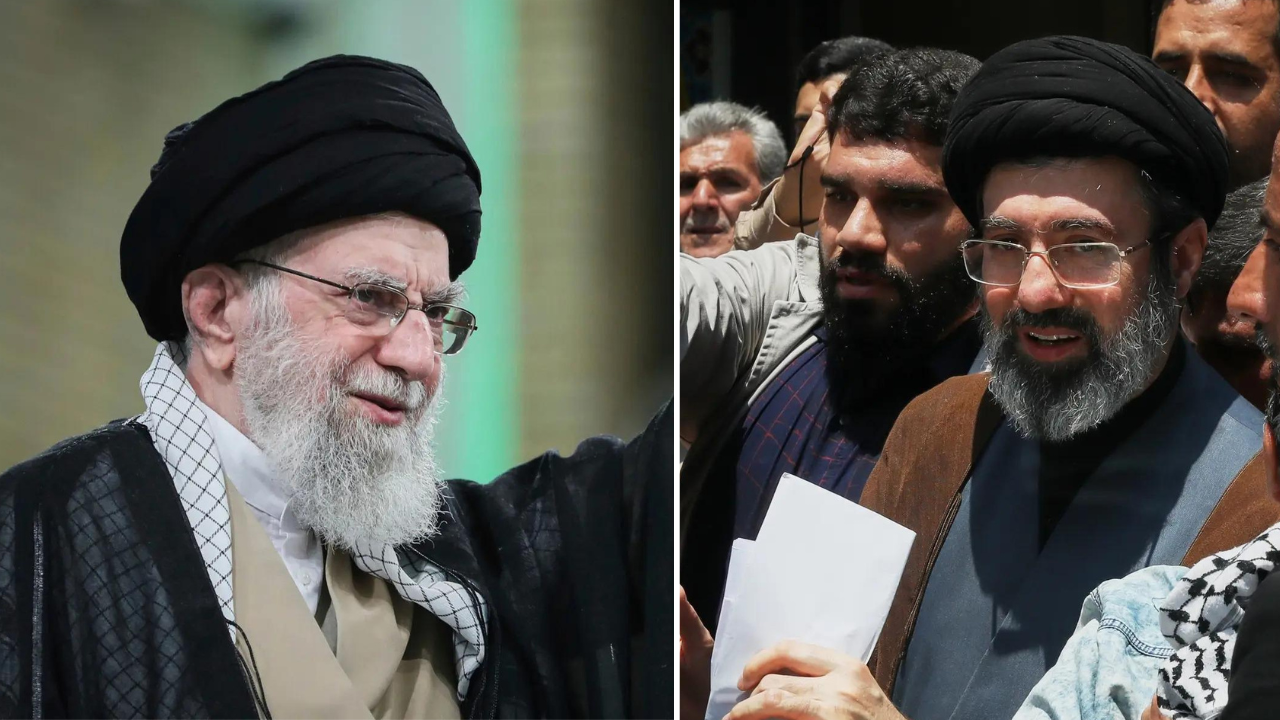
You don't usually see a supreme leader hide from the public when burying his own father. But that's exactly what's happening in Tehran right now. Mojtaba Khamenei, Iran's newly minted Supreme Leader, is skipping the massive state funeral for Ayatollah Ali Khamenei.
Think about the optics of that for a second. The Islamic Republic thrives on public displays of strength, revolutionary fervor, and total defiance. Yet, the man holding the highest office in the country won't show his face at a historic event honoring his predecessor. If you liked this piece, you should read: this related article.
Ayatollah Hakim Elahi, the supreme leader's representative in India, dropped this bombshell right before flying back to Tehran. He admitted that while Mojtaba desperately wanted to lead the funeral prayers, Iranian security officials straight up told him no. They can't guarantee his safety. The threat level is just too high.
This isn't just about a son missing his father's burial. It's a stark look at the brutal geopolitical reality shaping the Middle East in 2026. For another angle on this story, check out the latest update from Associated Press.
The Targeted Leader and the Deadliest Threat
Let's look at why the regime is terrified. This decision didn't happen in a vacuum. It comes directly after Israeli Defence Minister Israel Katz publicly declared that Mojtaba Khamenei is marked for death. That's not empty political theater. Israel has proven repeatedly over the last few years that its intelligence apparatus can reach deep inside Iranian borders.
Remember what happened on February 28. Former Supreme Leader Ali Khamenei wasn't taken by old age. He was killed in his own residence by a massive US and Israeli airstrike during Donald Trump's Operation Epic Fury. That same strike wiped out Mojtaba's wife, Zahra Haddad-Adel.
Mojtaba skipped his wife's funeral back then for the exact same reason. He's been living in the shadows ever since he took power in March.
When you look at the sheer scale of modern surveillance, staying alive means staying invisible. Israel utilizes advanced satellite tracking, artificial intelligence drone networks, and real-time signals intelligence to track high-value targets. A massive, multi-city public funeral is an assassin's dream. It offers predictable schedules, fixed locations, and massive security vulnerabilities.
Iranian security forces are fully aware that a single public appearance could end the new regime before it even gets its footing. By keeping Mojtaba underground, they're prioritizing regime survival over religious tradition.
A Broken Ceasefire and the Islamabad MoU
This security panic is playing out against a backdrop of incredibly fragile diplomacy. Just days ago, negotiators from the US and Iran met in Doha through Qatari and Pakistani mediators. They were actually making some headway on a 14-point diplomatic framework known as the Islamabad Memorandum of Understanding.
The deal was supposed to end the blistering hostilities that exploded earlier this year. According to the terms, Washington is responsible for keeping its allies in Tel Aviv in check.
Iranian Foreign Minister Seyed Abbas Araghchi didn't hold back on social media. He blasted Washington, demanding that the US muzzle its pets in Tel Aviv. He made it clear that any strike against Iran's new leadership would completely destroy the peace talks and trigger an immediate, devastating retaliation.
But Israel doesn't seem to care about the Islamabad MoU. Katz's comments prove that Israel views Iran's leadership transition as an opportunity to completely dismantle the regime's command structure. Tehran knows that if Israel decides to ignore US pressure, a funeral procession is the perfect place to strike.
The Massive Logistics of a High Risk Funeral
While Mojtaba stays in an underground bunker, the rest of the Iranian government is moving forward with a massive, multi-city funeral procession. It's an absolute logistical nightmare. The ceremonies are scheduled to run from July 4 to July 9, crossing multiple cities in both Iran and Iraq.
Here is how the official itinerary looks:
- Friday: Public farewell ceremonies kick off in the capital city of Tehran.
- Saturday and Sunday: Tributes continue at the massive Imam Khomeini Mosalla prayer hall.
- Monday: A massive public procession moves through Tehran, with officials shutting down the capital for four straight days.
- July 7: The body moves to the theological hub of Qom.
- July 8: In a highly risky cross-border move, the coffin travels to Iraq for Shia holy rites.
- July 9: Ali Khamenei will finally be laid to rest in his northeastern hometown of Mashhad.
Organizers expect officials from over 100 countries to attend. We're talking about heads of state, foreign ministers, and special envoys. Managing the safety of foreign dignitaries while dealing with millions of emotional mourners is already a massive headache. Doing it while under the constant threat of an Israeli airstrike makes it one of the most stressful security operations in modern history.
The Ghost of Past Funeral Disasters
External military threats aren't the only thing keeping Iranian security chiefs up at night. History shows that major state funerals in Iran have a terrifying track record of turning deadly due to poor crowd control.
Look back at June 1989, when Islamic Republic founder Ayatollah Ruhollah Khomeini died. His funeral was pure chaos. Millions of grief-stricken people surged toward the coffin. They completely overwhelmed the security barriers, tore at the burial shroud, and damaged the casket. The chaos got so bad that the military had to use a helicopter to physically lift the body away from the crowd, re-shroud it, and delay the burial by a whole day.
An even worse disaster happened in January 2020 during the funeral of Qasem Soleimani in Kerman. The crowds got so tightly packed that a massive stampede broke out. At least 56 people died and over 200 were severely injured. The government had to halt the burial because the streets were completely choked with bodies.
Gholamhossein Mozaffari, the governor of Razavi Khorasan Province, is trying hard to avoid a repeat of those tragedies. He's already announced that fleet helicopters will monitor the crowds from above in Mashhad to manage the flow of people. They've designed highly choreographed, barricaded pathways to keep the public from crushing the procession.
What This Means for Iran's Future Stability
Mojtaba's absence is going to leave a massive psychological void at the center of these ceremonies. To the hardline loyalists who form the backbone of the regime, the Supreme Leader is supposed to be a fearless, divinely guided figurehead. Seeing him stay hidden out of fear of foreign assassinations sends a damaging message. It shows weakness at a time when the regime needs to project total control.
It also highlights the deep rift between Iran's political goals and its military realities. The regime keeps claiming that it won the recent war and came out stronger than ever. But if you're so strong, why can't you protect your own leader at his father's funeral?
This tells us that the internal security assessment inside Tehran is incredibly grim. They know their air defenses can't completely guarantee protection against advanced stealth aircraft or long-range hypersonic missiles. They know their inner circles might be compromised by intelligence leaks.
Immediate Steps for Regional Observers
If you're tracking the geopolitical stability of the Middle East, the next few days are absolutely critical. Watch these specific markers to see where this crisis goes next.
Monitor the border movements between Iran and Iraq on July 8. Moving a high-profile target like Khamenei's coffin across international borders during an active security crisis is a massive flashpoint. Any unexpected delay or route change will indicate an immediate intelligence threat.
Keep a close eye on the ongoing Doha negotiations. If the US fails to restrain Israel during this week of mourning, Iran will likely walk away from the 14-point Islamabad MoU entirely. If those talks collapse, expect a swift resumption of regional proxy strikes.
Finally, watch who actually leads the funeral prayers in Tehran on Friday. Since Mojtaba won't be there, the regime's choice for the surrogate prayer leader will reveal exactly who holds the real power in the new administration's inner circle.