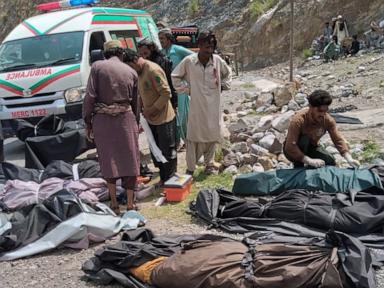
A week after two massive earthquakes ripped through northern Venezuela, the official numbers are finally matching the grim reality on the ground. Acting President Delcy Rodriguez announced that the confirmed death toll has reached 2,595 people. Another 12,400 individuals are dealing with injuries. These numbers are heavy, but they don't even begin to tell the full story of what's happening right now in places like La Guaira.
The initial shock of the 7.2 and 7.5 magnitude tremors on June 24 has passed, but the humanitarian nightmare is just starting.
The Logistics Behind the Venezuela Earthquake Disaster
Tracking casualties in a major disaster is messy. In this case, Venezuelan authorities are using a unique cross-checking system to make sure the data stays clean. Rodriguez noted that officials are using the country's fingerprint-based subsidized fuel system to verify identities. Interestingly, this thorough process actually saved five people from being wrongly counted as deceased. They turned up alive after their fingerprints registered in the system.
The government wants to avoid unproven data. That makes sense when you look at the sheer scale of the destruction along the San Felipe-Yumare-Montalbán axis. Entire neighborhoods are gone.
Shattered Infrastructure and Collapsed Homes
The physical destruction is massive. At least 189 buildings completely collapsed during the initial shaking and the 800 aftershocks that followed. Another 855 structures have severe damage. The UN Development Programme used its Rapid Digital Analysis system to map out the economic hit. The current estimate sits at a staggering $6.7 billion in damages to homes, businesses, and infrastructure.
Numbers like that feel abstract until you look at the human cost. Around 12,800 people have completely lost their homes. The UN Refugee Agency puts the total number of displaced people closer to 16,000. People are sleeping in makeshift transitional camps or out in the open, terrified that the next aftershock will bring down whatever structures are left standing.
International Relief Mobilizes Amid Political Hurdles
Venezuela cannot rebuild from this alone. The country's infrastructure was already under immense strain before the ground started shaking. Now, the government is talking with groups that it hasn't always had smooth relationships with in the past.
Rodriguez confirmed that the government is actively negotiating with the US State Department and the International Monetary Fund to secure resources. The World Bank and the Inter-American Development Bank are also at the table, offering a mix of emergency grants and credit facilities.
On the ground, international help is already arriving. A team of Israeli structural specialists landed to help assess which buildings are safe to re-enter and which need immediate demolition. The Venezuelan government put up an initial $200 million for reconstruction and set up a dedicated fund with the CAF-Development Bank of Latin America and the Caribbean to handle incoming international donations.
What Rebuilding Actually Requires
Money helps, but money doesn't clear rubble or heal trauma. The immediate priority remains stabilization. Hospitals in La Guaira and surrounding areas are completely overwhelmed, struggling with a massive lack of basic medical supplies and surgical equipment.
If you want to support the relief efforts, focus your resources on verified international organizations operating on the ground like the UN Refugee Agency or established local networks that have direct access to the transitional camps. Donating directly to verified emergency funds ensures that medical supplies and clean water reach displaced families without getting tangled in bureaucratic red tape. Rebuilding northern Venezuela will take years, not weeks.